
Introduction
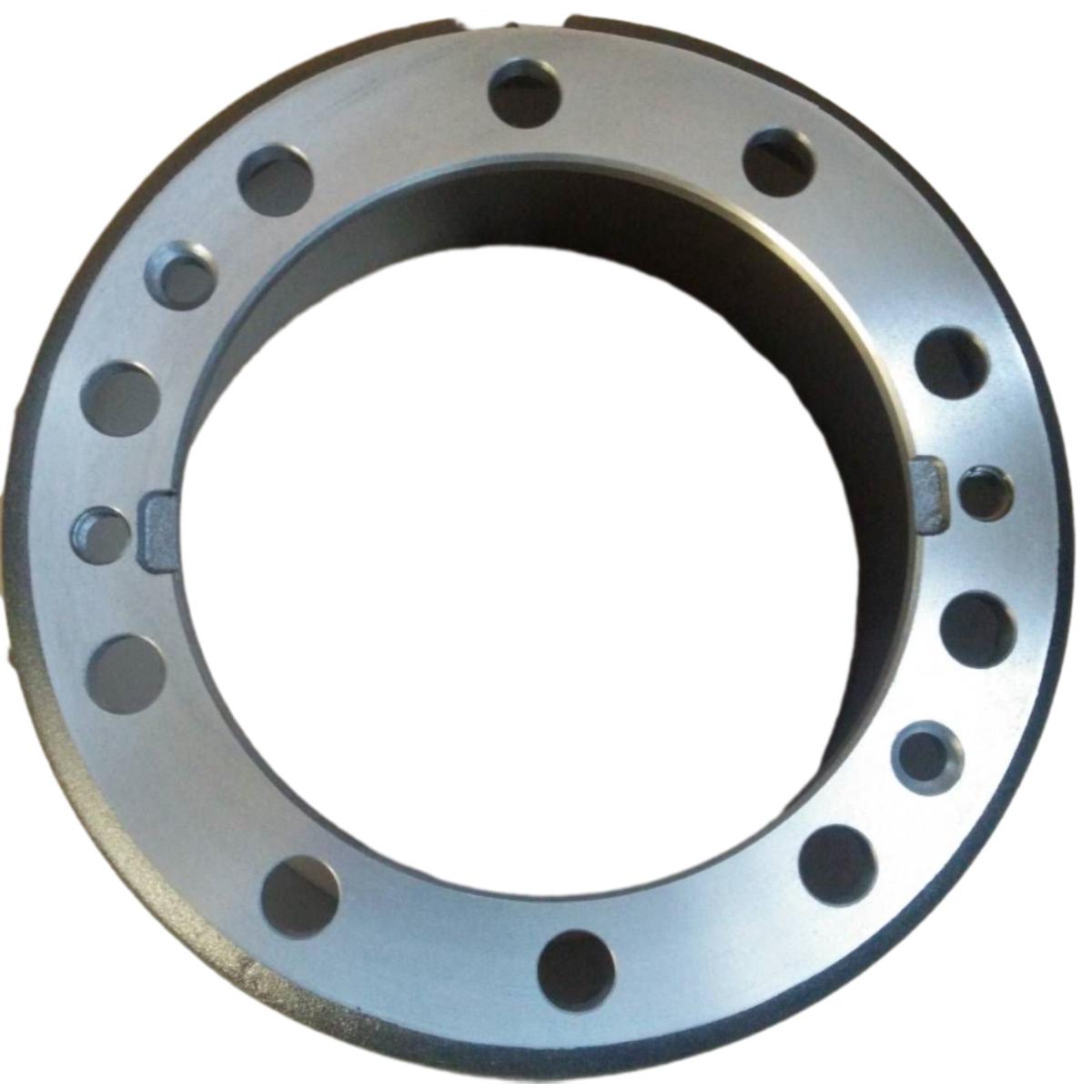
Disc and drum brakes represent two fundamentally distinct approaches to converting kinetic energy into thermal energy, ultimately decelerating or stopping a vehicle or mechanism. While both achieve the same objective, their construction, operational principles, performance characteristics, and manufacturing processes diverge significantly. Drum brakes, historically prevalent, utilize friction generated by brake shoes pressing against the inner surface of a rotating drum. Disc brakes, now dominating higher-performance applications, employ calipers to squeeze pads against a rotating rotor. This guide provides an in-depth technical comparison, dissecting material science, manufacturing techniques, performance engineering, failure modes, and relevant industry standards, focusing on the core challenges faced by automotive engineers and procurement specialists in selecting the optimal braking system for specific applications. A key industry pain point revolves around balancing cost-effectiveness with performance and durability, particularly concerning weight reduction and thermal management. Understanding these nuances is crucial for optimizing vehicle safety and operational efficiency.
Material Science & Manufacturing
Drum brake components primarily utilize cast iron for the brake drum due to its high thermal capacity, wear resistance, and relatively low cost. Brake shoes are traditionally composed of woven organic materials reinforced with steel, or semi-metallic compositions incorporating iron, copper, and graphite for improved friction and heat dissipation. Manufacturing involves casting the drum, followed by machining to precise dimensions, and forming the shoes through pressing and bonding of friction materials. Critical parameters include casting porosity, drum surface finish, and friction material density. Disc brake rotors are commonly manufactured from cast iron, although higher-performance applications increasingly employ carbon ceramic composites or steel alloys with optimized thermal conductivity. Calipers are typically constructed from aluminum alloys for weight reduction, while brake pads utilize a complex blend of organic materials, ceramics, and metallic particles, tailored to specific operating temperatures and friction requirements. Rotor manufacturing involves casting or forging, followed by precision machining and surface treatments like milling or drilling to enhance cooling. Caliper manufacturing demands high-precision machining and assembly to ensure consistent clamping force. Parameter control focuses on material composition, heat treatment, surface roughness, and the accuracy of caliper piston movement. A crucial challenge is mitigating rotor warping due to thermal stress and ensuring consistent friction material performance across a wide temperature range.
Performance & Engineering
The performance of both systems is fundamentally governed by the principles of friction, heat dissipation, and hydraulic pressure. Drum brakes exhibit a self-energizing effect, where a portion of the braking force is amplified by the drum’s rotation, providing increased stopping power at lower pedal pressures. However, this effect can lead to grabby braking and reduced modulation. Disc brakes offer superior modulation and consistent braking force, enabling precise control during deceleration. Finite element analysis (FEA) is employed to optimize rotor and drum designs, ensuring structural integrity under extreme thermal and mechanical loads. Thermal analysis is crucial for predicting temperature distribution and preventing brake fade, a phenomenon caused by the loss of friction due to overheating. Hydraulic systems, including master cylinders and wheel cylinders/calipers, are designed to deliver consistent pressure and minimize fluid compressibility. Compliance requirements, such as FMVSS 135 in the United States and ECE R90 in Europe, dictate minimum braking performance standards, including stopping distance and deceleration rates. The engineering challenge lies in optimizing the balance between stopping power, pedal feel, and thermal stability, while minimizing weight and complexity. Consideration must also be given to factors such as brake system packaging and integration with anti-lock braking systems (ABS) and electronic stability control (ESC).
Technical Specifications
| Parameter | Disc Brakes | Drum Brakes | Typical Application |
|---|---|---|---|
| Weight (per corner) | 3 - 8 kg | 2 - 5 kg | Passenger Vehicles |
| Thermal Capacity | Moderate | High | Heavy Duty Trucks |
| Cooling Efficiency | High (especially ventilated rotors) | Low | Motorcycles |
| Friction Coefficient (μ) | 0.3 - 0.5 | 0.25 - 0.4 | Performance Cars |
| Stopping Distance (60-0 mph, dry) | 30 - 40 m | 40 - 50 m | Standard Passenger Cars |
| Cost (per corner) | $50 - $500 | $20 - $150 | Budget Vehicles |
Failure Mode & Maintenance
Disc brakes are susceptible to rotor warping due to uneven heat distribution, leading to brake pedal pulsation. Pad glazing, caused by overheating, reduces friction and increases stopping distance. Caliper piston seizure can result in uneven pad wear and reduced braking force. Corrosion of rotor surfaces can also degrade performance. Drum brakes can experience brake shoe lining delamination due to excessive heat or contamination. Drum distortion, caused by thermal stress, can lead to brake squeal and reduced efficiency. Wheel cylinder leaks can result in fluid loss and brake failure. Regular maintenance includes inspecting pad/shoe thickness, rotor/drum surface condition, and hydraulic fluid levels. Bleeding the brake lines to remove air bubbles is essential for maintaining optimal performance. Rotor resurfacing or replacement may be necessary to correct warping or excessive wear. Caliper and wheel cylinder rebuild or replacement may be required to address leakage or seizure. A common failure analysis involves examining wear patterns on brake pads/shoes to identify potential issues with caliper/wheel cylinder function or rotor/drum surface condition. Preventative maintenance, including periodic flushing of brake fluid and inspection of brake lines, can significantly extend the lifespan of the braking system.
Industry FAQ
Q: What are the primary reasons for the shift from drum brakes to disc brakes in modern passenger vehicles?
A: The transition is primarily driven by superior performance characteristics. Disc brakes offer better heat dissipation, reducing brake fade and maintaining consistent stopping power under demanding conditions. They also provide more precise control and modulation, improving driver safety and confidence. Furthermore, disc brakes are generally easier to maintain and offer better water shedding capabilities, particularly important in wet climates.
Q: How does the material composition of brake pads influence stopping performance and noise generation?
A: Brake pad composition is critical. Organic pads offer quiet operation but have lower friction coefficients and are prone to fade at higher temperatures. Semi-metallic pads provide a good balance of friction, heat dissipation, and durability, but can generate more noise. Ceramic pads offer excellent stopping power, low noise, and reduced dust, but are typically more expensive. The specific formulation is tailored to the vehicle's weight, operating conditions, and desired performance characteristics.
Q: What role does rotor ventilation play in mitigating brake fade?
A: Rotor ventilation, achieved through internal vanes or external fins, significantly enhances heat dissipation. The increased surface area allows for more efficient transfer of heat away from the braking surface, reducing the risk of brake fade. Ventilated rotors are particularly crucial in high-performance applications where frequent and hard braking is anticipated.
Q: What are the typical failure modes associated with hydraulic brake systems, and how can they be prevented?
A: Common failures include master cylinder leaks, caliper piston seizure, and brake line corrosion. Prevention involves regular inspection of brake lines and hoses for cracks or leaks, periodic flushing of brake fluid to remove moisture and contaminants, and ensuring proper maintenance of the master cylinder and calipers. Air in the brake lines is also a frequent issue, addressed through proper bleeding procedures.
Q: What are the key considerations when selecting brake materials for electric vehicles (EVs) due to regenerative braking?
A: EVs utilize regenerative braking, which reduces the reliance on friction brakes. However, friction brakes are still essential for emergency stops and low-speed maneuvering. Materials must be selected to minimize corrosion due to infrequent use and to maintain optimal performance under varying temperature conditions. Weight reduction is also paramount in EVs to maximize range, favoring lightweight rotor and caliper materials.
Conclusion
The choice between disc and drum brakes is a complex engineering trade-off heavily influenced by application-specific requirements. While drum brakes remain cost-effective and offer high thermal capacity, disc brakes provide superior performance, modulation, and heat dissipation, making them the dominant choice in modern passenger vehicles and high-performance applications. Advancements in materials science, such as carbon ceramic composites, and manufacturing techniques continue to push the boundaries of braking performance and durability. Ongoing research focuses on optimizing brake system integration with advanced driver-assistance systems (ADAS) and autonomous driving technologies.
Future trends include the development of brake-by-wire systems, which eliminate the mechanical linkage between the brake pedal and the calipers, enabling more precise control and faster response times. Furthermore, the increasing prevalence of electric vehicles necessitates brake materials and designs optimized for infrequent use and regenerative braking scenarios. A holistic systems engineering approach, considering factors such as weight, cost, performance, and safety, is crucial for selecting the optimal braking system for any given application.