
In composite engineering, deploying a certified extrusion welder hdpe tool guarantees robust pressure-tight seals at critical metal-to-polymer interfaces. Modern industrial fabrication frequently integrates metallic support structures with heavy-duty thermoplastic liners to build containment vessels, chemical processing tanks, and civil infrastructure barriers. Achieving flawless seam integrity across dissimilar material boundaries requires precise thermal control and continuous plasticized filler deposition.
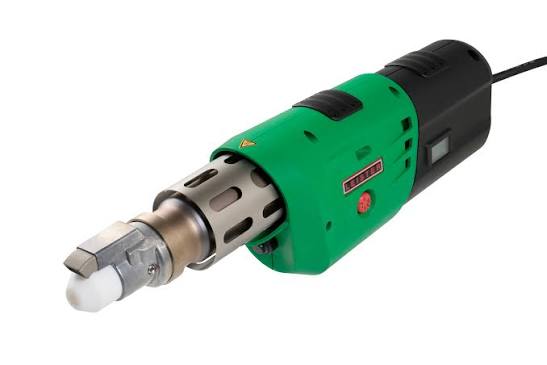
Engineers must evaluate thermal expansion differentials, surface preparation protocols, and molten mass flow rates to prevent joint displacement and micro-leakage in heavy containment applications.
Thermal Dynamics in Polymeric Fusion Joining
Extrusion welding operates by preheating parent thermoplastic sheets with localized hot air while simultaneously feeding a molten plasticized rod through a heated barrel. This dual thermal input ensures that both the substrate boundary and the extrudate achieve homogeneous molecular interdiffusion, forming a continuous monolithic bond upon cooling.
Maintaining exact melt temperatures prevents thermal oxidation of the high-density polyethylene polymer chains. Proper shoe geometry and uniform hand pressure press the plasticized extrudate firmly into the pre-grooved joint, eliminating internal voids and structural stress concentrations.
Mechanical Load Transfer Across Hybrid Enclosures
Thermoplastic containment liners anchored within metallic structural frames experience continuous hydrostatic pressure and cyclic mechanical shock. Inferior lap welds or un-melted root seams can propagate micro-cracks under load, leading to eventual containment failure and severe chemical corrosion of the outer steel chassis.
Heavy-duty extrusion welding creates thick structural fillets capable of transferring mechanical stress across the joint profile. Quality assurance procedures, such as non-destructive spark testing and ultrasonic flaw detection, verify that welded seams remain fully intact under peak operational pressures.
Supply Chain Reliability for Heavy Fabrication Equipment
Executing large-scale environmental containment and hybrid structural projects demands high-precision welding tools and stable field equipment support. Engineering contractors and metal fabricators collaborate with an advanced supplier to procure durable thermoplastic welding tools engineered for continuous heavy-duty field duty.
Utilizing high-performance equipment like a specialized hdpe extrusion welder ensures that field operators maintain constant extrudate output and accurate temperature control across extensive liner installations. Working alongside a premium manufacturer guarantees access to rapid spare parts replacement and dedicated technical support.
Advancing Quality Standards in Structural Containment
Integrating high-efficiency thermoplastic fusion tools into structural fabrication workflows ensures uncompromising environmental protection and fluid containment. Sourcing precision extrusion equipment allows engineering teams to execute complex hybrid installations with high joint reliability and minimal operational downtime.