
An examination of how quality metal fasteners and wire products influence production efficiency and end-product reliability across industrial sectors.
Brad Nails are fundamental to precision fastening in woodworking, trim work, and industrial assembly operations. These small but critical components must meet exacting standards for tensile strength, corrosion resistance, and dimensional consistency to ensure reliable performance in automated and manual applications alike.
The Role of Material Quality in Fastener Performance
In industrial manufacturing, the quality of fasteners directly impacts production line efficiency and final product durability. Manufacturers sourcing metal components must consider factors such as wire grade, coating uniformity, and dimensional precision. When fasteners fail during installation, the resulting downtime can cost thousands of dollars per minute in high-volume production environments.
The selection of appropriate Metal Wire for fastener production is equally critical. Wire diameter consistency, surface finish, and metallurgical composition all influence the finished product's performance characteristics. Industrial buyers increasingly demand wire that meets strict International Organization for Standardization (ISO) and American Society for Testing and Materials (ASTM) specifications to ensure compatibility with high-speed automated equipment.
Supply Chain Considerations for Metal Component Sourcing
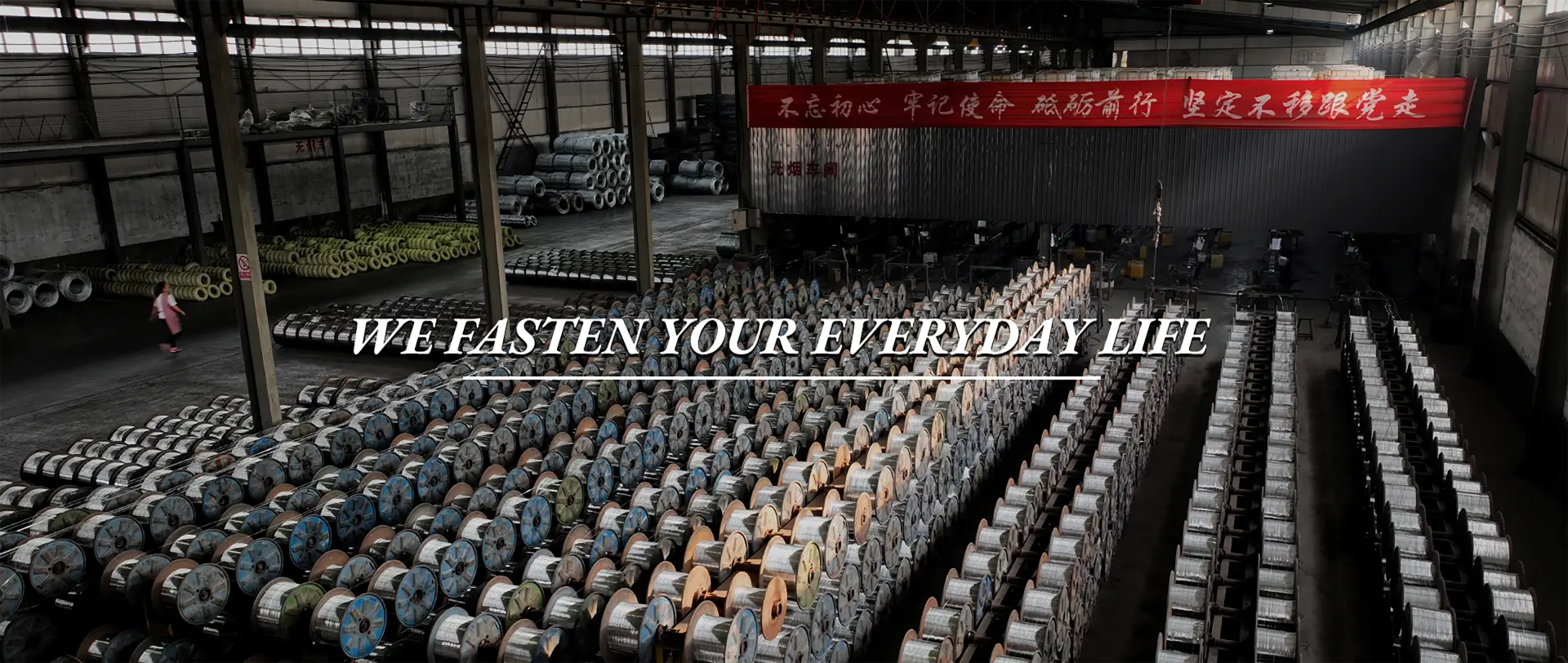
The global market for metal fasteners and wire products has experienced significant evolution over the past decade. Manufacturers now prioritize suppliers who can demonstrate consistent quality control, reliable lead times, and the ability to scale production in response to demand fluctuations. The vertical integration of production facilities, from raw material processing to finished product packaging, has emerged as a key differentiator among suppliers serving the industrial sector.
Production facilities that maintain control over their entire manufacturing process can offer greater consistency in product quality. This includes monitoring wire drawing, heat treatment, surface finishing, and quality assurance testing within a single operational framework. Such integrated approaches reduce the variability that can occur when multiple subcontractors handle different stages of production.
Quality Standards and Testing Protocols
Industrial buyers of metal fasteners and wire products should verify that their suppliers adhere to recognized quality management standards. This includes documentation of tensile strength testing, hardness verification, coating thickness measurement, and dimensional inspection. Many leading manufacturers now employ automated optical inspection systems that can detect surface defects and dimensional variations at production line speeds.
The implementation of traceability systems has become increasingly important in the metal components industry. Buyers now expect batch-level traceability that allows them to identify the exact production parameters for any given shipment. This capability supports quality assurance programs and facilitates rapid response in the event of quality issues.
Future Trends in Metal Fastener Manufacturing
The metal components industry continues to evolve with advances in materials science and manufacturing technology. High-strength steel alloys, advanced corrosion-resistant coatings, and precision manufacturing techniques are enabling the production of fasteners that perform better in demanding applications. Additionally, the industry is seeing increased interest in sustainable manufacturing practices, including the use of recycled materials and energy-efficient production processes.
As automated assembly systems become more sophisticated, the demand for fasteners with tighter dimensional tolerances will continue to grow. Suppliers who invest in advanced manufacturing equipment and rigorous quality control systems will be best positioned to meet these evolving requirements.
This article examines the technical considerations and industry standards relevant to metal fastener and wire component selection for industrial manufacturing applications.