
Rubber Lined Elbows illustrate a broader lesson in industrial design: when a process moves abrasive slurry, corrosive liquid, or other challenging media, the performance of a metal component depends on more than its external shape. Material selection, fabrication accuracy, lining compatibility, and maintenance planning all influence how reliably a flow system performs over time.
For engineers and plant operators, component failure rarely has a single cause. A fitting may wear faster than expected because flow velocity is too high, a transition creates turbulence, or the selected material is poorly suited to the conveyed substance. Understanding how manufacturing choices interact with operating conditions can help teams specify components more effectively and avoid preventable downtime.
Start with the operating environment
The first step in choosing a component is defining what it will encounter. Relevant factors include the chemical composition of the process fluid, temperature, pressure, flow rate, suspended solids, and the frequency of starts and stops. Even small differences in particle size or concentration can change the rate and location of wear inside a pipe or fitting.
Abrasion is especially sensitive to geometry. At a bend, particles may strike the outer wall as the flow changes direction. At a poorly matched joint, a ledge or gap can disturb the stream and create localized erosion. A robust specification therefore considers the whole flow path, not simply the nominal diameter or pressure rating of an individual part.
Operators can improve the information available to designers by recording recurring leak locations, inspection findings, service life, and changes in process conditions. These records help distinguish a material issue from a layout, installation, or operating problem.
Match materials to the job
Metal remains essential in industrial infrastructure because it can offer structural strength, dimensional stability, and compatibility with demanding fabrication requirements. Yet the base metal alone may not provide the best resistance to every process condition. In some applications, a protective lining or a polymer-based pipe system can help address corrosion, abrasion, or chemical exposure.
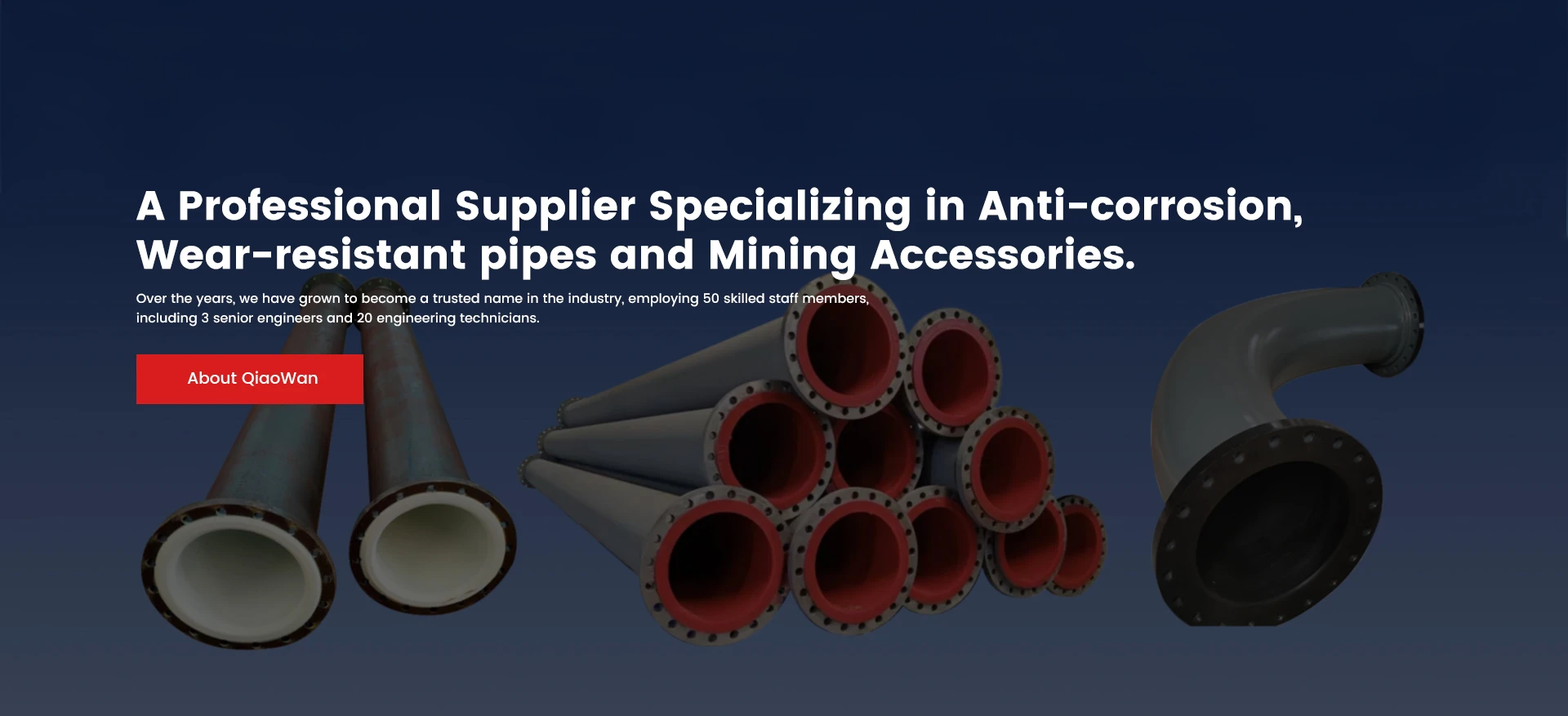
A HDPE Lined Steel Pipe is one example of a design that combines a steel structure with a polymer contact surface. Whether a lined product is appropriate depends on the service conditions, including operating temperature, pressure, chemical compatibility, and the demands placed on connections and supports. The interface between lining and substrate also matters: poor fit or damage during handling can undermine the intended protection.
Material selection should therefore be treated as a system decision. Engineers need to assess not only resistance to the conveyed media, but also fabrication tolerances, joining methods, installation constraints, and inspection access. A material that performs well in isolation may be less suitable if it complicates maintenance or cannot be integrated reliably with adjacent components.
Fabrication quality is part of performance
Precision manufacturing plays a direct role in service life. Dimensional variation can make alignment more difficult, place stress on joints, or produce internal discontinuities that interrupt flow. For formed and machined parts, repeatable processes and practical inspection checkpoints help keep components consistent across production runs.
Good quality control begins before a part reaches the workshop. Clear drawings, defined tolerances, material traceability, and agreed inspection criteria give production teams a shared reference. During fabrication, checks should focus on characteristics that affect fit and function, such as wall thickness, roundness, surface condition, and connection dimensions. Final inspection can then confirm that the finished item matches the specification.
Manufacturers working across metal, rubber, and plastic products must also pay close attention to how different materials behave during processing and assembly. Each has distinct requirements for forming, machining, bonding, and handling. Coordinating those processes is particularly important when a component depends on a reliable interface between structural and protective materials.
Design for inspection and maintenance
No component is immune to wear. Effective designs make it easier to identify deterioration before it becomes a shutdown event. Access points, replaceable sections, and sensible inspection intervals can reduce the time and uncertainty involved in maintenance. Where conditions permit, planned inspections also help teams compare actual wear with the assumptions used during specification.
- Map areas where flow changes direction or velocity increases.
- Record inspection results and component service life in a consistent format.
- Review supports, alignment, and installation practices when wear appears uneven.
- Confirm that replacement components match current operating conditions, not only the original design assumptions.
These habits turn maintenance data into useful design feedback. If a component repeatedly fails at the same point, revisiting the geometry, material combination, or operating parameters may be more effective than replacing it with an identical part.
A practical role for experienced manufacturers
Manufacturing partners can contribute valuable process knowledge when specifications are being developed. Their experience with metalworking, rubber, and plastic production can help identify tolerance concerns, assembly constraints, and inspection needs early in a project. This input is most useful when it supports engineering decisions rather than substituting for them.
Hebei Qiao Wan Metal Products Co., Ltd., established in 2008 in Jingxian, Hebei, is one example of a manufacturer working across metal, rubber, and plastic products. Its team includes 50 staff members, among them senior engineers and engineering technicians. More broadly, manufacturers with cross-material experience can help project teams understand how fabrication choices affect component fit, durability, and maintainability.
Build reliability into the specification
Long service life is rarely achieved through material choice alone. It comes from matching components to real operating conditions, controlling fabrication quality, and designing for inspection and replacement. When engineers, operators, and manufacturers share clear performance requirements and field data, metal components and lined systems are more likely to deliver predictable results in demanding industrial service.