
Utilizing high-precision thread rolling equipment establishes the metallurgical foundation for manufacturing structural fasteners with superior fatigue resistance. In modern industrial machining, producing high-stress threaded components requires process engineers to look beyond traditional chip-removal lathe cutting and embrace cold displacement technologies that preserve metal grain continuity.
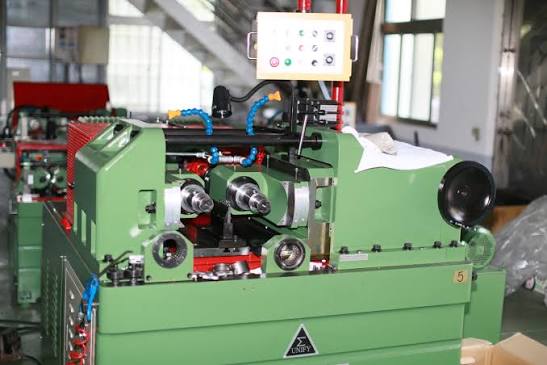
Threaded connections in automotive suspensions, heavy industrial hydraulics, and structural engineering endure relentless dynamic loads and rotational stress. When threads are formed via conventional cutting tools, microscopic stress risers and interrupted micro-grain boundaries are created along the thread flank and root. Under cyclic tensile fatigue, these micro-cracks propagate rapidly, increasing the likelihood of sudden mechanical failure in critical assemblies.
Grain Flow Redistribution and Work Hardening Dynamics
The cold rolling process displaces metal plastically rather than severing it. Precision-ground steel dies apply uniform radial pressure, forcing the cold metal blank to flow plastically along the contours of the rolling profile. This mechanical displacement compresses the grain matrix along the crests and roots of the thread, creating a burnished, high-density grain structure that aligns perfectly with the thread geometry.
Furthermore, cold displacement induces significant work hardening on the cold-formed surface layer. The localized tensile strength and yield point of the thread root increase noticeably, while the surface roughness improves to near-mirror quality. Integrating specialized tools from an advanced supplier allows high-throughput manufacturing plants to maintain tight pitch tolerances across millions of continuous production cycles.
Tooling Calibration and Hydraulic Pressure Control
Achieving micron-level dimensional precision across varied carbon steel and alloy profiles requires exact hydraulic pressure management and synchronized die rotation. Multi-axis hydraulic systems deliver steady, vibration-free thrust that prevents workpiece slippage during initial contact, ensuring consistent pitch geometry from head to shank.
Selecting an engineered screw rolling machine equipped with intelligent control interfaces enables operators to fine-tune dwell times, hydraulic feed rates, and rolling speeds. This precise control over plastic deformation prevents surface micro-lapping and material flaking, extending the operational life of both the rolling dies and the finished components.
Industrial Scalability and Quality Governance
Modern mass production relies heavily on equipment stability to prevent costly line stoppages and non-conforming batches. High-volume metalworking enterprises must implement strict ISO-certified quality management protocols and real-time sensor feedback to monitor hydraulic pressure curves during continuous operation.
Sourcing automated forming machinery from a premium manufacturer ensures access to robust machine bed castings, precision-ground spindles, and comprehensive technical support. By combining cold-forming metallurgy with high-rigidity machine design, industrial fabricators optimize material utilization, reduce cycle times, and produce world-class threaded components for high-stress applications.