

Introduction
Leading trailing drum brakes represent a foundational technology in mechanical braking systems, particularly prevalent in heavy-duty applications such as commercial vehicles, industrial machinery, and specialized equipment. Their design, characterized by alternating leading and trailing shoe configurations within a rotating drum, provides a balance between braking force, heat dissipation, and operational longevity. This architecture inherently self-energizes the leading shoe, increasing braking efficiency, while the trailing shoe relies on frictional force alone. The system’s efficacy is directly tied to material selection, manufacturing precision, and rigorous adherence to performance standards, all critical to mitigating common failure modes. This guide provides a comprehensive analysis of leading trailing drum brakes, covering material science, manufacturing processes, performance engineering, failure analysis, and relevant industry standards, addressing the core challenges faced by engineers and procurement professionals.
Material Science & Manufacturing
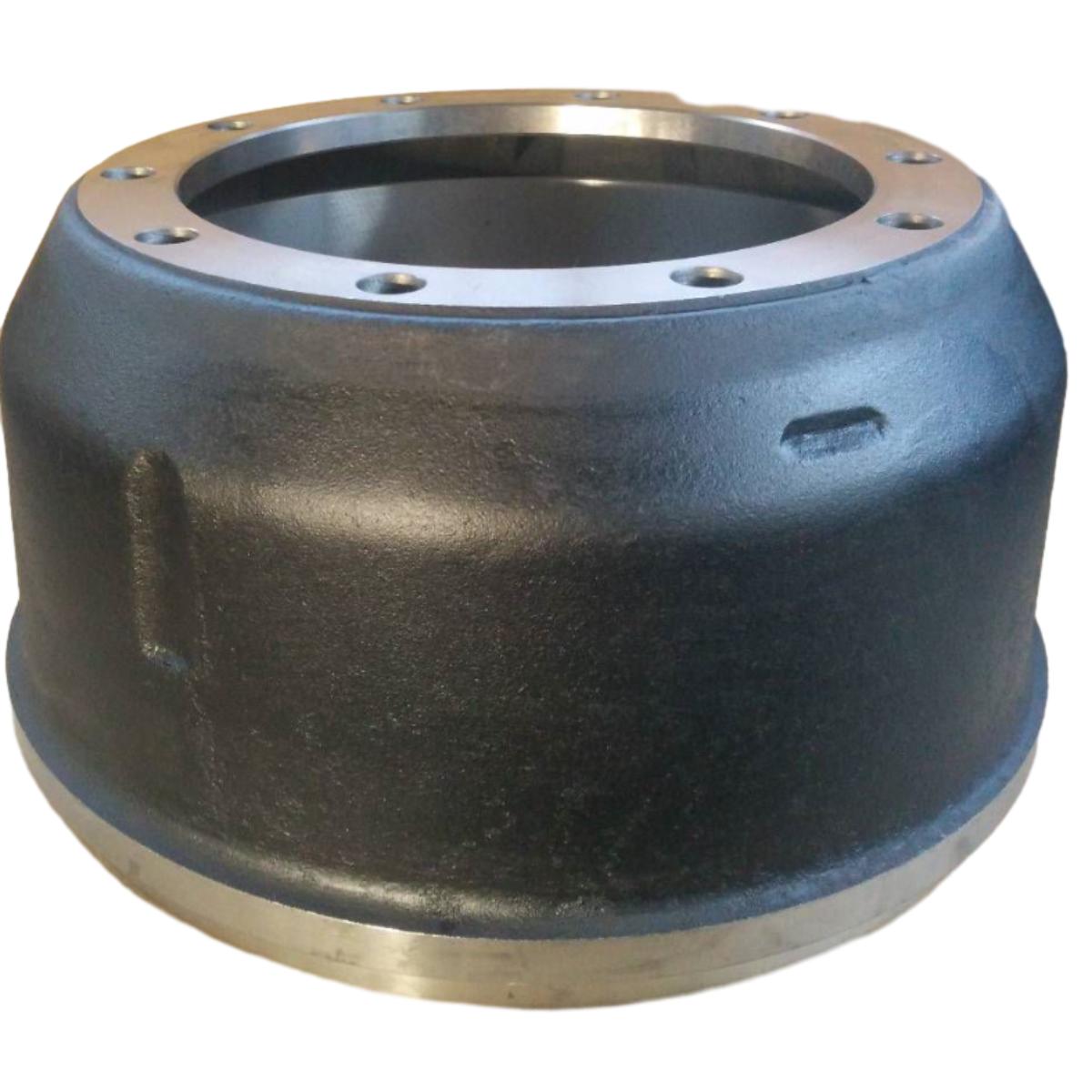
The performance of leading trailing drum brakes is fundamentally linked to the material properties of its constituent components. The drum itself is typically constructed from gray cast iron, chosen for its high thermal conductivity, wear resistance, and relatively low cost. Chemical composition is precisely controlled, generally adhering to ASTM A48 standards, with specific emphasis on carbon content (2.5-4.0%), silicon (1.8-3.2%), and manganese (0.6-1.2%) to optimize microstructure and damping characteristics. Brake shoes commonly employ ferrous materials like nodular cast iron or steel, often incorporating friction modifiers like copper or graphite to enhance coefficient of friction and reduce noise. Linings, bonded to the shoes, are typically composed of organic or semi-metallic compounds; organic linings utilize phenolic resins reinforced with fibers like aramid or cellulose, offering quiet operation but lower heat resistance, while semi-metallic linings incorporate steel wool, iron powder, and copper fibers for improved heat dissipation and fade resistance.
Manufacturing involves several critical processes. Drum casting utilizes sand molding techniques, requiring precise control of cooling rates to prevent defects like shrinkage porosity and distortion. Machining operations, including turning and grinding, achieve dimensional accuracy and surface finish crucial for optimal friction and heat transfer. Brake shoe fabrication typically involves forging or casting followed by machining and bonding of the friction lining using high-strength adhesives, often epoxy-based. Critical parameters during lining bonding include temperature, pressure, and curing time, impacting bond strength and durability. Quality control is paramount, with non-destructive testing methods like ultrasonic inspection and magnetic particle inspection employed to detect flaws in the castings, and peel tests used to verify lining adhesion. The heat treatment processes applied to the shoes and drums are carefully monitored to achieve the desired hardness and tensile strength, influencing wear rates and overall system performance.
Performance & Engineering
The engineering performance of a leading trailing drum brake is governed by a complex interplay of forces, thermal dynamics, and material behavior. The self-energizing effect of the leading shoe, resulting from the rotational force amplifying the braking force, is a key performance characteristic. However, this effect also contributes to instability and increased wear. Detailed force analysis, incorporating parameters like drum rotation speed, friction coefficient, and hydraulic pressure, is essential for optimizing brake performance and preventing wheel lockup. Thermal management is critical, as repeated braking events generate substantial heat, leading to brake fade – a reduction in braking efficiency due to elevated drum and lining temperatures. The drum's thermal capacity and the lining's thermal conductivity directly influence fade resistance. Finite element analysis (FEA) is frequently employed to simulate thermal stresses and optimize drum and shoe designs for improved heat dissipation.
Compliance requirements dictate stringent performance standards. SAE J378 defines performance tests for service brakes, focusing on stopping distance, brake force, and fade resistance. ISO 26602 provides guidelines for braking systems on road vehicles. Environmental resistance is also a crucial consideration. Exposure to moisture, salt, and corrosive contaminants can accelerate corrosion and degrade material properties. Protective coatings, such as zinc plating or powder coating, are applied to critical components to enhance corrosion resistance. The long-term durability of the system is dependent on the careful selection of materials with high fatigue strength, resistance to wear, and compatibility with the operating environment.
Technical Specifications
| Parameter | Unit | Typical Value (Light Duty) | Typical Value (Heavy Duty) |
|---|---|---|---|
| Drum Diameter | mm | 203 | 320 |
| Drum Width | mm | 50 | 70 |
| Friction Lining Material | - | Organic | Semi-Metallic |
| Friction Coefficient (μ) | - | 0.35 | 0.45 |
| Maximum Operating Temperature | °C | 300 | 350 |
| Braking Torque (per shoe) | Nm | 200 | 500 |
Failure Mode & Maintenance
Leading trailing drum brakes are susceptible to several failure modes. Fatigue cracking in the drum, particularly around mounting bolt holes and stress concentration points, can lead to catastrophic failure. This is exacerbated by thermal cycling and dynamic loading. Lining wear is a common issue, with wear rates influenced by operating conditions, friction material composition, and drum surface condition. Delamination of the friction lining from the shoe is another frequent failure, typically caused by inadequate bonding or exposure to moisture. Drum distortion, resulting from uneven heating or mechanical stress, can lead to brake squeal and reduced braking efficiency. Corrosion, particularly in marine or industrial environments, can degrade drum and shoe surfaces, accelerating wear and reducing braking force.
Preventive maintenance is crucial for maximizing brake life and ensuring safe operation. Regular inspections should include checking lining thickness, drum runout, and shoe-to-drum clearance. Resurfacing or replacing drums with excessive wear or distortion is essential. Lubricating moving parts, such as the adjuster mechanism and pivot points, prevents sticking and ensures smooth operation. Periodic cleaning of the brake assembly removes debris and contaminants. Early detection of cracks or corrosion is critical; damaged components should be replaced immediately. Adjusting the brake shoes to maintain proper clearance optimizes braking performance and minimizes wear. Adhering to manufacturer's recommended maintenance schedules and utilizing high-quality replacement parts are fundamental to long-term reliability.
Industry FAQ
Q: What is the primary difference in wear characteristics between organic and semi-metallic friction linings?
A: Organic linings generally exhibit lower wear rates on the drum surface but tend to degrade faster themselves, particularly under high heat loads. Semi-metallic linings, while potentially causing slightly increased drum wear, offer superior fade resistance and a longer service life in demanding applications. The choice depends on the balance between drum preservation and overall brake system longevity.
Q: How does drum material selection impact thermal management within the braking system?
A: Gray cast iron, the common drum material, offers good thermal conductivity but relatively low thermal capacity. Increasing drum mass improves thermal capacity, slowing down temperature rise. Alternative materials, like composite materials, can enhance thermal conductivity but are generally more expensive.
Q: What are the critical parameters to monitor during brake shoe relining to ensure a durable bond?
A: Precise control of bonding temperature, pressure, and curing time is paramount. Surface preparation of both the shoe and lining is crucial to remove contaminants. Adhesive selection must be compatible with the materials involved, and the applied adhesive layer thickness should be within specified limits.
Q: What is the significance of drum runout, and what are the acceptable tolerance levels?
A: Drum runout, or radial variation during rotation, can cause brake squeal, uneven lining wear, and reduced braking performance. Acceptable tolerance levels typically range from 0.05mm to 0.1mm, depending on the application and manufacturer's specifications. Exceeding these limits necessitates drum resurfacing or replacement.
Q: How does environmental contamination affect the performance and lifespan of leading trailing drum brakes?
A: Exposure to salt, moisture, and corrosive chemicals accelerates corrosion of drum and shoe surfaces, reducing friction and increasing wear rates. Dust and debris can contaminate the braking interface, leading to reduced braking force and increased noise. Regular cleaning and the application of corrosion inhibitors are essential for mitigating these effects.
Conclusion
Leading trailing drum brakes remain a critical braking technology due to their robust design, cost-effectiveness, and adaptability to a wide range of applications. Understanding the complex interplay between material science, manufacturing processes, and engineering principles is essential for optimizing performance, extending service life, and ensuring safety. The careful selection of materials, precise control of manufacturing parameters, and diligent adherence to maintenance protocols are all fundamental to mitigating common failure modes.
Future advancements in brake technology will likely focus on improving thermal management, reducing weight, and enhancing corrosion resistance. The integration of smart sensors and predictive maintenance algorithms will enable proactive monitoring of brake system health, minimizing downtime and maximizing operational efficiency. Despite the emergence of disc brake systems, leading trailing drum brakes will continue to play a significant role in applications where cost, durability, and simplicity are paramount.