
Introduction
Drum brake layout refers to the geometric arrangement and component integration within a drum braking system. Positioned within the vehicle's braking system hierarchy between the actuation system (master cylinder, brake lines) and the wheel, the drum brake converts rotational energy into thermal energy via friction, slowing or stopping the vehicle. Core performance characteristics encompass braking torque, fade resistance, self-energizing effect efficiency, and overall reliability. A well-defined layout is critical for maximizing these parameters. The industry currently faces challenges related to reducing weight, improving heat dissipation, and meeting increasingly stringent noise, vibration, and harshness (NVH) requirements. This guide provides a comprehensive technical overview of drum brake layout, covering material science, manufacturing, performance engineering, failure modes, and maintenance practices.
Material Science & Manufacturing
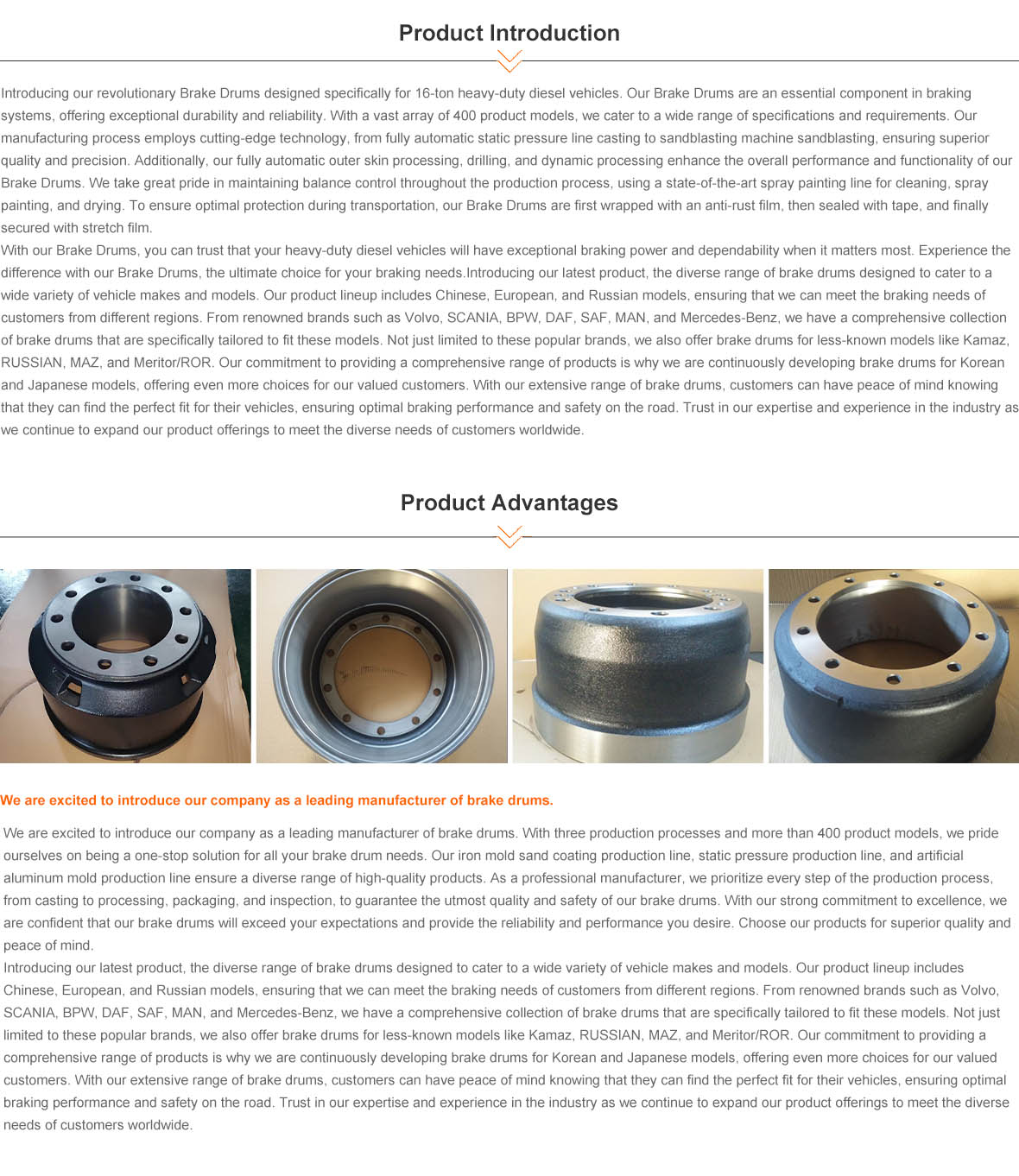
The core materials in drum brake layout are grey cast iron for the brake drum and brake shoes, and steel for the backing plates and various hardware. Grey cast iron (typically ASTM A48 Class 30) is favored for its high thermal conductivity, wear resistance, and damping characteristics, crucial for heat dissipation and noise reduction. Its composition (primarily iron, carbon in flake form, silicon, manganese, sulfur, and phosphorus) dictates its mechanical properties. Manufacturing the drum involves sand casting, where molten iron is poured into a mold; critical parameters include cooling rate, mold material, and metal composition to control microstructure (pearlite, ferrite, graphite flake distribution). Brake shoes utilize cast iron or woven composite materials, with the latter offering weight reduction but often at a higher cost. Backing plates are typically stamped from low-carbon steel (e.g., SAE 1010) and undergo surface treatments like zinc phosphate coating for corrosion resistance. Manufacturing precision is paramount. Dimensional accuracy of the drum’s inner surface (where the shoes contact) is controlled via machining operations after casting. The shoe lining bonding process (adhering friction material to the shoe core) requires precise adhesive application and curing parameters to ensure reliable adhesion under high temperatures and stresses. Welding is employed to assemble various components, demanding controlled heat input to avoid distortion and maintain material integrity.
Performance & Engineering
Drum brake performance is significantly influenced by layout parameters. The leading/trailing shoe configuration leverages the self-energizing effect, where the friction force amplifies braking torque. The angle of the shoe contact points relative to the drum’s rotation dictates the magnitude of this effect. Force analysis involves calculating the radial and tangential forces acting on the shoes, considering friction coefficients, drum rotation speed, and applied hydraulic pressure. Environmental resistance is crucial; components must withstand temperature variations, moisture, road salt, and debris. Corrosion protection, through coatings and material selection, is essential. Compliance requirements, such as FMVSS 105 in the US and ECE-R13 in Europe, mandate minimum braking performance levels, fade resistance, and durability standards. Engineering considerations extend to heat dissipation; drum design (fin geometry, material thickness) directly impacts thermal capacity and cooling rate. Finite element analysis (FEA) is routinely used to optimize drum and shoe designs for stress distribution and thermal management. The spring return mechanism's strength and material fatigue life are critical for consistent brake release and prevent dragging. The adjuster mechanism ensuring proper shoe-to-drum clearance must operate reliably over its entire range.
Technical Specifications
| Parameter | Typical Value (Passenger Vehicle) | Unit | Testing Standard |
|---|---|---|---|
| Drum Diameter | 203 | mm | ISO 2660 |
| Drum Width | 54 | mm | SAE J698 |
| Shoe Width | 38 | mm | FMVSS 105 |
| Friction Material Thickness | 4 | mm | ECE-R13 |
| Spring Rate (Return Spring) | 50-70 | N/mm | DIN EN 1364-1 |
| Maximum Braking Torque | 300-500 | Nm | ISO 2660 |
Failure Mode & Maintenance
Common failure modes in drum brakes include brake shoe wear, drum warping, adjuster mechanism failure, and cylinder leaks. Brake shoe wear results from abrasive wear against the drum surface, accelerated by contamination (grit, dust). Drum warping occurs due to uneven heat distribution and thermal stress, leading to brake judder and reduced braking efficiency. Failure of the automatic adjuster can lead to excessive clearance between the shoes and drum, reducing braking force. Leaks in the wheel cylinder can cause loss of hydraulic pressure and brake failure. Fatigue cracking in the drum, initiated by stress concentrations, is a less frequent but catastrophic failure mode. Maintenance involves regular inspection of shoe thickness, drum runout, adjuster operation, and cylinder seals. Resurfacing drums can restore performance, but has thickness limitations. Replacement of worn shoes, cylinders, and springs is essential for safe operation. Proper lubrication of pivot points and adjuster threads prevents corrosion and ensures smooth operation. Periodic brake fluid flushing is necessary to remove contaminants and maintain hydraulic pressure. Avoiding aggressive braking and ensuring proper wheel alignment minimizes wear and extends component life.
Industry FAQ
Q: What is the impact of drum material composition on fade resistance?
A: The carbon content and graphite flake distribution within the grey cast iron significantly influence fade resistance. Higher carbon content and a finely dispersed graphite structure improve thermal conductivity, allowing for faster heat dissipation and reduced temperature rise under braking. This delays the onset of brake fade, where friction coefficient decreases due to elevated temperatures.
Q: How does the shoe lining composition affect braking performance and noise?
A: Shoe lining composition (organic, semi-metallic, or ceramic) dictates the coefficient of friction, wear rate, and noise characteristics. Organic linings offer quieter operation but lower friction and faster wear. Semi-metallic linings provide higher friction and better heat dissipation but can be noisier. Ceramic linings offer a balance of performance and noise reduction.
Q: What are the key considerations for drum brake layout in heavy-duty applications?
A: Heavy-duty applications require larger drum diameters and widths to accommodate increased thermal loads and braking forces. Material selection shifts towards more robust cast iron alloys with higher thermal conductivity and wear resistance. Enhanced cooling mechanisms, such as fin designs and forced air cooling, are crucial. The adjuster mechanism must be more durable and capable of handling larger forces.
Q: How does drum runout impact braking performance and NVH?
A: Excessive drum runout causes uneven shoe contact, leading to reduced braking efficiency, brake judder, and increased noise. It's often a symptom of drum warping or bearing damage. Maintaining drum runout within specified tolerances (typically <0.05 mm) is critical for optimal performance and NVH characteristics.
Q: What role does the wheel cylinder play in overall braking system reliability?
A: The wheel cylinder is a critical hydraulic component. Leaks within the cylinder directly impact braking force and can lead to complete brake failure. Cylinder bore wear and piston corrosion can contribute to inconsistent braking and reduced efficiency. Regular inspection and maintenance of the wheel cylinder are paramount for maintaining system reliability.
Conclusion
Drum brake layout is a complex engineering discipline requiring a holistic understanding of material science, manufacturing processes, and performance engineering principles. Optimizing the layout to maximize braking torque, minimize fade, and ensure durability is paramount for vehicle safety and performance. The selection of appropriate materials, precise manufacturing control, and robust design considerations are essential for addressing the industry’s ongoing challenges related to weight reduction, heat dissipation, and NVH.
Future advancements in drum brake technology will likely focus on the integration of advanced materials, such as carbon ceramic composites, and the implementation of innovative cooling strategies. Furthermore, sophisticated control algorithms and sensors will play a greater role in optimizing braking performance and enhancing safety. Continuous improvement in manufacturing processes and quality control will be essential for maintaining the reliability and affordability of drum braking systems.