
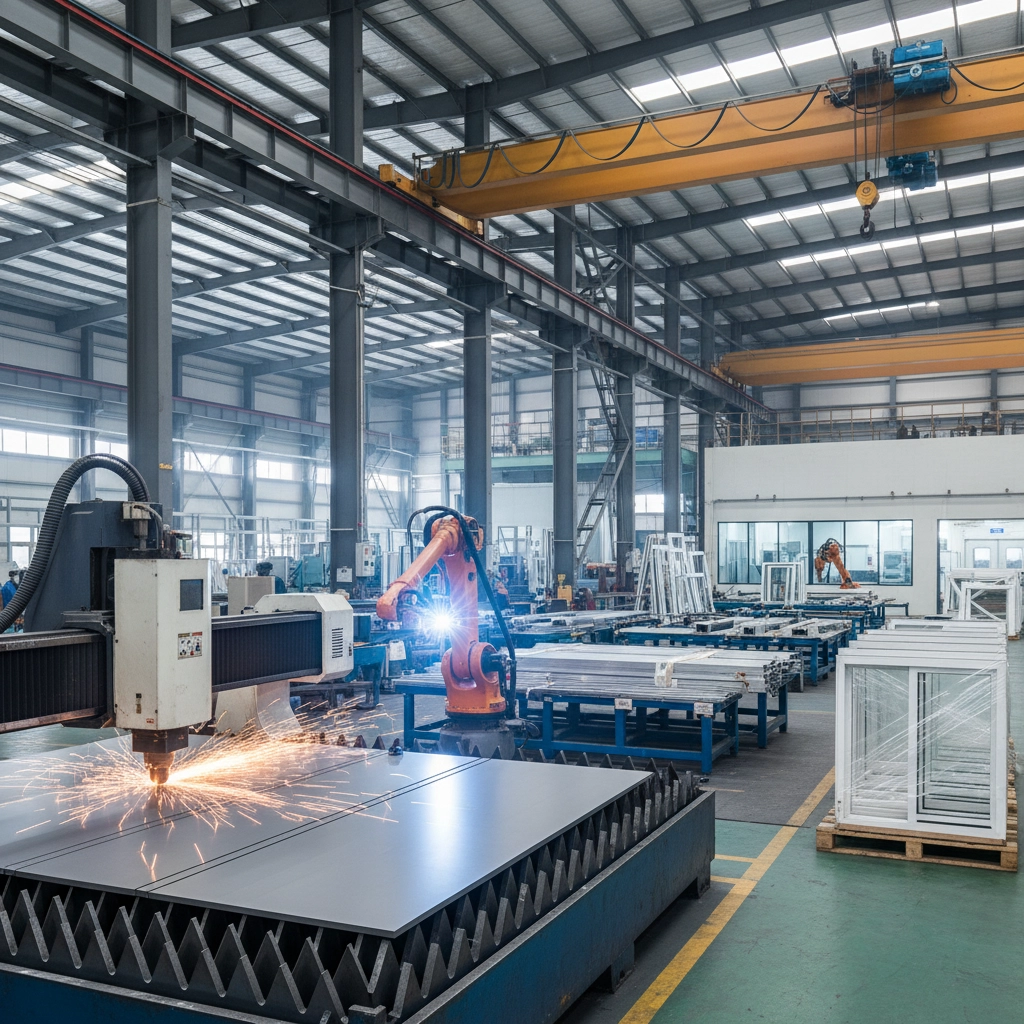
The global construction landscape is witnessing a significant shift toward high-performance materials, where China Aluminum Awning Window Factories play a pivotal role in redefining architectural ventilation and aesthetic versatility. By leveraging advanced extrusion technologies and lightweight alloys, these manufacturers provide solutions that balance structural integrity with energy efficiency, catering to the rigorous demands of modern urban developments.
Understanding the operational capacity of China Aluminum Awning Window Factories is essential for architects and developers who seek to optimize natural light and airflow without compromising security. The ability to produce precision-engineered frames that resist corrosion and weather extremes makes these factories the primary hub for wholesale sourcing in the global window and door market, particularly for commercial and residential projects.
From the integration of thermal break technology to the implementation of sustainable powder-coating processes, the output from these specialized facilities ensures that building envelopes are both durable and eco-friendly. As the industry moves toward smarter city infrastructure, the synergy between Chinese manufacturing scale and international quality standards continues to drive innovation in the awning window sector.
The Global Influence of China Aluminum Awning Window Factories
The dominance of China Aluminum Awning Window Factories in the international market is not merely a result of volume, but of a sophisticated integration of supply chain logistics and material science. By adhering to ISO standards and incorporating LEED-certified processes, these factories have transitioned from basic OEM providers to innovation leaders in the structural metal products sector.
This global influence is evident in the widespread adoption of Chinese aluminum profiles in high-rise residential complexes across Southeast Asia, the Middle East, and North America. The ability to rapidly iterate designs based on regional building codes allows these factories to provide bespoke solutions that meet specific wind-load and water-penetration requirements.
Defining the Technical Standards of Awning Window Production
When we discuss the operations of China Aluminum Awning Window Factories, we are referring to specialized manufacturing ecosystems that combine aluminum extrusion, CNC precision machining, and advanced glazing techniques. An awning window, characterized by hinges at the top and opening outward, requires precise geometry to ensure a weather-tight seal when closed and stable support when open.
Modern production lines in these factories utilize 6063-T5 aluminum alloy, renowned for its excellent corrosion resistance and surface finish capabilities. This technical foundation allows for the creation of slim sightlines that maximize glass area, a key trend in contemporary architecture that blends indoor and outdoor environments seamlessly.
Furthermore, the integration of multi-point locking systems and EPDM gaskets ensures that the products produced by these factories meet stringent airtightness and sound-insulation metrics. This technical rigor transforms a simple functional component into a high-performance architectural element capable of reducing HVAC energy consumption in large-scale buildings.
Core Components for Superior Durability and Performance
The resilience of products from China Aluminum Awning Window Factories stems from a focus on material purity and the quality of the thermal break. The thermal break, typically a polyamide strip, prevents the conduction of heat and cold between the interior and exterior aluminum profiles, which is critical for preventing condensation.
Another core component is the high-grade hardware—friction stays and operators—which must withstand thousands of cycles without failure. China Aluminum Awning Window Factories often source or manufacture stainless steel hardware that is salt-spray tested to ensure longevity in coastal environments where salinity can degrade inferior metals.
Finally, the glazing options provided by these factories, ranging from double-pane tempered glass to Low-E argon-filled units, significantly impact the overall R-value of the window. By optimizing the glass-to-frame ratio, these manufacturers ensure that awning windows provide maximum daylighting while minimizing UV penetration.
Cost-Efficiency and Scalability in Large-Scale Projects
One of the most significant advantages of partnering with China Aluminum Awning Window Factories is the economy of scale they offer. By automating the cutting and punching processes, these factories can reduce material waste and labor costs, passing these savings on to the developer without sacrificing the structural quality of the Casement Window or Sliding Window components.
Scalability is equally important for large-scale residential developments where consistency across thousands of units is non-negotiable. The use of standardized molds and digitized quality control systems ensures that every awning window produced is identical in dimension and performance, drastically reducing installation errors on-site.
Performance Metrics of China Aluminum Awning Window Factories Methods
Global Applications Across Diverse Climatic Zones
The versatility of products from China Aluminum Awning Window Factories allows them to be deployed in varied environmental conditions. In rainy tropical regions, the outward-opening design of the awning window is a strategic choice, as it allows for ventilation during rainfall without water leaking into the interior, providing a functional advantage over sliding windows.
In contrast, for projects in arid or extreme-cold regions, these factories implement specialized anodizing and thermal insulation layers. This ensures that the aluminum frames do not warp under intense UV exposure or create thermal bridges that lead to energy loss, making them ideal for sustainable housing projects in both desert and tundra climates.
Long-Term Value and Sustainability Benefits
Investing in solutions from China Aluminum Awning Window Factories offers substantial long-term value through reduced maintenance costs. Unlike wooden frames that rot or PVC frames that can become brittle over time, high-grade aluminum is naturally resistant to pests and decay, ensuring that the windows maintain their structural integrity for decades.
From a sustainability perspective, aluminum is one of the most recyclable materials on earth. Many leading factories now utilize recycled aluminum scrap in their extrusion process, significantly lowering the carbon footprint of the manufacturing cycle. This commitment to a circular economy aligns with global green building certifications.
Moreover, the precision of the seals and the efficiency of the glass units result in lower operational costs for the building owner. By minimizing air infiltration and maximizing thermal retention, these windows contribute to a healthier indoor environment and a lower overall energy bill.
Future Innovations in Aluminum Window Manufacturing
The future of China High Quality Aluminum Window Supplier entities and China Aluminum Awning Window Factories is being shaped by the integration of "Smart Glass" and automated opening systems. We are seeing a move toward electrochromic glass that can change opacity based on sunlight intensity, integrated directly into the aluminum awning frames—an area where these suppliers are leading the way—to further reduce cooling loads.
Additionally, the adoption of Industry 4.0 technologies—such as AI-driven quality inspection and robotic assembly—is minimizing human error and allowing for hyper-customization. This means architects can specify complex geometric shapes and unique finishes that were previously too costly to produce at scale.
As global policies shift toward Net-Zero emissions, these factories are also experimenting with bio-based coatings and advanced vacuum-insulated glazing (VIG). These innovations will ensure that aluminum awning windows remain the gold standard for efficiency and design in the decades to come.
Comparative Analysis of Manufacturing Standards in Theme Seven
Innovation Type | Technical Implementation | Impact on Efficiency | Market Adoption Rate |
Smart Glass Integration | Electrochromic Layers | Very High (Energy) | Emerging |
Vacuum Glazing (VIG) | Thin-film Vacuum Seal | Extreme (Thermal) | Moderate |
Robotic Assembly | AI-Driven CNC Arms | High (Production) | High |
Recycled Alloy Usage | Closed-loop Melting | High (Eco-impact) | Widespread |
Automated Operators | IoT Sensor Control | Moderate (Convenience) | Moderate |
Bio-based Coatings | Non-toxic Polymerized Paint | Moderate (Health) | Low |
FAQS
Why should I choose China Aluminum Awning Window Factories over local suppliers?
Choosing China Aluminum Awning Window Factories typically offers a superior balance of cost and advanced technology. Due to the massive scale of production and specialized expertise in aluminum extrusion, these factories can provide higher-spec materials—such as advanced thermal breaks and Low-E glass—at a fraction of the cost of local boutique manufacturers, while maintaining international certifications (ISO, CE).
How do I ensure the quality of windows sourced from overseas factories?
Are aluminum awning windows suitable for high-wind areas?
What is the average lifespan of an aluminum awning window?
Can these factories customize windows for specific architectural designs?
How does the thermal performance of aluminum compare to uPVC?
Conclusion
In summary, China Aluminum Awning Window Factories have evolved into global leaders by synthesizing massive production capacity with precision engineering and sustainable practices. From the core structural integrity of the aluminum alloys to the implementation of cutting-edge thermal breaks and smart glass, these facilities provide the architectural world with versatile, durable, and cost-effective ventilation solutions that meet the demands of any climate.
As the construction industry pivots toward greener, smarter, and more efficient building envelopes, partnering with an experienced manufacturer is no longer just about cost saving—it is about accessing the innovation required for future-proof architecture. We recommend developers and architects prioritize factories that combine ISO certification with a commitment to circular economy materials to ensure long-term project viability. Visit our website for more professional solutions: www.xiaoanwindow.com