
Introduction
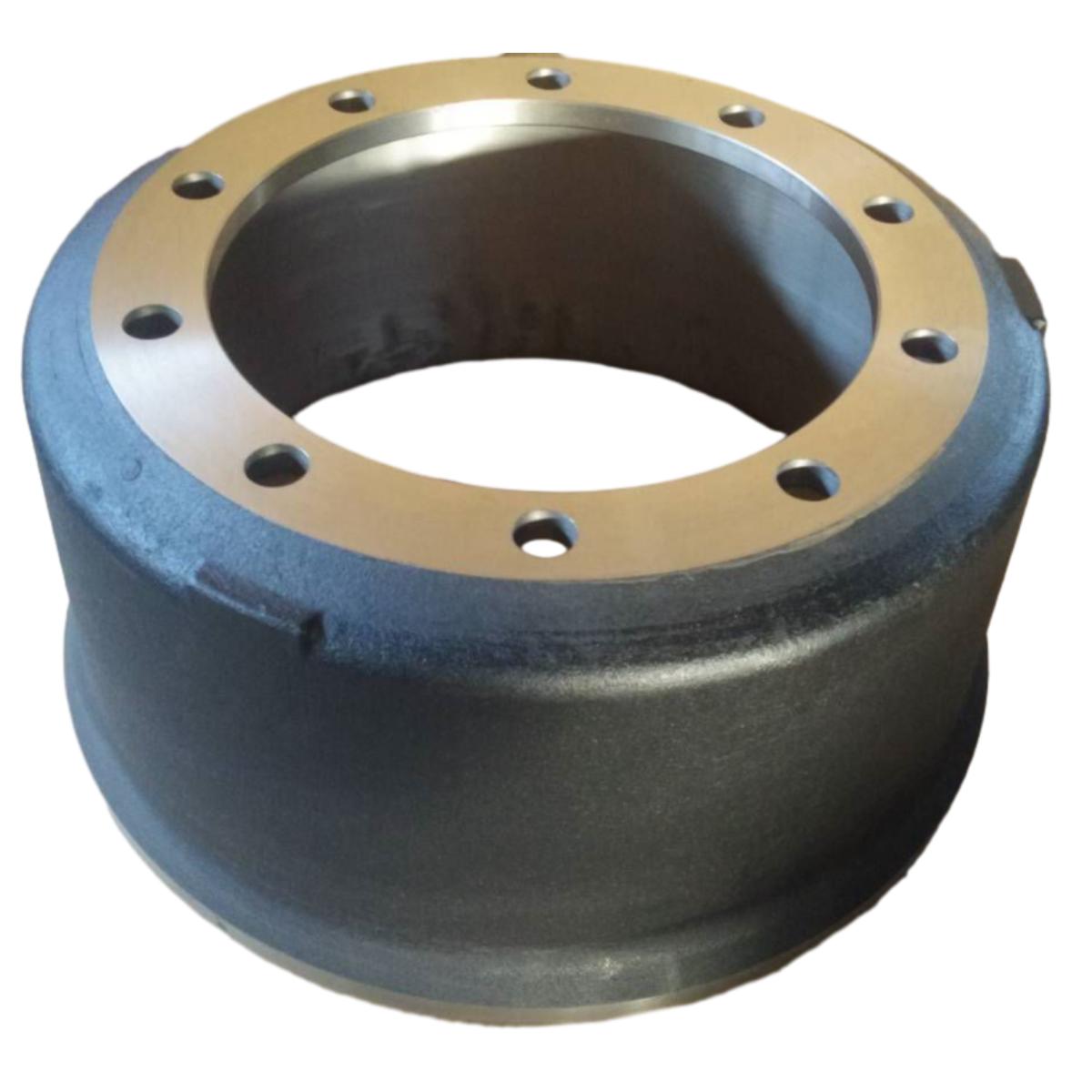
The percussion brake drum is a critical component within braking systems, primarily utilized in heavier-duty applications such as commercial vehicles, trailers, and industrial machinery. Positioned within the vehicle's wheel assembly, the brake drum interfaces directly with the brake shoes, facilitating deceleration and stopping through frictional force. Unlike disc brake systems relying on calipers and rotors, percussion brake drums utilize an internal shoe-to-drum interface. Core performance characteristics are defined by thermal capacity (ability to dissipate heat generated by friction), wear resistance, and structural integrity under substantial mechanical stress. A significant industry pain point revolves around managing drum temperature, preventing thermal fade, and ensuring consistent braking performance across varying load conditions. Modern drum brake designs increasingly incorporate materials and geometries aimed at mitigating these challenges and improving overall efficiency.
Material Science & Manufacturing
Percussion brake drums are traditionally manufactured from gray cast iron, owing to its favorable combination of thermal conductivity, wear resistance, and cost-effectiveness. The typical composition consists of iron, carbon (2.5-4.0%), silicon (1.8-3.2%), manganese (0.6-1.2%), sulfur (0.08-0.20%), and phosphorus (0.05-0.15%). The graphite flake structure within gray cast iron contributes to its damping characteristics, reducing noise during braking. However, the limitations of cast iron – particularly its lower tensile strength and susceptibility to thermal shock – have led to increasing adoption of alternative materials like ductile iron. Ductile iron (nodular cast iron) boasts significantly enhanced tensile strength and ductility due to the spheroidal shape of graphite inclusions. Manufacturing processes typically involve sand casting, followed by machining operations to achieve precise dimensions and surface finishes. Key parameter control includes mold temperature, pouring rate, and cooling rate during casting. Subsequent machining involves turning, milling, and grinding to ensure proper drum concentricity and surface smoothness, critical for effective braking. Heat treatment processes like annealing may also be employed to relieve residual stresses and improve machinability. Surface treatments like pearlitization and induction hardening are applied to enhance wear resistance. Increasingly, powder metallurgy is being investigated for producing complex drum geometries and controlling material microstructure with greater precision.
Performance & Engineering
Brake drum performance is intimately linked to its ability to dissipate heat generated during braking events. Force analysis involves considering centrifugal forces induced by drum rotation, frictional forces between the shoes and drum, and thermal stresses arising from temperature gradients. Finite Element Analysis (FEA) is routinely employed to model these stresses and optimize drum geometry for maximizing structural integrity. Environmental resistance is a paramount concern, with drums exposed to corrosive elements like road salt, moisture, and brake fluid. Coatings such as zinc phosphate or electrodeposition are utilized to mitigate corrosion. Compliance requirements are dictated by national and international standards, including FMVSS 105 in the United States and ECE R90 in Europe, specifying performance criteria for braking systems. The drum’s internal surface profile is engineered to optimize friction coefficient and minimize brake shoe wear. Ribs and fins are incorporated into the drum’s design to enhance heat transfer. Brake drums also need to consider the coefficient of thermal expansion - differing expansion rates between the drum and shoes can result in performance degradation. Drum geometry also influences self-energizing effects. A properly designed drum uses the rotation itself to increase braking force, improving effectiveness without proportional increase in pedal effort.
Technical Specifications
| Diameter (in) | Width (in) | Material | Maximum Operating Temperature (°F) |
|---|---|---|---|
| 12 | 3.5 | Gray Cast Iron (Grade 30) | 800 |
| 14 | 3.0 | Ductile Iron (Grade 65-45-12) | 900 |
| 16 | 5.0 | Gray Cast Iron (Grade 40) | 750 |
| 18 | 4.0 | Ductile Iron (Grade 70-50-05) | 950 |
| 20 | 6.0 | Gray Cast Iron (Grade 50) | 850 |
| 22 | 5.5 | Ductile Iron (Grade 60-42-10) | 1000 |
Failure Mode & Maintenance
Common failure modes in percussion brake drums include thermal cracking, scuffing, warping, and corrosion. Thermal cracking arises from rapid temperature fluctuations, inducing tensile stresses that exceed the material’s strength. Scuffing, characterized by abrasive wear, results from insufficient lubrication or contaminated brake fluids. Warping, or out-of-roundness, develops from uneven heat distribution or mechanical stress, leading to brake pulsation and reduced braking efficiency. Corrosion, initiated by exposure to corrosive environments, weakens the drum material and accelerates wear. Failure analysis often reveals a combination of these factors. Maintenance procedures include periodic visual inspection for cracks, scoring, and corrosion; measurement of drum runout to detect warping; and ensuring proper brake shoe adjustment and lubrication. Resurfacing drums (turning) can remove minor scoring and restore surface smoothness, but should be performed within specified limits to maintain adequate drum thickness. Regular cleaning and inspection of brake components contribute significantly to extending drum lifespan. Ignoring early signs of wear, such as squealing noises or reduced braking performance, can lead to catastrophic failure and compromise vehicle safety. Proper storage of spare drums in a dry, protected environment is critical for preventing corrosion during extended periods of non-use.
Industry FAQ
Q: What is the primary difference between gray cast iron and ductile iron brake drums, and when would you specify one over the other?
A: Gray cast iron offers cost-effectiveness and good damping characteristics, making it suitable for lighter-duty applications where high tensile strength isn't paramount. Ductile iron, however, boasts significantly higher tensile strength, ductility, and shock resistance, making it the preferred choice for heavier-duty applications, commercial vehicles, and situations demanding increased safety margins and durability. The added cost of ductile iron is justified by its enhanced performance and extended service life in demanding conditions.
Q: How does drum geometry impact braking performance and heat dissipation?
A: Drum geometry directly influences braking performance through factors like self-energizing effects, friction surface area, and heat transfer efficiency. Ribs and fins increase surface area, enhancing heat dissipation. The internal profile of the drum dictates friction coefficient and wear rates. Optimized geometry maximizes braking force while minimizing heat buildup, preventing thermal fade.
Q: What are the key indicators that a brake drum needs to be replaced rather than resurfaced?
A: If the drum falls below the manufacturer's minimum thickness specification after resurfacing, it must be replaced. Significant cracking, severe scoring that cannot be removed through resurfacing, or evidence of excessive warping are also grounds for replacement. Continuing to use a drum outside these parameters compromises safety.
Q: What role do coatings play in extending the life of a brake drum?
A: Coatings, such as zinc phosphate or electrodeposition, primarily protect against corrosion. Corrosion weakens the drum material and accelerates wear. Coatings create a barrier between the drum surface and corrosive elements, extending its service life and maintaining braking performance.
Q: How do I assess whether a brake drum is experiencing thermal fade during operation?
A: Thermal fade manifests as a noticeable reduction in braking performance, often accompanied by a spongy or soft brake pedal feel. Repeated heavy braking can cause the drum to overheat, reducing the friction coefficient and diminishing stopping power. Visual inspection might reveal discoloration or a reddish glow on the drum surface in severe cases. Regular monitoring of brake temperature during demanding operation is essential.
Conclusion
The percussion brake drum, while a mature technology, remains a vital component in numerous braking systems, particularly those requiring robust performance and cost-effectiveness. Material science advancements, specifically the increasing utilization of ductile iron, coupled with sophisticated manufacturing techniques and engineered geometries, continue to enhance drum performance, durability, and safety. Understanding the principles of heat transfer, stress analysis, and material properties is paramount to optimizing drum design and mitigating potential failure modes.
Future developments are likely to focus on exploring novel materials, such as ceramic matrix composites, and incorporating advanced cooling technologies to further improve thermal management. Predictive maintenance strategies, leveraging sensor data and machine learning algorithms, will also play an increasingly important role in proactively identifying and addressing potential issues, minimizing downtime and enhancing overall system reliability.