
Introduction
Lincoln drum brakes represent a foundational braking technology, historically prevalent in automotive and heavy-duty vehicle applications. Positioned within the vehicle's braking system as a mechanical friction brake, they convert rotational kinetic energy into thermal energy through the application of friction. While disc brakes have largely superseded drum brakes in front axle applications in passenger vehicles due to superior heat dissipation, Lincoln drum brakes maintain a significant presence in rear axle configurations and in applications prioritizing cost-effectiveness and mechanical advantage, such as parking brakes and certain commercial vehicle sectors. Their core performance characteristics revolve around stopping power, durability, and relative simplicity of maintenance, though they are subject to performance limitations related to heat build-up and fade compared to disc brake systems. Understanding their material composition, manufacturing processes, and failure modes is crucial for ensuring safe and reliable vehicle operation.
Material Science & Manufacturing
The core materials in a Lincoln drum brake system include cast iron for the drum itself, and a combination of steel, cast iron, and friction materials for the brake shoes. Cast iron, typically gray cast iron with a graphite flake structure, is chosen for its high thermal conductivity, good wear resistance, and relative affordability. The graphite flakes contribute to self-lubricating properties, minimizing scoring and wear. Brake shoes are commonly constructed from steel backing plates, providing structural integrity, and lined with friction materials. These friction materials vary in composition, commonly utilizing woven or molded organic compounds, semi-metallic formulations (containing steel wool, iron powder, and graphite), or ceramic-based mixtures. Organic materials offer quieter operation but have lower heat resistance. Semi-metallic formulations provide higher friction coefficients and better heat dissipation but can be more abrasive to the drum. Ceramic formulations provide a balance of performance and longevity.
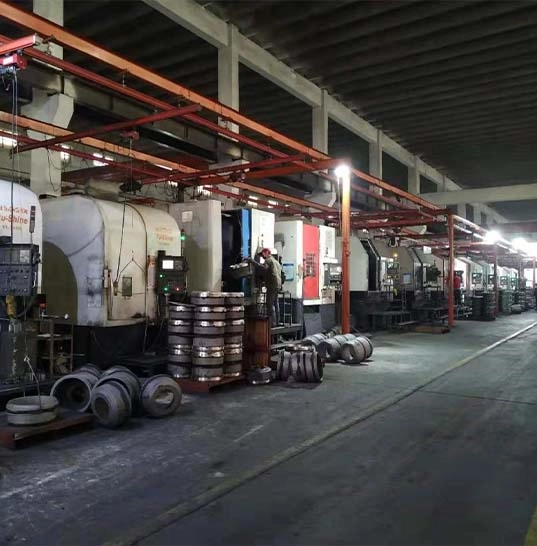
Manufacturing the drum involves sand casting, where molten cast iron is poured into a mold created with a sand matrix. Key parameters controlled during casting include cooling rate, mold composition (sand type, binder), and metal temperature to minimize defects like porosity and shrinkage. Brake shoe manufacturing involves stamping the steel backing plate from sheet metal and then bonding the friction material using a high-temperature adhesive and curing process. The precision of the stamping and bonding processes is critical to ensure uniform friction distribution and prevent delamination. The drum’s internal surface is often machined to precise tolerances for optimal contact with the brake shoes. Heat treatment processes, such as annealing, may be employed to relieve stresses induced during casting and machining. Quality control measures throughout the process involve dimensional inspections, material composition analysis, and destructive testing to verify mechanical properties.

Performance & Engineering
The performance of Lincoln drum brakes is governed by the principles of friction and heat transfer. The braking force is generated by the normal force between the brake shoes and the drum, multiplied by the coefficient of friction. Force analysis considers the lever arm created by the wheel cylinder, which actuates the brake shoes outward. A longer lever arm provides a mechanical advantage, requiring less force from the hydraulic system to achieve a given braking force. However, this also increases the distance the shoes travel, potentially slowing response time. Environmental resistance is a critical factor. Moisture ingress can lead to corrosion of the drum and shoe surfaces, reducing friction and potentially causing sticking. Dust and debris accumulation can also affect friction performance and contribute to uneven wear.
Compliance requirements are dictated by national and international safety standards, such as FMVSS 105 in the United States and ECE R13 in Europe. These standards specify minimum braking performance criteria, including stopping distance, deceleration rates, and fade resistance. Fade resistance, the ability to maintain braking performance under repeated heavy braking, is a key engineering challenge. Heat build-up within the drum can lead to a reduction in the coefficient of friction and even vaporization of the brake fluid, resulting in brake fade. Engineering solutions to mitigate fade include drum venting, friction material selection, and the incorporation of cooling fins. The system’s hydraulic pressure must also be carefully calibrated to ensure optimal braking force without exceeding the structural limits of the components.
Technical Specifications
| Drum Diameter (in) | Drum Width (in) | Friction Material Type | Coefficient of Friction (μ) |
|---|---|---|---|
| 8 | 1.75 | Organic | 0.25 - 0.35 |
| 10 | 2.0 | Semi-Metallic | 0.35 - 0.45 |
| 11 | 2.25 | Ceramic | 0.30 - 0.40 |
| 12 | 2.5 | Organic | 0.20 - 0.30 |
| 11.75 | 2.25 | Semi-Metallic | 0.40 - 0.50 |
| 10.5 | 2.0 | Ceramic | 0.35 - 0.45 |
Failure Mode & Maintenance
Common failure modes in Lincoln drum brakes include brake shoe wear, drum scoring, wheel cylinder leaks, and spring failures. Brake shoe wear occurs due to the abrasive action of the friction material against the drum. Uneven wear can be caused by contamination, improper adjustment, or sticking pistons within the wheel cylinder. Drum scoring results from abrasive particles embedded in the friction material or from corrosion. Wheel cylinder leaks can lead to a loss of braking force and require immediate attention. Spring failures, particularly of the return springs, can prevent the brake shoes from fully retracting, causing dragging and overheating. Fatigue cracking can also occur in the drum itself, especially under severe thermal cycling.
Preventative maintenance is crucial for extending the life of drum brakes. Regular inspections should include checking brake shoe thickness, drum surface condition, wheel cylinder for leaks, and spring integrity. Adjustments should be performed to maintain proper brake clearance, ensuring optimal responsiveness. Drums should be resurfaced or replaced if scoring exceeds allowable limits. Wheel cylinders should be rebuilt or replaced if leaks are detected. Periodic cleaning to remove dust and debris is also recommended. When replacing brake shoes, it is essential to match the friction material type to the drum material to ensure compatibility and prevent premature wear. Proper lubrication of pivot points and contact surfaces can also minimize friction and prevent sticking.
Industry FAQ
Q: What is the primary cause of brake fade in Lincoln drum brakes?
A: The primary cause of brake fade is excessive heat build-up within the drum. This heat reduces the coefficient of friction between the shoes and the drum, and in severe cases, can vaporize the brake fluid, leading to a loss of braking force. Factors contributing to heat build-up include repeated heavy braking, prolonged downhill braking, and inadequate drum ventilation.
Q: How does friction material composition affect brake performance?
A: Friction material composition significantly impacts performance characteristics. Organic materials offer quiet operation but have lower heat resistance. Semi-metallic materials provide better heat dissipation and higher friction coefficients but can be more abrasive. Ceramic materials offer a balance of both, providing good performance and longevity. Choosing the correct material for the application is crucial.
Q: What are the common signs of a failing wheel cylinder?
A: Common signs of a failing wheel cylinder include brake fluid leaks around the cylinder, spongy brake pedal feel, uneven braking performance, and a tendency for the brakes to drag. A leaking wheel cylinder compromises the hydraulic pressure within the system and necessitates immediate repair or replacement.
Q: How often should drum brakes be inspected and adjusted?
A: Drum brakes should be inspected at least every 6,000 miles or six months, whichever comes first. Adjustments should be performed whenever brake shoe thickness reaches the minimum specified limit or if the brake pedal travel is excessive. Regular preventative maintenance is critical for ensuring optimal braking performance and preventing premature wear.
Q: What is the purpose of drum venting and how does it improve performance?
A: Drum venting refers to the incorporation of fins or other design features into the drum to increase surface area and promote heat dissipation. Improved heat dissipation reduces the risk of brake fade and prolongs the life of the brake components. Venting is especially important in applications involving frequent or heavy braking.
Conclusion
Lincoln drum brakes, while evolving in application, remain a viable and cost-effective braking solution in specific contexts. Their performance hinges on a complex interplay of material science, manufacturing precision, and proper maintenance. Understanding the nuances of friction, heat transfer, and potential failure modes is paramount for engineers and maintenance professionals seeking to optimize system longevity and ensure vehicle safety.
Looking ahead, continued advancements in friction material technology and drum design may further enhance the performance and reliability of drum brake systems. However, their dominance in primary braking applications will likely continue to be challenged by disc brake technology, particularly as demands for increased stopping power and fade resistance become more stringent. The enduring value of drum brakes lies in their simplicity, affordability, and suitability for applications where these factors outweigh the performance benefits of more complex systems.