

Introduction
Brake drums are foundational components in braking systems, primarily utilized in mechanical brake configurations, although still prevalent in some heavy-duty and parking brake applications. Positioned within the industry chain as a critical interface between the braking actuator and the vehicle chassis, the brake drum's performance directly influences stopping power, stability, and safety. Functionally, brake drums provide a surface against which brake shoes, actuated by hydraulic or mechanical means, generate friction to decelerate or halt vehicle motion. Core performance characteristics include thermal capacity (ability to dissipate heat generated during braking), wear resistance (longevity and consistency of the braking surface), and structural integrity (resistance to deformation or fracture under stress). The selection and specification of brake drums necessitate a thorough understanding of vehicle weight, operating conditions, and regulatory requirements. A key industry pain point revolves around balancing cost-effectiveness with achieving optimal thermal performance and minimizing noise, vibration, and harshness (NVH).
Material Science & Manufacturing
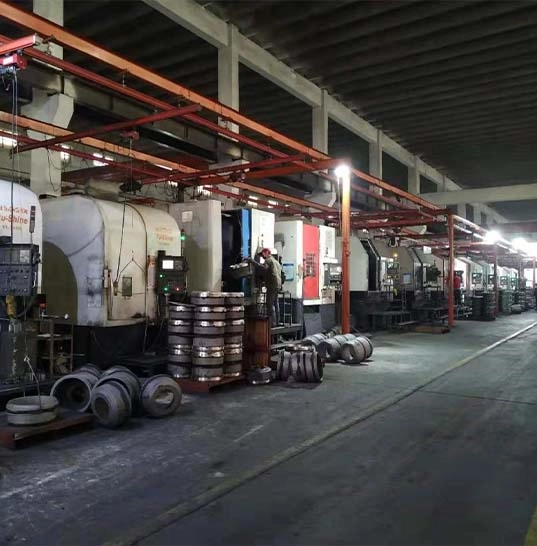
Brake drums are predominantly manufactured from grey cast iron due to its excellent thermal conductivity, wear resistance, and cost-effectiveness. The chemical composition typically includes 2.5-4.0% carbon, 1.2-2.5% silicon, 0.3-1.0% manganese, and a controlled amount of sulfur and phosphorus. The graphite flake structure within grey cast iron provides lubrication and contributes to its damping properties, reducing noise. Alternative materials, such as ductile cast iron and composite materials (carbon fiber reinforced polymers), are increasingly used in high-performance applications demanding lower weight and superior thermal performance. The manufacturing process commonly involves sand casting, where molten iron is poured into a mold cavity. Precise control of pouring temperature, cooling rate, and mold material is crucial to achieving the desired microstructure and dimensional accuracy. Machining operations, including turning, milling, and grinding, are employed to create the final braking surface and ensure proper fitment. Heat treatment processes, such as annealing or stress relieving, may be applied to optimize material properties and minimize residual stresses. Quality control procedures involve non-destructive testing (NDT) methods like ultrasonic testing and magnetic particle inspection to detect internal flaws and surface defects.
Performance & Engineering
The performance of a brake drum is critically dependent on its ability to dissipate the kinetic energy converted into heat during braking. Thermal analysis, utilizing finite element methods (FEM), is employed to predict temperature distribution within the drum under various braking conditions. Factors considered include drum geometry, material properties, cooling airflow, and braking frequency. Engineering design focuses on maximizing surface area and optimizing fin geometry to enhance heat transfer. Structural analysis is performed to assess the drum’s resistance to centrifugal forces and thermal stresses. Force analysis considers the radial and axial forces exerted by the brake shoes during braking, ensuring the drum can withstand these loads without deformation or failure. Compliance requirements vary by region and application, encompassing standards related to braking performance, material composition, and dimensional tolerances. Environmental resistance is a significant concern, particularly in corrosive environments. Coatings, such as zinc phosphate or powder coating, are applied to protect against corrosion and extend service life. The drum’s dynamic behavior, including its natural frequencies and mode shapes, is analyzed to mitigate the risk of resonance and noise generation. Understanding the coefficient of friction between the brake shoes and the drum surface is vital for calculating braking torque and stopping distance.
Technical Specifications
| Diameter (in) | Width (in) | Material | Maximum Operating Temperature (°F) |
|---|---|---|---|
| 10 | 2 | Grey Cast Iron (G3000) | 932 |
| 11 | 2.25 | Grey Cast Iron (G3500) | 1022 |
| 12 | 2.5 | Ductile Cast Iron (65-45-12) | 1112 |
| 13 | 3 | Grey Cast Iron (G4000) | 1202 |
| 14 | 2.75 | Composite (Carbon Fiber Reinforced Polymer) | 662 |
| 16 | 3.5 | Grey Cast Iron (G3500) | 1022 |
Failure Mode & Maintenance
Brake drum failure manifests in several modes. Thermal cracking, induced by repeated heating and cooling cycles, is a common issue, particularly in heavy-duty applications. Fatigue cracking can occur due to cyclic stress induced by braking forces. Wear, resulting from friction between the brake shoes and the drum surface, gradually reduces drum thickness and compromises braking performance. Spalling, the chipping or flaking of the drum surface, can occur due to localized stress concentrations. Corrosion, especially in environments with high humidity or salt exposure, weakens the drum material. Delamination, prevalent in composite drums, involves the separation of layers within the material. Maintenance involves regular inspection for cracks, wear, and corrosion. Brake drum thickness should be measured periodically and compared to the manufacturer’s minimum allowable thickness. Resurfacing or turning of the drum can restore the braking surface and remove minor imperfections. However, excessive resurfacing reduces drum thickness and may compromise structural integrity. Proper lubrication of brake shoe contact points is crucial to minimize wear and noise. In cases of severe cracking or corrosion, drum replacement is necessary. Avoid aggressive braking maneuvers that generate excessive heat, as this accelerates wear and increases the risk of thermal cracking.
Industry FAQ
Q: What is the primary advantage of using ductile cast iron over grey cast iron for brake drums?
A: Ductile cast iron offers significantly higher tensile strength, ductility, and impact resistance compared to grey cast iron. This makes it suitable for applications demanding higher loads and greater resistance to shock, leading to increased durability and safety. While grey cast iron excels in thermal conductivity, the improved mechanical properties of ductile iron are often prioritized in demanding applications.
Q: How does drum geometry influence braking performance and heat dissipation?
A: Drum geometry directly affects both braking performance and heat dissipation. A larger diameter drum generally provides a greater braking torque. Fin designs, strategically incorporated into the drum structure, increase surface area, enhancing heat transfer to the surrounding air. The shape and placement of these fins are optimized through thermal analysis to maximize cooling efficiency.
Q: What are the key considerations when selecting a surface coating for a brake drum?
A: The primary consideration is corrosion resistance. Coatings should withstand exposure to moisture, salt, and other corrosive agents. The coating must also be compatible with the brake shoe friction material and not adversely affect braking performance. Furthermore, the coating should maintain its integrity at elevated temperatures. Zinc phosphate and powder coating are commonly used for this purpose.
Q: How does the coefficient of friction between the brake shoe and drum affect stopping distance?
A: A higher coefficient of friction translates directly to a greater braking force for a given clamping pressure. This results in shorter stopping distances. However, excessively high friction can lead to increased wear and noise. Balancing friction and durability is a critical aspect of brake system design.
Q: What non-destructive testing (NDT) methods are commonly used to inspect brake drums for defects?
A: Ultrasonic testing (UT) is employed to detect internal flaws, such as cracks and voids, within the drum material. Magnetic particle inspection (MPI) is effective for identifying surface cracks and discontinuities. Radiographic testing (RT) can also be used, but is less common due to cost and safety considerations. Visual inspection, coupled with dye penetrant testing, is used to identify surface defects.
Conclusion
Brake drums remain a vital component in many braking systems, despite the increasing prevalence of disc brakes. The selection of appropriate materials, meticulous manufacturing processes, and a thorough understanding of performance engineering principles are paramount to ensuring reliable and safe operation. The ongoing challenge lies in balancing cost, weight, thermal performance, and durability while meeting increasingly stringent regulatory requirements.
Future developments will likely focus on the wider adoption of composite materials to reduce weight and enhance thermal dissipation, coupled with advanced surface treatments to improve wear resistance and corrosion protection. Continued refinement of finite element analysis techniques will enable more accurate prediction of thermal stresses and optimization of drum geometry for enhanced performance and longevity.