

Introduction
The 4707 brake drum is a critical component in braking systems for medium to heavy-duty vehicles, particularly prevalent in commercial transport and industrial applications. Positioned within the vehicle’s wheel assembly, its primary function is to house the brake shoes and provide a frictional surface against which they are pressed to decelerate or halt vehicle motion. The 4707 designation often refers to a specific dimension or manufacturing standard, influencing interchangeability and application suitability. Core performance characteristics include thermal capacity (the ability to absorb heat generated during braking), wear resistance, and structural integrity under substantial dynamic and static loads. The industry currently faces challenges in optimizing brake drum design to balance weight reduction with increasing braking demands driven by stricter safety regulations and the rise of heavier vehicles, particularly electric vehicles requiring regenerative braking compatibility. Corrosion and fatigue are significant concerns, prompting ongoing materials research and advanced coating technologies.
Material Science & Manufacturing
4707 brake drums are predominantly manufactured from grey cast iron, due to its superior damping characteristics, wear resistance, and cost-effectiveness. The chemical composition typically consists of iron (Fe) as the base, with silicon (Si) ranging from 2.2% to 2.8%, carbon (C) between 2.5% and 3.5%, manganese (Mn) from 0.7% to 1.2%, sulfur (S) below 0.08%, and phosphorus (P) below 0.4%. The specific alloy composition is meticulously controlled to optimize the microstructure for desired mechanical properties. Manufacturing commences with pattern making, followed by sand casting. Crucially, the cooling rate during solidification impacts the graphite flake size and distribution within the cast iron matrix. Faster cooling yields smaller, more dispersed flakes, enhancing strength but potentially reducing damping. Machining operations – turning, milling, and drilling – follow casting, ensuring precise dimensional accuracy and surface finish. Critical parameters during machining include cutting speed, feed rate, and coolant application to prevent thermal distortion and maintain dimensional tolerances. Heat treatment, such as annealing, is often employed to relieve residual stresses induced during casting and machining, enhancing the drum’s overall durability. Surface treatments like phosphate coating or specialized anti-corrosion paints are frequently applied to improve resistance to environmental factors.
Performance & Engineering
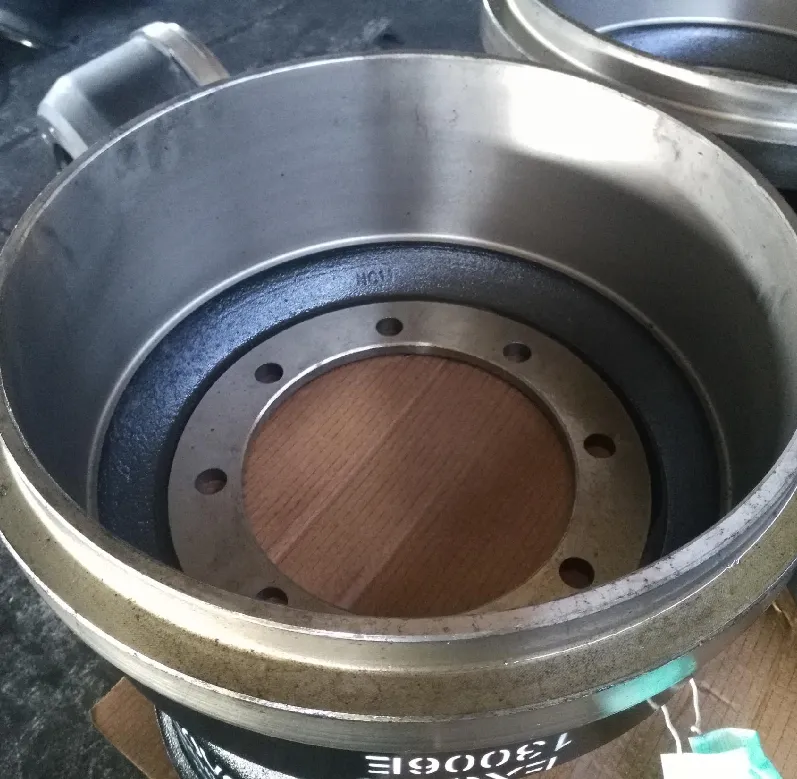
The performance of a 4707 brake drum is governed by several key engineering principles. Firstly, thermal management is paramount. During braking, kinetic energy is converted into heat through friction. The drum must dissipate this heat efficiently to prevent thermal fade – a reduction in braking performance due to overheating. Finite Element Analysis (FEA) is extensively used to model heat transfer within the drum, optimizing fin geometry and material selection to maximize thermal conductivity. Secondly, structural integrity under load is critical. Brake drums experience significant radial and axial forces during braking. Stress concentrations typically occur at key points, such as the bolt holes and the flange. Detailed force analysis, utilizing FEA and analytical calculations, ensures that the drum can withstand these loads without exceeding its yield strength or fatigue limit. Compliance requirements are dictated by industry standards like SAE J10 and FMVSS 105 in the United States, and ECE R90 in Europe, which define minimum performance criteria for braking systems, including drum dimensional accuracy, material properties, and braking effectiveness. Finally, runout – the radial deviation of the drum during rotation – must be minimized to prevent brake judder and ensure smooth braking operation. Dynamic balancing is typically performed to reduce vibration at high speeds.
Technical Specifications
| Parameter | Unit | Typical Value (4707 Specification) | Testing Standard |
|---|---|---|---|
| Outer Diameter | mm | 406.4 | SAE J10 |
| Inner Diameter | mm | 203.2 | SAE J10 |
| Width | mm | 76.2 | SAE J10 |
| Material | - | Grey Cast Iron (ASTM A48 Class 30) | ASTM A48 |
| Tensile Strength | MPa | 200-280 | ASTM A48 |
| Hardness (Brinell) | HB | 180-240 | ASTM A25 |
Failure Mode & Maintenance
4707 brake drums are susceptible to several failure modes. Thermal cracking, induced by repeated heating and cooling cycles, is a common issue, particularly in heavily loaded applications. Fatigue cracking can initiate at stress concentration points, such as bolt holes, and propagate under cyclic loading. Corrosion, particularly from road salts and environmental moisture, can lead to material degradation and reduced structural integrity. Delamination – separation of the surface layer – can occur due to improper heat treatment or material defects. Wear, resulting from friction between the drum and brake shoes, leads to dimensional changes and reduced braking effectiveness. Maintenance is crucial to prolong drum life. Regular inspections should identify cracks, corrosion, and excessive wear. Brake shoe adjustments are essential to maintain proper contact and prevent uneven wear. Surface cleaning and application of anti-corrosion coatings can mitigate corrosion. Resurfacing of the drum – machining to remove worn material – can restore dimensional accuracy, but must be performed carefully to avoid weakening the structure. If cracks exceeding a specified length are detected, the drum should be replaced immediately. Proper lubrication of the brake assembly components is also critical for smooth operation and reduced wear.
Industry FAQ
Q: What is the impact of varying silicon content in the cast iron composition on the 4707 brake drum’s performance?
A: Silicon content significantly affects the cast iron’s properties. Higher silicon levels (within the specified range) promote graphite formation, enhancing machinability and damping capacity but potentially reducing tensile strength. Lower silicon levels can increase strength but make the material more brittle and difficult to machine. Precise control is essential to balance these competing characteristics.
Q: How do different surface coatings affect the corrosion resistance of the brake drum?
A: Phosphate coatings provide a moderate level of corrosion protection by creating a conversion layer on the metal surface. Specialized anti-corrosion paints, such as epoxy-based coatings, offer superior protection, particularly in harsh environments. Zinc-rich primers are also effective in providing sacrificial corrosion protection. The choice of coating depends on the operating environment and cost considerations.
Q: What are the limitations of using FEA for predicting brake drum thermal performance?
A: FEA accuracy depends heavily on the accuracy of input parameters, such as material properties (thermal conductivity, specific heat capacity), boundary conditions (convection heat transfer coefficient), and braking load profile. Simplified models may not accurately capture complex heat transfer phenomena, such as radiation. Furthermore, accurately modeling the contact resistance between the brake shoes and drum is challenging.
Q: What are the key considerations when resurfacing a 4707 brake drum?
A: Minimum drum thickness must be maintained to ensure sufficient material for heat dissipation and structural integrity. Excessive machining can reduce the drum’s ability to absorb heat and increase the risk of cracking. The resurfacing process must be performed by a skilled technician using appropriate machining parameters to avoid introducing residual stresses or warping the drum.
Q: How does regenerative braking in electric vehicles impact the lifespan of 4707 brake drums?
A: Regenerative braking reduces the reliance on friction brakes, potentially extending the lifespan of the brake drums. However, the increased weight of electric vehicles and the potential for more frequent, albeit less intense, braking events can still contribute to wear and thermal stress. The interaction between regenerative braking and friction braking must be carefully controlled to optimize brake system performance and longevity.
Conclusion
The 4707 brake drum remains a foundational element in braking systems for heavy-duty vehicles. Its performance is intricately linked to material science, manufacturing precision, and sound engineering principles. Maintaining optimal thermal management, ensuring structural integrity, and adhering to rigorous industry standards are paramount for safe and reliable operation. Continuous advancements in materials, coatings, and manufacturing processes are focused on reducing weight, enhancing durability, and improving braking performance to meet the evolving demands of the transportation industry.
Future developments will likely involve the integration of advanced sensor technologies for real-time monitoring of drum temperature and wear, enabling predictive maintenance and improved braking system control. Exploring alternative materials, such as ceramic composites, could offer further weight reduction and enhanced thermal resistance. Furthermore, optimizing the drum’s design for compatibility with increasingly sophisticated braking systems, including advanced ABS and stability control systems, will be crucial for maintaining its relevance in the automotive landscape.