
Introduction
Brake drums are critical components of braking systems in vehicles and industrial machinery, responsible for housing the brake shoes and providing a surface against which they apply friction to decelerate or stop rotational motion. Their technical position within the supply chain extends from raw material sourcing (cast iron, ductile iron, or composite materials) through precision casting or forging, machining, heat treatment, and finally, quality inspection. Core performance characteristics include thermal capacity, wear resistance, dimensional stability under thermal stress, and mechanical strength. The industry faces ongoing challenges relating to weight reduction, improved heat dissipation to prevent brake fade, and the increasing demand for materials that minimize noise, vibration, and harshness (NVH). This guide provides an in-depth analysis of brake drum technology, encompassing materials, manufacturing processes, performance parameters, failure modes, and relevant industry standards.
Material Science & Manufacturing
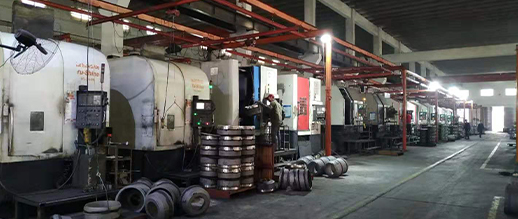
Brake drums are predominantly manufactured from grey cast iron, ductile iron (nodular cast iron), or, increasingly, composite materials. Grey cast iron (typically Grade 30-40) offers good damping characteristics, minimizing noise, and is relatively inexpensive. However, its tensile strength and impact resistance are limited. Ductile iron, with its spheroidal graphite structure, provides significantly higher tensile strength, ductility, and shock resistance, enabling thinner drum designs and reduced weight. The manufacturing process typically involves sand casting, centrifugal casting, or, for high-volume production, shell molding. Centrifugal casting is favored for its ability to produce dense, fine-grained structures with minimal porosity. Critical parameters during casting include melt temperature, pouring rate, mold material composition, and cooling rate. Machining operations, including turning, milling, and grinding, are then performed to achieve precise dimensions and surface finish. Heat treatment, such as annealing or stress relieving, is applied to minimize residual stresses and improve machinability. For composite drums, processes like resin transfer molding (RTM) or filament winding are utilized, combining carbon fiber or other reinforcement materials with a polymer matrix. Precise control of resin viscosity, fiber orientation, and curing temperature are vital to achieving optimal mechanical properties. Chemical composition control is paramount in all processes, ensuring adherence to specified standards to guarantee consistent material properties and performance.
Performance & Engineering
Brake drum performance is dictated by several engineering factors. Thermal capacity is critical, as repeated braking generates substantial heat. Higher thermal capacity delays brake fade – the reduction in braking effectiveness due to overheating. Finite element analysis (FEA) is routinely employed to simulate thermal stress distribution within the drum during braking events. Material selection and drum geometry influence heat dissipation rates. Ventilation features, such as fins or internal channels, enhance convective heat transfer. Structural integrity is assessed through stress analysis, considering centrifugal forces, braking torque, and thermal stresses. Drum thickness, rib design, and material properties are optimized to prevent cracking and deformation. Compliance requirements, such as FMVSS 105 in the United States and ECE R90 in Europe, mandate minimum braking performance standards and material specifications. These standards define parameters like brake torque, stopping distance, and fade resistance. Engineering considerations also extend to minimizing weight, as reduced unsprung mass improves vehicle handling and fuel efficiency. The coefficient of friction between the brake shoes and the drum surface is also a crucial factor, influenced by material compatibility, surface finish, and operating temperature.
Technical Specifications
| Parameter | Grey Cast Iron (Grade 30) | Ductile Iron (60-42-10) | Composite Material (Carbon Fiber/Epoxy) | Units |
|---|---|---|---|---|
| Tensile Strength | 205 | 420 | 650 | MPa |
| Yield Strength | 138 | 300 | 500 | MPa |
| Hardness (Brinell) | 180-240 | 200-300 | N/A | HB |
| Thermal Conductivity | 45 | 50 | 15 | W/m·K |
| Density | 7200 | 7200 | 1600 | kg/m³ |
| Coefficient of Thermal Expansion | 12 x 10⁻⁶ | 11 x 10⁻⁶ | 2 x 10⁻⁶ | /°C |
Failure Mode & Maintenance
Brake drums are susceptible to several failure modes. Thermal cracking, induced by repeated heating and cooling cycles, is a common issue, especially in heavily loaded applications. Fatigue cracking can occur due to cyclical stresses from braking forces. Spalling, the chipping or flaking of the drum surface, is often caused by corrosion or impact damage. Wear is inevitable, but excessive wear can reduce drum thickness to unsafe levels. Corrosion, particularly in environments with high salt content, can weaken the material and lead to premature failure. Maintenance procedures include regular inspection for cracks, spalling, and excessive wear. Drum thickness should be measured periodically to ensure it remains within specified limits. Surface rust should be removed, and anti-corrosion coatings applied. Resurfacing or re-machining the drum surface can restore its braking performance, but should be performed within allowable thickness limits. Early detection of issues like uneven wear or noise during braking can indicate underlying problems that require immediate attention. Proper lubrication of the brake shoe pivot points is also crucial to prevent sticking and uneven wear.
Industry FAQ
Q: What is the primary advantage of using ductile iron over grey cast iron in brake drum applications?
A: Ductile iron offers significantly higher tensile strength and ductility compared to grey cast iron. This allows for thinner drum designs, reducing weight without compromising structural integrity. It also exhibits superior resistance to shock loading and fatigue, contributing to longer service life and improved safety.
Q: How do composite brake drums address the issue of weight reduction?
A: Composite materials, such as carbon fiber reinforced polymers, have a significantly lower density than cast iron or ductile iron. This results in substantial weight savings, which can improve vehicle handling, fuel efficiency, and braking performance by reducing unsprung mass.
Q: What role does Finite Element Analysis (FEA) play in brake drum design?
A: FEA is used to simulate the thermal and mechanical stresses experienced by the brake drum during braking events. This allows engineers to optimize drum geometry, material selection, and rib design to minimize stress concentrations, prevent cracking, and ensure structural integrity.
Q: What are the typical causes of thermal cracking in brake drums and how can it be mitigated?
A: Thermal cracking is primarily caused by repeated heating and cooling cycles that induce thermal stresses. Mitigation strategies include selecting materials with higher thermal shock resistance, optimizing drum design to promote uniform heat distribution, and incorporating ventilation features to enhance heat dissipation.
Q: What are the key considerations when selecting a brake drum supplier?
A: Key considerations include the supplier's quality control processes, adherence to relevant industry standards (e.g., ISO 9001), material traceability, manufacturing capabilities, and ability to meet specific technical requirements. A reputable supplier should provide comprehensive material certifications and test reports.
Conclusion
Brake drum technology continues to evolve, driven by demands for increased safety, reduced weight, and improved performance. The selection of appropriate materials, precise manufacturing processes, and rigorous quality control are crucial for ensuring the reliability and durability of these critical components. Ductile iron represents a significant advancement over grey cast iron, offering enhanced mechanical properties and allowing for lighter designs. Composite materials offer the potential for further weight reduction, but require careful consideration of cost and manufacturing complexities.
Future developments are likely to focus on advanced materials, such as ceramic matrix composites, and innovative cooling techniques to further enhance thermal capacity and reduce brake fade. Adherence to stringent industry standards and continuous improvement in manufacturing processes will remain paramount to meeting the evolving needs of the automotive and industrial sectors.