
Introduction
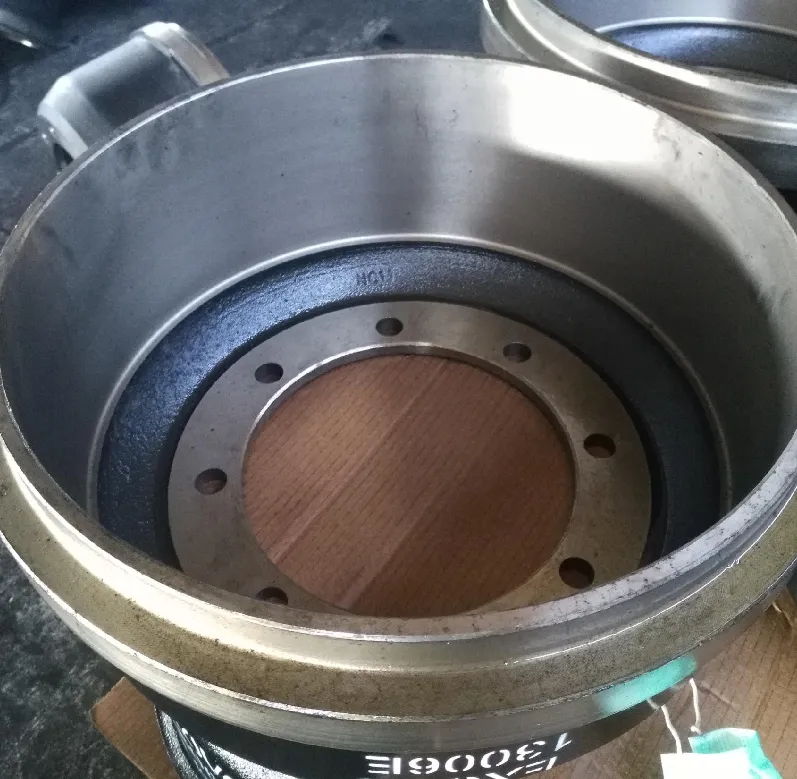
The 3573x brake drum is a critical component in heavy-duty braking systems, primarily employed in commercial vehicles such as trucks, buses, and trailers. Its function is to provide a friction surface for brake shoes or pads, converting kinetic energy into thermal energy through friction, thereby decelerating or stopping the vehicle. Positioned within the vehicle’s wheel end assembly, the 3573x brake drum directly impacts braking performance, durability, and overall vehicle safety. This guide will provide a detailed examination of the 3573x brake drum, encompassing material science, manufacturing processes, performance characteristics, potential failure modes, and relevant industry standards. Core performance indicators include heat dissipation capability, resistance to thermal cracking, dimensional stability under high stress, and overall service life. The industry faces challenges relating to consistently achieving high levels of gray cast iron quality, minimizing porosity, and mitigating the risk of premature failure due to factors like severe duty cycles and corrosive environments.
Material Science & Manufacturing
The 3573x brake drum is predominantly manufactured from gray cast iron, specifically grades ranging from ASTM A48 Class 30 to Class 40. Gray cast iron is favored due to its excellent heat absorption properties, good machinability, and relatively low cost. The material composition typically consists of 90-95% iron, 2-4% carbon (primarily in the form of graphite flakes), 0.5-2.0% silicon, and smaller percentages of manganese, sulfur, and phosphorus. The graphite flakes contribute to the material’s damping capacity and reduce the risk of thermal stress cracking.
Manufacturing begins with pattern making, followed by sand casting. The sand mold is created using a core and cavity formed around the pattern. Molten iron is then poured into the mold cavity. Critical parameters during the casting process include pouring temperature (typically 1260-1370°C), cooling rate, and sand composition. Controlled cooling is essential to achieve the desired microstructure, influencing the size, shape, and distribution of graphite flakes. Following casting, the drum undergoes several finishing operations: gate and riser removal, sandblasting to clean the surface, and machining to achieve precise dimensions and surface finish. Machining includes turning, milling, and drilling operations. Quality control at each stage includes chemical analysis of the molten iron, radiographic inspection to detect internal defects (porosity, shrinkage), and dimensional verification using coordinate measuring machines (CMM). Heat treatment, typically annealing, may be applied to relieve internal stresses and improve machinability. The final stage often involves coating with a protective layer, such as zinc phosphate, to enhance corrosion resistance.

Performance & Engineering
The performance of a 3573x brake drum is governed by several engineering principles. Firstly, thermal management is paramount. During braking, significant kinetic energy is converted into heat, which must be dissipated efficiently to prevent overheating and thermal fade. The drum’s design, including its fin geometry and mass, directly influences its heat dissipation capacity. Finite element analysis (FEA) is routinely used to model thermal stresses and optimize the drum's design for maximum heat transfer. Secondly, structural integrity is critical. The drum must withstand significant radial and tangential stresses induced by braking forces. The mechanical design must account for both static and dynamic loads, including impact loads during emergency braking. Stress concentrations at features like bolt holes and cooling fins must be minimized. Material selection plays a key role in achieving adequate strength and fatigue resistance. Thirdly, compliance with regulatory standards is essential. Brake drums must meet stringent performance requirements outlined by organizations like SAE International and the Department of Transportation (DOT). These requirements cover factors such as braking efficiency, thermal capacity, and structural integrity. Corrosion resistance is also a key performance factor. Exposure to road salt, moisture, and other corrosive agents can lead to surface degradation and ultimately compromise the drum’s structural integrity. Protective coatings and material selection are crucial for mitigating corrosion.
Technical Specifications
| Parameter | Unit | Typical Value (3573x) | Testing Standard |
|---|---|---|---|
| Diameter | mm | 357.3 | GB/T 21634 |
| Width | mm | 76.2 | SAE J10 |
| Material | - | Gray Cast Iron (ASTM A48 Class 30) | ASTM A48 |
| Tensile Strength | MPa | 200-250 | ASTM A48 |
| Hardness (Brinell) | HB | 180-240 | ASTM A25 |
| Maximum Operating Temperature | °C | 600 | SAE J10 |
Failure Mode & Maintenance
Common failure modes for the 3573x brake drum include thermal cracking, fatigue cracking, and corrosion-induced degradation. Thermal cracking occurs due to rapid and localized heating during heavy braking, leading to tensile stresses exceeding the material’s strength. The presence of shrinkage porosity or other internal defects exacerbates the risk of thermal cracking. Fatigue cracking develops over time due to cyclical loading during repeated braking events. Factors contributing to fatigue cracking include high stress concentrations, surface defects, and material inhomogeneities. Corrosion, particularly in environments with high salt concentrations, can lead to pitting corrosion and surface degradation, reducing the drum’s effective thickness and structural integrity.
Preventive maintenance is crucial for extending the service life of the 3573x brake drum. Regular inspections should be conducted to identify signs of cracking, corrosion, and excessive wear. Visual inspection can reveal surface cracks and corrosion. Non-destructive testing (NDT) methods, such as magnetic particle inspection (MPI) and ultrasonic testing, can detect subsurface defects. The brake drum should be periodically resurfaced (turned) to remove worn material and restore a smooth friction surface. However, resurfacing should be limited to maintain adequate drum thickness. Lubrication of the wheel bearings and proper adjustment of the brake shoes or pads are essential for minimizing stress on the drum. Avoidance of harsh braking maneuvers can reduce thermal stress and fatigue loading. When replacing a brake drum, ensure that the replacement meets or exceeds the original equipment manufacturer’s (OEM) specifications.
Industry FAQ
Q: What is the impact of graphite flake shape on the performance of the brake drum?
A: The shape of graphite flakes significantly influences performance. Flake size and distribution affect both thermal conductivity and mechanical strength. Finer, more uniformly distributed flakes generally improve thermal conductivity, aiding in heat dissipation. However, excessively large or elongated flakes can reduce strength and increase the risk of thermal shock cracking. A balance is therefore crucial.
Q: How does the cooling fin design affect heat dissipation?
A: Cooling fin design plays a critical role. More fins increase the surface area available for heat transfer, but they can also introduce stress concentrations. Fin height, thickness, and spacing must be optimized to balance heat dissipation with structural integrity. Computational Fluid Dynamics (CFD) modeling is often used to evaluate different fin designs.
Q: What are the implications of exceeding the maximum operating temperature?
A: Exceeding the maximum operating temperature can lead to several detrimental effects, including reduced braking efficiency (brake fade), thermal cracking, and distortion of the drum. Prolonged exposure to high temperatures can also alter the material’s microstructure, reducing its strength and durability.
Q: What is the typical service life expectancy of a 3573x brake drum under normal operating conditions?
A: Under normal operating conditions, a 3573x brake drum can typically last between 150,000 to 300,000 miles. However, this lifespan is highly dependent on factors such as vehicle load, driving conditions, and maintenance practices. Severe duty applications may significantly reduce service life.
Q: What NDT methods are most effective for detecting internal defects in brake drums?
A: Magnetic particle inspection (MPI) is highly effective for detecting surface and near-surface cracks. Ultrasonic testing (UT) is preferred for detecting subsurface defects, such as porosity and shrinkage. Radiographic inspection (X-ray) can also be used, but it is generally more expensive and time-consuming.
Conclusion
The 3573x brake drum remains a foundational component in heavy-duty braking systems. Its reliable operation is intrinsically linked to the careful selection of materials, precise manufacturing processes, and adherence to stringent engineering principles. Gray cast iron continues to be the material of choice due to its thermal properties, but ongoing research is exploring alternative materials to further enhance performance and durability. The optimization of design parameters, such as fin geometry and drum mass, through advanced modeling techniques is critical for maximizing heat dissipation and minimizing stress concentrations.
Looking ahead, the industry is focused on developing more robust and efficient brake drum designs capable of withstanding the demands of increasingly heavy loads and more aggressive driving cycles. Advances in coating technologies are aimed at improving corrosion resistance and extending service life. Furthermore, the integration of sensor technologies into brake drums will enable real-time monitoring of temperature and stress levels, facilitating predictive maintenance and enhancing safety. Continued innovation in material science and manufacturing processes is essential for maintaining the integrity and reliability of this vital component.