
The deployment of industrial slide rails is essential for superior linear positioning.
Modern metal stamping, fabricating, and foundry automation lines depend heavily on precise linear kinematics to transfer heavy structural materials between processing stations. Whether conveying raw steel billets or precision-machined aluminum casings, the material handling system must maintain rigorous positioning accuracy under substantial static and dynamic loads. Achieving this level of operational fluid motion requires absolute structural rigidity, not only within the guidance tracking itself but also across the synchronous drive mechanisms that power the linear axes.
The Critical Intersection of Drive Polishing and Structural Guidance
Automated motion gantries typically utilize a combination of heavy-duty guidance tracking and synchronous timing belt drives to achieve rapid travel velocities. While the linear bearings handle the heavy vertical and lateral forces, the timing belt pulleys are responsible for delivering precise acceleration and deceleration profiles. If there is any mechanical compliance or rotational backlash at the pulley interface, the system encounters positional tracking errors, which can result in material misfeeds, stamping defects, or catastrophic tooling collisions.
Enhancing Component Synchronization via Advanced Clamping
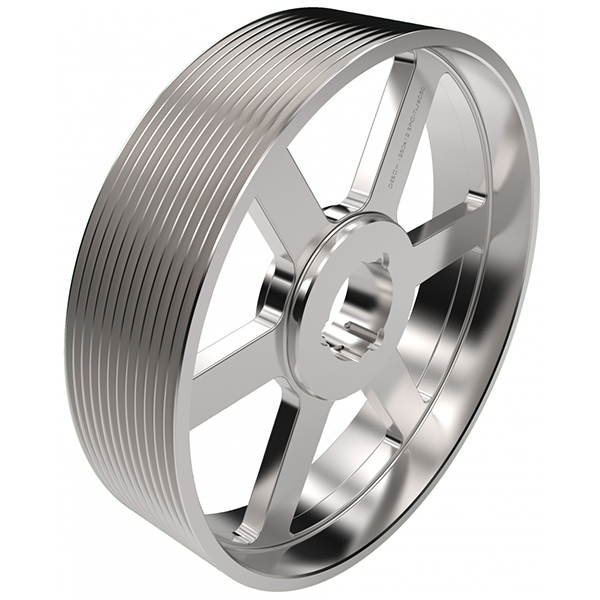
To eliminate rotational positioning errors, engineering standards have shifted away from standard bore configurations in favor of taper-lock mechanical systems. Applying a double timing pulley outfitted with an integrated tapered bushing guarantees a true zero-backlash connection between the drive motor shaft and the synchronous pulley. The conical interface forces the pulley to run perfectly true, mitigating harmonic vibrations that could otherwise propagate through the linear framework and affect the smooth tracking of the guiding block assemblies.
| Kinematic Parameter | Impact of Structural Misalignment | Advanced Mechanical Optimization |
|---|---|---|
| Positioning Accuracy | Asymmetric wear on slider rail blocks | Zero-backlash taper lock ensures rigid timing synchronization |
| Operational Velocity | High vibrations, reduced belt operating life | Concentric hub mounting balances rotational mass perfectly |
Supply Chain Evaluation for High-Capacity Automation Infrastructure
Procuring heavy-duty motion components requires careful evaluation of manufacturing capabilities. Premium international material handling integrators rely on high-quality providers capable of delivering customized, made-to-order casting and machining configurations. Ensuring that transmission components are sourced from an established, quality-controlled facility possessing integrated foundry and surface treatment capabilities allows plant operators to achieve uninterrupted system availability and minimal maintenance overhead in aggressive industrial environments.
Conclusive Lifecycle Advantages
The strategic harmonization of robust linear guidance mechanisms with precision-locked synchronous drives forms the foundation of efficient metal processing automation. By adopting comprehensive taper-locking drive designs, engineering teams effectively future-proof their machinery against mechanical wear, realizing reduced total cost of ownership (TCO) and elevated throughput efficiency across the entire manufacturing installation.