
Introduction
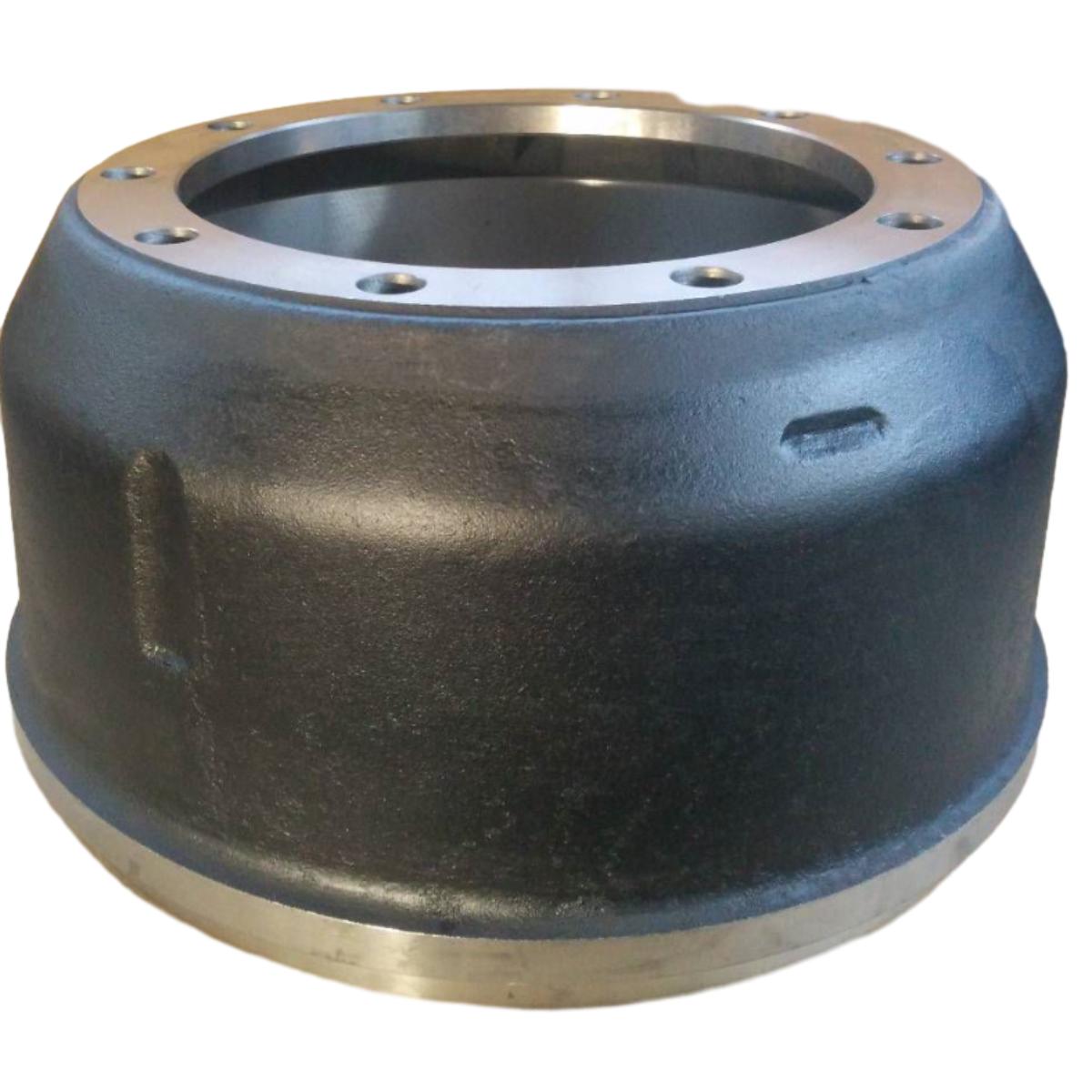
The drum doctor brake lathe is a precision machine tool utilized for the resurfacing and remanufacturing of brake drums and rotors. Positioned within the automotive aftermarket and heavy-duty vehicle maintenance supply chain, its primary function is to restore braking surfaces to original equipment manufacturer (OEM) specifications, ensuring optimal braking performance and safety. The core performance characteristics of a drum doctor brake lathe are defined by its spindle speed variability, feed rate accuracy, surface finish capability, and roundness tolerance achieved on the machined component. Increasingly stringent vehicle safety standards and the economic viability of brake component remanufacturing are driving demand for more sophisticated and precise drum doctor brake lathes. A key pain point within the industry stems from achieving consistently high surface finish and minimizing runout, necessitating robust machine design and operator skill.
Material Science & Manufacturing
The core construction of a drum doctor brake lathe relies heavily on cast iron (typically ASTM A128 gray iron) for the base, spindle housing, and carriage components due to its high damping capacity, rigidity, and wear resistance. The spindle itself is commonly manufactured from alloy steel (typically 4140 or equivalent) and undergoes heat treatment (hardening and tempering) to achieve a Rockwell C hardness of 58-62 HRC, maximizing wear resistance and dimensional stability. Linear motion is facilitated by hardened and ground ways, often employing induction hardening processes to create a surface layer with a hardness exceeding 60 HRC. Critical components like spindle bearings utilize high-precision ball or roller bearings (typically SKF or FAG) manufactured from bearing steel (e.g., 52100) with tight tolerances to minimize runout and vibration. The manufacturing process involves precision casting, extensive machining (turning, milling, grinding), and meticulous assembly. Parameter control is crucial; spindle runout must be maintained within 0.0005 inches, carriage feed rate accuracy within 0.001 inches per revolution, and surface roughness (Ra) consistently below 1.6 μm to meet industry standards. Chemical compatibility considerations include resistance to cutting fluids (typically water-miscible coolants) to prevent corrosion and maintain dimensional accuracy.

Performance & Engineering
The performance of a drum doctor brake lathe is fundamentally governed by force analysis during the cutting process. Tangential cutting force, radial cutting force, and axial cutting force all contribute to spindle deflection and vibration. Rigidity of the machine structure is paramount in minimizing these deflections. Finite Element Analysis (FEA) is commonly employed during the design phase to optimize component geometry and material selection to withstand these forces. Environmental resistance is also a key consideration; the lathe must operate reliably in workshop environments characterized by dust, oil mist, and temperature fluctuations. Compliance requirements, such as adherence to ISO 9001 quality management systems, ensure consistent performance and traceability. Functional implementation hinges on precise spindle speed control (typically via variable frequency drives – VFDs), accurate feed rate control (often utilizing stepper motors or servo motors), and effective chip evacuation systems to prevent re-cutting and maintain surface finish quality. Brake dust collection systems are now integral, addressing health and safety concerns related to particulate matter emissions.
Technical Specifications
| Parameter | Unit | Typical Value (Light Duty) | Typical Value (Heavy Duty) |
|---|---|---|---|
| Maximum Drum Diameter | mm | 350 | 650 |
| Maximum Drum Width | mm | 250 | 400 |
| Spindle Speed Range | RPM | 50-1500 | 40-1000 |
| Feed Rate | mm/rev | 0.01-0.3 | 0.005-0.5 |
| Spindle Runout | µm | <5 | <2 |
| Surface Roughness (Ra) | µm | <1.6 | <0.8 |
Failure Mode & Maintenance
Common failure modes in drum doctor brake lathes include spindle bearing failure (due to contamination, overloading, or insufficient lubrication), carriage way wear (leading to reduced accuracy and vibration), motor failure (typically due to overheating or electrical faults), and control system malfunctions (caused by electromagnetic interference or component aging). Fatigue cracking in the spindle housing, though less frequent, can occur under prolonged cyclic loading. Delamination of the hardened way surfaces is also a potential issue. Preventative maintenance is critical. Regular lubrication of bearings and ways (using appropriate greases per manufacturer specifications) is paramount. Periodic inspection of spindle runout and carriage way straightness is essential. Electrical connections should be checked for tightness and corrosion. Chip shields and dust collection systems must be cleaned regularly to prevent overheating and maintain air quality. Spindle bearings should be replaced every 5000 operating hours or as indicated by noise or vibration analysis. Control system software updates should be applied to address known bugs and improve performance. Monitoring vibration levels and thermal signatures can provide early warning signs of potential failures.
Industry FAQ
Q: What is the impact of cutting tool material on surface finish when using a drum doctor brake lathe?
A: The cutting tool material significantly influences surface finish. Carbide inserts (e.g., K10, K20) generally provide superior surface finish and longer tool life compared to high-speed steel (HSS) tools, particularly when machining harder materials. The grit size and coating (e.g., TiN, TiAlN) of the carbide insert also play a critical role; finer grit sizes and advanced coatings enhance surface finish and reduce friction.
Q: How does the rigidity of the lathe’s frame affect machining accuracy?
A: Frame rigidity is paramount for machining accuracy. A more rigid frame minimizes deflection under cutting forces, leading to improved roundness, cylindricity, and surface finish. Heavier, cast iron frames generally provide higher rigidity than lighter, welded steel frames. Finite element analysis (FEA) is crucial in optimizing frame design to maximize rigidity.
Q: What are the key considerations for selecting a variable frequency drive (VFD) for spindle speed control?
A: Selecting the right VFD involves considering the motor’s power rating, voltage, and current requirements. The VFD should offer precise speed control, dynamic braking capabilities, and protection against overvoltage, overcurrent, and overheating. Vector control VFDs provide superior torque control and dynamic response compared to scalar control VFDs.
Q: What are the best practices for maintaining the accuracy of the carriage ways?
A: Regular lubrication with the manufacturer-specified grease is essential. Periodic cleaning to remove chips and debris prevents abrasive wear. Monitoring carriage movement for smoothness and backlash is crucial. If wear is detected, the ways may require re-grinding or replacement. Avoiding excessive loads and ensuring proper alignment of the cutting tool minimizes wear.
Q: How important is dust collection, and what types of systems are most effective?
A: Dust collection is critically important for operator health and safety, as brake dust contains hazardous materials. Effective systems typically employ a multi-stage filtration process, including pre-filters, HEPA filters, and activated carbon filters. Local exhaust ventilation (LEV) systems, positioned close to the cutting zone, are most effective at capturing dust before it disperses into the workshop air. Compliance with OSHA regulations is mandatory.
Conclusion
The drum doctor brake lathe represents a vital component in the automotive and heavy-duty vehicle maintenance infrastructure, enabling cost-effective and reliable brake component remanufacturing. Its performance is intrinsically linked to material science, manufacturing precision, and adherence to stringent engineering principles. Maintaining optimal machining accuracy relies on a comprehensive understanding of force analysis, vibration control, and preventative maintenance procedures.
Future advancements in drum doctor brake lathe technology will likely focus on incorporating automated tool changing systems, advanced sensor technologies for real-time process monitoring, and integration with Industry 4.0 principles for predictive maintenance and optimized production scheduling. Continued refinement of cutting tool materials and the implementation of more efficient dust collection systems will further enhance performance, safety, and environmental sustainability.