
Introduction
The phenomenon of a brake drum failing to return to its fully released position, commonly referred to as “drum won’t go back on brake,” represents a significant operational and safety concern in vehicle maintenance. This issue affects a wide range of vehicle types, from light-duty passenger cars to heavy-duty commercial trucks, impacting braking efficiency and potentially leading to component failure. The root causes are multifactorial, spanning from mechanical binding within the braking system to thermal distortion of components. This technical guide provides an in-depth examination of the underlying principles, material characteristics, common failure modes, diagnostic procedures, and preventative maintenance strategies associated with this prevalent braking system problem. Understanding the intricacies of drum brake operation and the factors contributing to retraction issues is critical for effective repair and ensuring vehicle safety. The industry faces challenges with consistent repair quality and increasingly complex brake system designs, demanding comprehensive troubleshooting approaches.
Material Science & Manufacturing
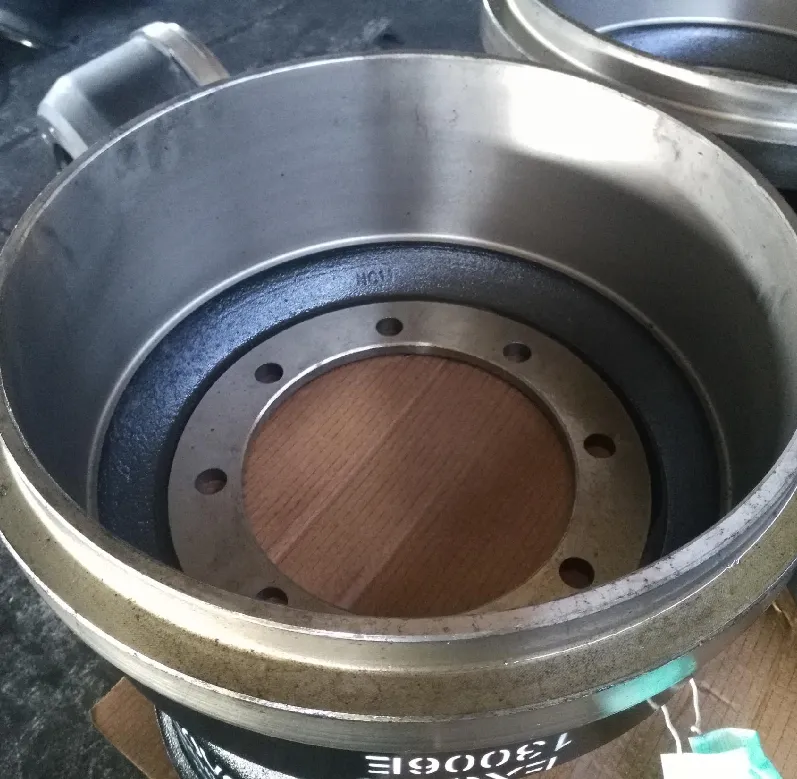
Brake drums are typically manufactured from cast gray iron, chosen for its high thermal conductivity, wear resistance, and cost-effectiveness. The chemical composition of gray iron predominantly consists of iron (Fe), carbon (C) in the form of graphite flakes, silicon (Si), manganese (Mn), sulfur (S), and phosphorus (P). The graphite flakes contribute to the material's damping characteristics and machinability, while silicon enhances the iron's fluidity during casting. Manufacturing processes for brake drums commonly involve sand casting, centrifugal casting, or permanent mold casting. Sand casting, while being the most economical, can introduce surface imperfections and porosity. Centrifugal casting produces denser drums with improved mechanical properties due to the centrifugal force driving impurities outwards. The manufacturing process significantly impacts the microstructure of the cast iron. A fine, evenly distributed graphite flake structure is desirable for optimal performance. Heat treatment, such as annealing, is often employed to relieve residual stresses introduced during the casting process and improve machinability. Brake shoes, the mating component, are often constructed from semi-metallic friction materials bonded to steel backing plates. The friction material composition is critical, consisting of organic and inorganic fibers, friction modifiers, and binders. Incorrect material pairings or manufacturing inconsistencies in either the drum or shoe can exacerbate retraction problems. Specifically, surface finish – roughness (Ra) – is a critical parameter; a very rough surface increases friction and hinders free movement. Key parameter control during manufacturing includes precise alloy composition control, maintaining consistent graphite flake size and distribution, and achieving appropriate surface finishes on both the drum’s inner surface and the brake shoe friction material.
Performance & Engineering
The retraction of a brake drum relies on several key engineering principles. Upon release of the brake pedal, return springs exert a force on the brake shoes, pushing them away from the rotating drum. This force must overcome the static friction between the shoes and drum, as well as any mechanical binding within the system. The geometry of the brake shoe and drum is engineered to facilitate this retraction. The shoe’s curved shape and the drum’s inner profile create a camming action that assists in disengagement. Force analysis reveals that the return spring force must be sufficient to overcome the maximum frictional force generated during braking. Environmental resistance is also a critical consideration. Exposure to moisture, salt, and road debris can cause corrosion on the drum's surface and within the brake assembly, increasing friction and hindering retraction. Thermal expansion during braking generates significant heat within the drum. Uneven heating can lead to distortion, causing the drum to bind against the shoes. The drum’s dimensional stability at elevated temperatures is therefore paramount. Compliance requirements dictate that braking systems meet stringent performance standards, including parking brake holding force and service brake stopping distance. A drum that doesn’t fully retract will negatively impact both parameters. Functional implementation requires precise adjustment of the brake shoe clearance. Too little clearance results in continuous shoe-drum contact, generating heat and hindering retraction. Too much clearance reduces braking efficiency. Regular inspection and adjustment are essential.
Technical Specifications
| Parameter | Typical Value (Passenger Vehicle) | Typical Value (Light-Duty Truck) | Typical Value (Heavy-Duty Truck) |
|---|---|---|---|
| Drum Material | Gray Cast Iron (ASTM A48 Class 30) | Gray Cast Iron (ASTM A48 Class 35) | Gray Cast Iron (ASTM A48 Class 40) |
| Drum Diameter | 203 mm (8 in) | 229 mm (9 in) | 320 mm (12.6 in) |
| Drum Width | 44.45 mm (1.75 in) | 50.8 mm (2 in) | 63.5 mm (2.5 in) |
| Brake Shoe Friction Material | Semi-Metallic (20-40% Metal Content) | Semi-Metallic (30-50% Metal Content) | Non-Asbestos Organic (NAO) / Semi-Metallic |
| Return Spring Force | 50-80 N | 80-120 N | 150-250 N |
| Maximum Drum Temperature (Operating) | 300°C (572°F) | 350°C (662°F) | 400°C (752°F) |
Failure Mode & Maintenance
Several failure modes contribute to the “drum won’t go back on brake” issue. Fatigue cracking within the drum, often initiated by thermal stress and repeated braking cycles, can cause the drum to become oval or out-of-round, leading to binding. Delamination of the friction material from the brake shoe backing plate increases friction and prevents proper retraction. Corrosion, particularly in areas exposed to moisture and salt, can cause the shoes to seize within the drum. Oxidation of the drum surface can also increase friction. Mechanical binding due to a swollen brake hose, a sticking wheel cylinder, or a misaligned brake assembly are common culprits. A damaged or corroded self-adjuster mechanism can prevent the brake shoes from properly retracting. For preventative maintenance, regular inspection of brake shoe wear is crucial. Periodic cleaning of the drum and shoe surfaces removes corrosion and debris. Lubrication of the contact points within the brake assembly – excluding the friction surfaces – reduces friction. Wheel cylinder function should be tested regularly for proper movement and sealing. Brake hose integrity must be verified to prevent swelling and blockage. When replacing brake shoes, ensure correct installation and adjustment of the self-adjuster mechanism. Resurfacing or replacing a severely damaged drum is often necessary. Proper torque specifications must be adhered to during assembly to prevent distortion and binding.
Industry FAQ
Q: What is the most common cause of a brake drum not retracting, and how can a technician quickly diagnose it?
A: The most common cause is often corrosion and debris buildup within the brake assembly, leading to sticky or seized components. A quick diagnostic involves manually attempting to rotate the drum; resistance indicates a problem. Visually inspecting the wheel cylinder for leaks and checking the brake hose for swelling are also initial steps. A careful examination of the return springs and their attachment points is critical.
Q: How does drum eccentricity affect brake performance and retraction?
A: Drum eccentricity – being out-of-round – causes uneven contact between the shoes and drum, leading to increased friction and uneven wear. It exacerbates retraction issues as the shoes bind in certain areas. Severe eccentricity necessitates drum replacement or resurfacing.
Q: What are the risks associated with using excessive lubricant on brake components?
A: Excessive lubricant can contaminate the friction material, drastically reducing braking efficiency. It can also attract dust and debris, creating a paste-like substance that hinders retraction and promotes wear. Only use brake-specific lubricant sparingly on designated contact points.
Q: What material properties are most important when selecting a replacement brake drum?
A: High thermal conductivity and wear resistance are paramount. The drum’s chemical composition should match the original specification (typically gray cast iron conforming to ASTM A48 standards). Dimensional accuracy and surface finish are also critical for proper fit and function.
Q: How often should brake drums be inspected for signs of cracking or wear?
A: Brake drums should be inspected at least every 6,000 miles (10,000 kilometers) or during every routine brake pad/shoe replacement. Look for visible cracks, scoring, and excessive wear. A depth gauge can be used to measure drum thickness and determine if it’s within acceptable limits.
Conclusion
Addressing the issue of a brake drum failing to retract requires a comprehensive understanding of material science, manufacturing processes, and braking system mechanics. The interaction between the drum, shoes, springs, and wheel cylinder dictates the system’s proper function. Identifying and rectifying the underlying cause—whether it be corrosion, mechanical binding, thermal distortion, or material degradation—is essential for restoring braking performance and ensuring vehicle safety. Regular preventative maintenance, including thorough inspections and proper lubrication, can significantly reduce the occurrence of this common braking problem.
Future developments in brake technology, such as the increased adoption of electronic parking brakes and advanced materials, may mitigate some of these issues. However, a fundamental understanding of drum brake principles will remain crucial for effective diagnostics and repair, particularly in legacy vehicle fleets. Investing in technician training and utilizing appropriate diagnostic tools will be essential for maintaining a high standard of brake system maintenance and optimizing vehicle safety.