

Introduction
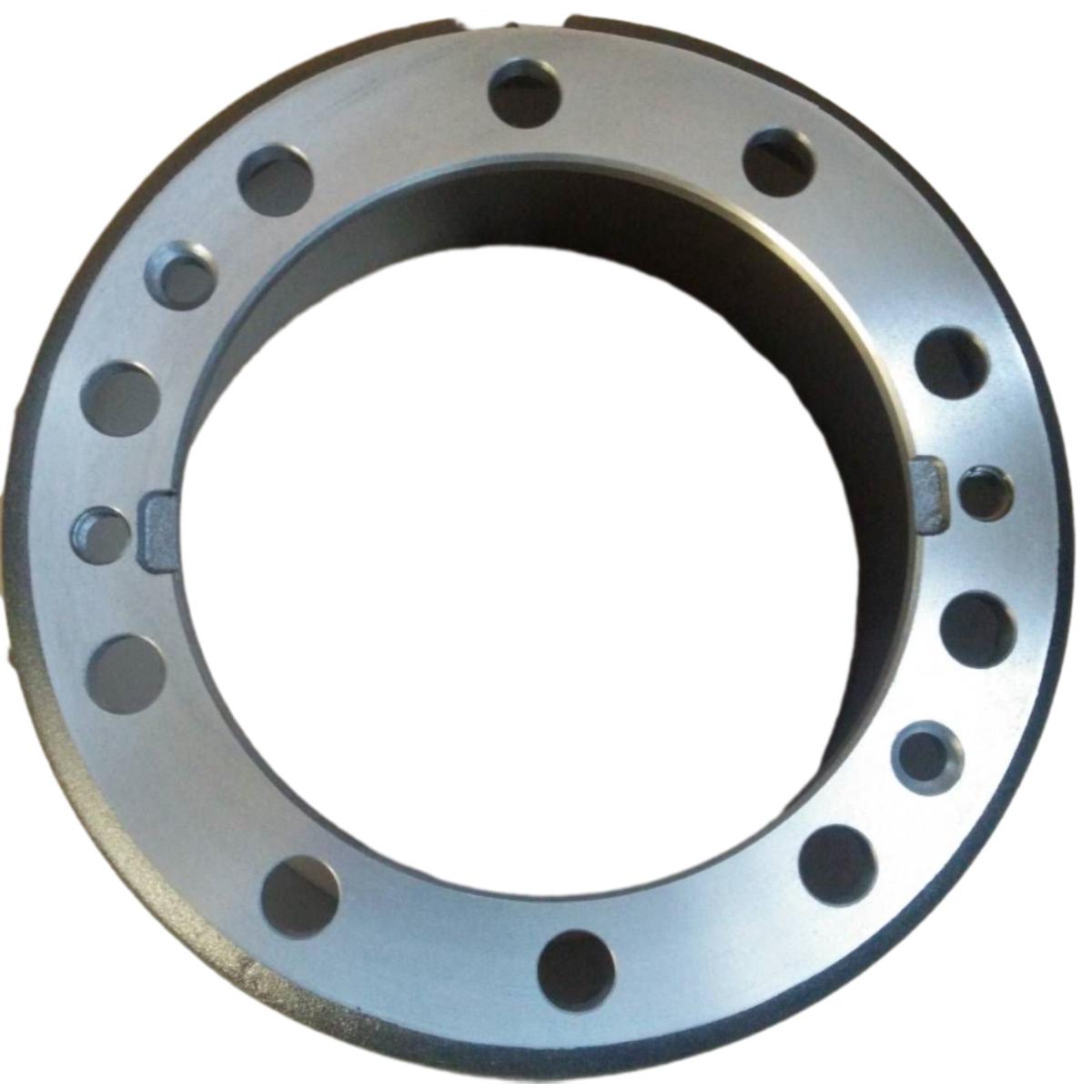
The brake drum lip, also known as the drum flange, is a critical component integrated into the design of cast iron or composite brake drums. Its primary function is to provide a secure mounting surface for attachment to the vehicle's wheel hub and bearing assembly. Beyond mechanical fixation, the lip contributes to structural rigidity and heat dissipation. In the automotive and heavy-duty trucking industries, the integrity of the brake drum lip directly impacts braking performance, safety, and overall system durability. Historically, lip designs have evolved alongside braking system advancements – from simple, flat flanges to more complex, reinforced geometries designed to mitigate stress concentrations and manage thermal expansion. Core performance characteristics include runout tolerance, concentricity with the drum bore, and resistance to cracking under cyclical loading and thermal stress. A failure in the brake drum lip can result in wheel wobble, bearing failure, and potentially catastrophic loss of braking control, making it a critical area of engineering scrutiny.
Material Science & Manufacturing
Brake drum lips are predominantly manufactured from gray cast iron due to its excellent wear resistance, thermal conductivity, and machinability. The specific grade of cast iron (e.g., ASTM A48 Class 30) is determined by the anticipated loading and operating temperatures. Compositionally, it typically consists of iron, carbon (2.5% - 4.0%), silicon (1.8% - 3.2%), manganese (0.6% - 1.2%), and phosphorus (0.2% - 0.8%). The carbon exists primarily as graphite flakes within the iron matrix, contributing to its damping characteristics. Alternative materials, such as ductile iron (with spherical graphite inclusions) are used in high-performance applications where increased tensile strength and ductility are required. The manufacturing process begins with pattern making, followed by sand casting. Key parameters during casting include mold temperature, pouring temperature, and cooling rate, all of which influence the microstructure and mechanical properties. After casting, the lip undergoes machining operations – typically turning, milling, and drilling – to achieve the required dimensions and surface finish. Critical control points include ensuring concentricity of the lip to the drum bore and maintaining tight tolerances on the mounting surface. Post-machining, stress relieving heat treatment may be employed to reduce residual stresses induced by the machining process, further enhancing fatigue resistance. Chemical composition verification is conducted via spectrographic analysis, and non-destructive testing (NDT) like magnetic particle inspection (MPI) or ultrasonic testing (UT) are employed to detect subsurface flaws.
Performance & Engineering
The performance of the brake drum lip is fundamentally governed by its ability to withstand cyclical tensile and shear stresses induced by braking forces, vehicle vibrations, and thermal gradients. Force analysis involves considering the radial load from the wheel bearing, the tangential force from braking torque, and the inertial forces generated during vehicle acceleration and deceleration. Finite element analysis (FEA) is routinely used to predict stress distributions within the lip and optimize its geometry for maximum strength and stiffness. A key engineering consideration is mitigating stress concentrations at the root of the lip where it transitions to the main drum body. This is often achieved through the use of fillets, gradual transitions, and optimized wall thicknesses. Environmental resistance is also crucial. Brake drums are exposed to corrosive elements such as road salt, water, and brake dust. Coatings, such as zinc phosphate or epoxy-based paints, are applied to provide corrosion protection. Furthermore, thermal performance is critical. Braking generates significant heat, and the lip acts as a heat sink. Its thermal conductivity influences the rate at which heat is dissipated, preventing thermal stress buildup. Compliance requirements vary by region but generally adhere to standards set by organizations such as SAE International (J10), and national regulatory bodies. Specifically, runout specifications are defined to ensure smooth braking operation and prevent vibration. The lip must also meet dimensional tolerances to ensure proper fitment with the wheel hub and bearing assembly.
Technical Specifications
| Parameter | Typical Value (Passenger Vehicle) | Typical Value (Heavy-Duty Truck) | Testing Standard |
|---|---|---|---|
| Material | Gray Cast Iron (ASTM A48 Class 30) | Ductile Iron (ASTM A536-85) | ASTM E407 (Chemical Analysis) |
| Tensile Strength | 200 - 280 MPa | 400 - 600 MPa | ASTM A48 / A536 |
| Hardness (Brinell) | 180 - 240 HB | 250 - 350 HB | ASTM E10 |
| Lip Thickness | 10 - 15 mm | 15 - 25 mm | Dimensional Drawings |
| Runout Tolerance (TIR) | 0.05 mm | 0.10 mm | SAE J431 |
| Surface Finish (Mounting Surface) | Ra 1.6 μm | Ra 3.2 μm | ISO 4287 |
Failure Mode & Maintenance
The primary failure modes of brake drum lips include fatigue cracking, particularly at the root radius where stress concentrations are highest. This is often initiated by cyclical loading during braking and exacerbated by thermal stress. Corrosion, particularly from road salt exposure, can accelerate crack propagation. Another common failure mode is distortion due to overheating, leading to runout exceeding acceptable limits. Impact damage, from road debris or improper wheel removal, can also cause cracking or deformation. Delamination, though less frequent, can occur in composite brake drums if the bonding between layers fails. Maintenance is critical for preventing premature failure. Regular inspections should include visual checks for cracks, corrosion, and deformation. Wheel bearings should be properly maintained to minimize radial loads on the lip. Brake drums should be cleaned regularly to remove brake dust and corrosive contaminants. If cracks are detected, the drum should be replaced immediately. Proper torqueing of wheel lug nuts is essential to prevent uneven loading and stress concentrations. Runout should be checked periodically using a dial indicator to ensure it remains within specifications. Preventative maintenance programs that incorporate these checks can significantly extend the service life of brake drums and enhance vehicle safety.
Industry FAQ
Q: What is the impact of excessive corrosion on the brake drum lip’s structural integrity?
A: Excessive corrosion significantly reduces the effective cross-sectional area of the lip, lowering its tensile strength and fatigue resistance. Corrosion pits act as stress concentrators, accelerating crack initiation and propagation. Furthermore, corrosion products can interfere with proper wheel hub seating, leading to uneven loading and increased stress.
Q: How does the design of the lip's root radius affect its fatigue life?
A: A larger, smoother root radius minimizes stress concentration, significantly increasing fatigue life. Sharp corners or abrupt transitions create localized stress hotspots where cracks are likely to initiate. Finite element analysis is crucial for optimizing the root radius to balance strength and material usage.
Q: What are the key differences in material selection between passenger vehicle and heavy-duty truck brake drum lips?
A: Heavy-duty truck applications demand higher strength and thermal capacity due to the increased braking loads and operating temperatures. Therefore, ductile iron is often preferred over gray cast iron in heavy-duty applications, providing superior tensile strength, ductility, and resistance to thermal shock.
Q: What nondestructive testing methods are commonly used to inspect brake drum lips for defects?
A: Magnetic Particle Inspection (MPI) is commonly used to detect surface and near-surface cracks in ferrous materials. Ultrasonic Testing (UT) can detect subsurface flaws, and dye penetrant inspection (DPI) is used to identify surface cracks that are not readily visible. Radiographic testing (X-ray) is used for a more comprehensive internal inspection, though less frequently.
Q: What is the significance of runout tolerance, and how is it measured?
A: Runout tolerance defines the permissible variation in the lip’s circularity during rotation. Excessive runout causes brake pulsation, vibration, and uneven pad wear. It's typically measured using a dial indicator mounted to a stationary point, while the drum is rotated. Strict adherence to specified runout tolerances is critical for optimal braking performance.
Conclusion
The brake drum lip is a deceptively complex component whose performance is inextricably linked to material science, manufacturing precision, and rigorous engineering analysis. Its role extends beyond simple mechanical attachment; it directly contributes to braking efficiency, vehicle safety, and component longevity. A thorough understanding of its failure modes and the application of appropriate preventative maintenance practices are paramount for maximizing service life and preventing catastrophic failures.
Future developments in brake drum lip design are likely to focus on lightweighting through advanced materials like composite structures and optimizing geometries via advanced simulation techniques. Furthermore, the integration of sensor technology for real-time stress monitoring and predictive maintenance will become increasingly prevalent, enabling proactive identification of potential failures and enhancing overall system reliability.