

Introduction
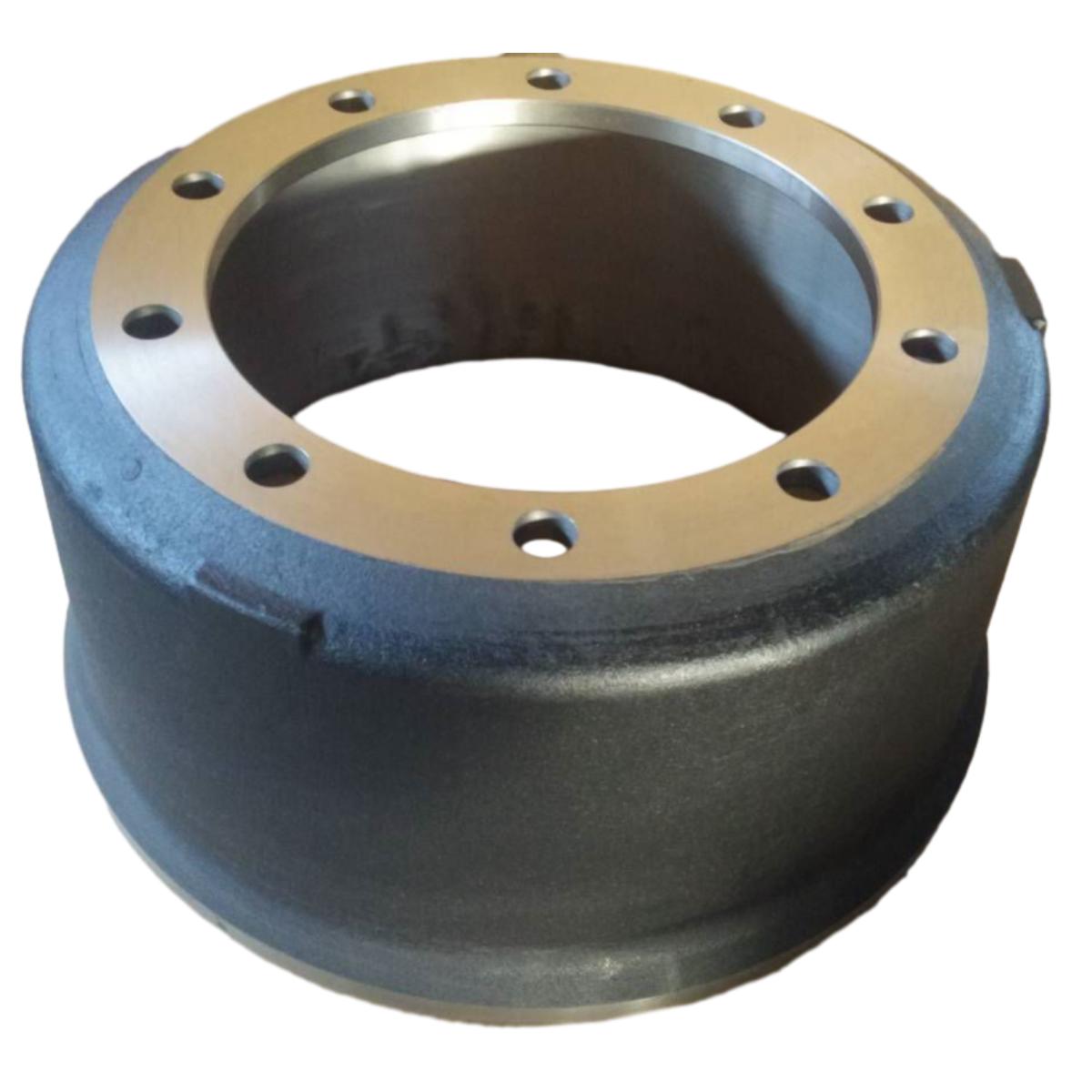
Blue brake drums represent a critical component within the automotive and heavy-duty vehicle braking systems, responsible for converting kinetic energy into thermal energy through friction. Their role extends beyond simple deceleration; they are vital for ensuring vehicle safety and operational longevity. Typically found in commercial vehicles, trailers, and some specialized automotive applications, these drums are distinguished by their surface coating, commonly a phosphate conversion coating imparting a blue hue, offering enhanced corrosion resistance compared to untreated cast iron. This technical guide will provide an in-depth analysis of blue brake drums, encompassing material science, manufacturing processes, performance characteristics, failure modes, maintenance protocols, and relevant industry standards. The increasing demand for durable, high-performance braking systems drives continuous innovation in brake drum technology, particularly regarding materials and surface treatments.
Material Science & Manufacturing
Blue brake drums are primarily manufactured from gray cast iron, specifically grades conforming to ASTM A48 Class 30. This material is selected for its excellent thermal conductivity, wear resistance, and inherent damping characteristics, which are crucial for minimizing noise and vibration during braking. The blue color is achieved through a phosphate conversion coating – typically zinc phosphate or manganese phosphate – applied via a chemical immersion process. This process forms a crystalline layer on the drum's surface, creating a passive barrier against corrosion. Key manufacturing steps include:
- Casting: Molten cast iron is poured into molds, utilizing sand casting or, increasingly, centrifugal casting for superior density and reduced porosity. Precise control of the cooling rate is critical to manage the microstructure and mechanical properties.
- Machining: Following casting, the drums undergo machining operations – turning, milling, and grinding – to achieve the required dimensions and surface finish. Maintaining tight tolerances is paramount for ensuring proper fitment and braking performance.
- Heat Treatment: Stress relieving and annealing processes are employed to alleviate residual stresses induced during casting and machining, improving dimensional stability and reducing the risk of cracking.
- Phosphate Coating: The drums are immersed in a phosphate solution, creating the protective blue coating. Process parameters like solution concentration, temperature, and immersion time directly impact the coating’s thickness, adhesion, and corrosion resistance.
- Quality Control: Rigorous inspection procedures, including dimensional checks, visual inspection for defects, and non-destructive testing (NDT) methods like ultrasonic testing, are performed to verify compliance with specifications.
The chemical composition of the cast iron significantly influences its performance. Carbon content typically ranges from 2.5% to 4.0%, silicon from 1.8% to 3.2%, and manganese from 0.6% to 1.2%. The presence of trace elements like chromium and molybdenum can further enhance wear resistance and high-temperature strength. The porosity of the cast iron is a critical factor; minimizing porosity improves the drum’s ability to dissipate heat and resist cracking.
Performance & Engineering
The performance of blue brake drums is governed by several key engineering principles. Thermal capacity is a primary concern. During braking, kinetic energy is converted into heat, and the drum must effectively absorb and dissipate this heat to prevent brake fade (reduction in braking effectiveness). Finite element analysis (FEA) is frequently utilized to model thermal stress distribution within the drum and optimize its design for enhanced heat dissipation.
Force analysis considers the radial and tangential stresses generated during braking. The drum must withstand these stresses without experiencing plastic deformation or fracture. The mechanical strength of the cast iron, coupled with the protective phosphate coating, plays a crucial role in resisting these forces. Coefficient of friction between the brake shoes and the drum surface is critical for braking performance, this is influenced by the surface finish and the composition of the brake shoe material. Compliance requirements, such as those stipulated by DOT (Department of Transportation) regulations and SAE International standards, dictate minimum performance criteria for brake drums, including braking force, fade resistance, and service life. Environmental resistance, particularly to road salts and moisture, is enhanced by the phosphate coating, significantly reducing corrosion and extending the drum’s operational lifespan. Careful consideration of these factors is essential for ensuring safe and reliable braking performance.
Technical Specifications
| Parameter | Unit | Typical Value (Heavy-Duty Truck Application) | Testing Standard |
|---|---|---|---|
| Diameter | mm | 410 | SAE J10 |
| Width | mm | 140 | ISO 3887 |
| Material | - | Gray Cast Iron (ASTM A48 Class 30) | ASTM A48 |
| Coating Type | - | Zinc Phosphate | ASTM D610 |
| Coating Thickness | µm | 10-25 | ASTM B117 (Salt Spray Test) |
| Tensile Strength | MPa | 200-300 | ASTM A48 |
| Hardness (Brinell) | HB | 180-240 | ASTM E10 |
Failure Mode & Maintenance
Blue brake drums are susceptible to several failure modes in practical applications. Thermal cracking can occur due to repeated heating and cooling cycles, especially under severe braking conditions. This often initiates at stress concentration points. Fatigue cracking arises from cyclic loading, particularly in areas experiencing high stresses. Corrosion, despite the phosphate coating, can still occur due to prolonged exposure to road salts and moisture, leading to pitting and weakening of the drum. Wear is an inevitable consequence of friction and manifests as a gradual reduction in drum diameter. Delamination of the phosphate coating, while less common, can reduce corrosion resistance and accelerate wear.
Professional maintenance is crucial for extending the service life of blue brake drums. Regular inspections should be conducted to identify any signs of cracking, corrosion, or excessive wear. Brake shoe condition should also be assessed, as worn or contaminated shoes can accelerate drum wear. Preventative maintenance includes cleaning the drums to remove dirt, debris, and corrosion products. If cracks are detected, the drum should be replaced immediately. Resurfacing of the drum is possible in some cases, but it must be performed by a qualified technician to ensure proper geometry and surface finish. Proper lubrication of the brake adjuster mechanism is also essential for smooth operation and preventing uneven wear. Adherence to manufacturer's recommended maintenance schedules is vital for maximizing brake drum longevity and ensuring optimal braking performance.
Industry FAQ
Q: What is the primary benefit of the blue phosphate coating compared to an uncoated brake drum?
A: The primary benefit is significantly enhanced corrosion resistance. The phosphate coating creates a passive layer that protects the cast iron from rust and corrosion caused by exposure to road salts, moisture, and other environmental contaminants. This extended service life and reduces the likelihood of premature failure.
Q: What is the impact of porosity in the cast iron on the drum’s performance?
A: Porosity reduces the drum's thermal conductivity and mechanical strength. Higher porosity leads to less efficient heat dissipation, increasing the risk of brake fade. It also creates stress concentration points, making the drum more susceptible to cracking.
Q: What are the key indicators that a blue brake drum needs to be replaced?
A: Key indicators include visible cracks, excessive wear (approaching the minimum allowable thickness specified by the manufacturer), significant corrosion pitting, and delamination of the phosphate coating over a large area. Any of these conditions compromise the drum’s structural integrity and braking performance.
Q: Can brake drums be resurfaced, and what are the limitations?
A: Yes, brake drums can be resurfaced, but only within the manufacturer’s specified limits for minimum thickness and diameter. Excessive resurfacing can weaken the drum and compromise its ability to dissipate heat. A qualified technician must perform the resurfacing to ensure proper geometry and surface finish.
Q: What role does the brake shoe material play in the overall braking system performance with these drums?
A: The brake shoe material's coefficient of friction directly impacts braking force and efficiency. Compatibility between the brake shoe material and the drum's cast iron is crucial to prevent excessive wear and ensure optimal performance. Different brake shoe formulations are available, optimized for various applications and operating conditions.
Conclusion
Blue brake drums represent a robust and reliable solution for braking systems in commercial vehicles and heavy-duty applications. Their performance is critically dependent on the careful selection of materials, precise manufacturing processes, and adherence to stringent quality control standards. The phosphate coating provides essential corrosion protection, extending the drums’ service life and enhancing safety.
Continued advancements in materials science and manufacturing techniques, such as the development of improved cast iron alloys and more durable phosphate coatings, are expected to further enhance the performance and longevity of blue brake drums. Future research may also focus on optimizing drum designs for even more efficient heat dissipation and reduced weight, contributing to improved vehicle fuel efficiency and reduced emissions.