
Introduction
Aircraft drum brakes are critical components in the landing gear system of both fixed-wing and rotary-wing aircraft, responsible for decelerating and stopping the aircraft upon landing. Unlike automotive drum brakes, aircraft systems operate under significantly more demanding conditions, including high speeds, extreme temperatures, and rigorous safety requirements. Their position in the industry chain is as a specialized sub-system within the broader aircraft landing gear assembly, sourced from aerospace component manufacturers to aircraft OEMs (Original Equipment Manufacturers) and MRO (Maintenance, Repair, and Overhaul) facilities. Core performance characteristics include stopping distance, thermal capacity, friction stability, and reliability, directly impacting flight safety. Modern aircraft frequently employ multi-disc brake designs, utilizing advanced materials to dissipate heat efficiently and provide consistent braking force. This guide provides a comprehensive technical overview of aircraft drum brakes, covering material science, manufacturing, performance, failure modes, and industry standards.
Material Science & Manufacturing
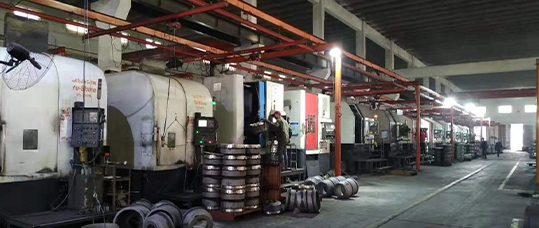
The performance of aircraft drum brakes is fundamentally linked to the materials employed and the precision of their manufacturing processes. Key materials include high-carbon steel alloys for the brake drum and pressure plate, providing high strength and wear resistance. Friction materials typically consist of sintered metal matrices reinforced with carbon, graphite, and various metallic additives to optimize the coefficient of friction and thermal stability. The choice of materials dictates operational temperature limits and wear characteristics. Manufacturing processes vary depending on component complexity. Brake drums are often produced through forging, followed by precision machining to ensure dimensional accuracy and surface finish. Friction discs are manufactured using powder metallurgy techniques, involving compaction and sintering of metal powders. Critical parameter control during manufacturing includes heat treatment to achieve desired hardness and tensile strength, dimensional tolerances to ensure proper fit and function, and surface treatments like carburizing or nitriding to enhance wear resistance. Welding processes, when utilized for assembly, require stringent quality control to prevent defects that could compromise structural integrity. The manufacturing process must adhere to AS9100 aerospace quality management standards. The composition of the friction material is carefully controlled to maintain a stable coefficient of friction across a wide temperature range, preventing brake fade.

Performance & Engineering
Aircraft drum brake performance is governed by a complex interplay of factors including hydraulic pressure, friction coefficient, thermal conductivity, and rotational speed. Force analysis involves calculating the braking torque generated by the friction discs, which is directly proportional to the hydraulic pressure and the coefficient of friction. The brake system must be engineered to handle the kinetic energy of the aircraft during landing, converting it into heat. Thermal management is crucial, as excessive heat can lead to brake fade and reduced stopping power. Heat dissipation is achieved through conduction, convection, and radiation, utilizing the brake drum and surrounding airflow. Environmental resistance is paramount, with materials selected to withstand exposure to de-icing fluids, hydraulic fluids, and corrosive atmospheric conditions. Compliance requirements are dictated by aviation authorities like the FAA (Federal Aviation Administration) and EASA (European Union Aviation Safety Agency), mandating specific performance standards and safety certifications. Functional implementation involves a hydraulic actuation system, typically powered by the aircraft's hydraulic pumps, to apply pressure to the brake pistons and engage the friction discs. Brake systems also incorporate anti-skid mechanisms to prevent wheel lockup and maintain directional control during braking. The design must account for the effects of thermal expansion and contraction of components, ensuring consistent performance over a wide range of operating temperatures.
Technical Specifications
| Parameter | Typical Value (Commercial Aircraft) | Typical Value (Regional Jet) | Typical Value (Helicopter) |
|---|---|---|---|
| Maximum Static Friction Coefficient | 0.35 - 0.45 | 0.30 - 0.40 | 0.25 - 0.35 |
| Maximum Operating Temperature (°C) | 400 | 350 | 300 |
| Hydraulic Operating Pressure (PSI) | 3000 - 5000 | 2500 - 4000 | 1500 - 3000 |
| Maximum Braking Torque (Nm) | 1500 - 2500 | 1000 - 1800 | 500 - 1200 |
| Friction Disc Material | Sintered Metal (Carbon/Graphite) | Sintered Metal (Carbon/Graphite) | Sintered Metal (Steel Fiber/Carbon) |
| Drum Material | High-Carbon Steel Alloy | High-Carbon Steel Alloy | Stainless Steel Alloy |
Failure Mode & Maintenance
Aircraft drum brakes are susceptible to several failure modes, including fatigue cracking of the brake drum due to thermal stress and repeated loading, delamination of the friction discs resulting from wear and tear, and degradation of the friction material due to exposure to extreme temperatures and contaminants. Oxidation of metal components can also lead to corrosion and reduced performance. A common failure mode is brake fade, caused by overheating and a reduction in the coefficient of friction. Fatigue cracking often initiates at stress concentration points, such as bolt holes and keyways. Preventative maintenance is crucial, involving regular inspection for wear, cracks, and corrosion. Maintenance procedures include cleaning and lubrication of brake components, measuring brake disc thickness to ensure compliance with minimum limits, and hydraulic system checks for leaks and proper operation. Bore scope inspections are used to identify internal cracks. Overhaul typically involves replacing worn friction discs, repairing or replacing damaged brake drums, and reconditioning hydraulic actuators. Proper storage is essential to prevent corrosion; components should be protected from moisture and contaminants. Detailed maintenance records are mandated by aviation regulations, tracking component life and maintenance actions.
Industry FAQ
Q: What is the primary cause of brake fade in aircraft drum brakes?
A: The primary cause of brake fade is excessive heat build-up within the brake system. This elevated temperature reduces the coefficient of friction of the friction material, diminishing its ability to generate sufficient braking force. Factors contributing to heat build-up include high landing speeds, frequent or hard braking events, and inadequate heat dissipation.
Q: How does the choice of friction material impact braking performance?
A: The friction material's composition directly influences the coefficient of friction, thermal stability, and wear resistance. Materials with a higher coefficient of friction provide greater stopping power, while those with superior thermal stability maintain consistent performance at elevated temperatures. The material's wear rate impacts the brake’s lifespan and maintenance intervals.
Q: What are the critical inspection points during aircraft drum brake maintenance?
A: Critical inspection points include the brake drum for cracks, distortion, and wear; the friction discs for thickness, delamination, and surface condition; hydraulic lines and actuators for leaks and proper operation; and the brake assembly for proper lubrication and component alignment. Non-destructive testing methods, such as eddy current inspection, are used to detect subsurface cracks.
Q: What role does hydraulic pressure play in aircraft drum brake operation?
A: Hydraulic pressure is the driving force behind the brake's operation. It actuates the brake pistons, clamping the friction discs against the brake drum, creating the frictional force necessary for deceleration. Maintaining adequate and consistent hydraulic pressure is essential for reliable braking performance.
Q: What standards govern the manufacture and maintenance of aircraft drum brakes?
A: Aircraft drum brakes are governed by stringent standards set by aviation authorities like the FAA (Federal Aviation Administration) and EASA (European Union Aviation Safety Agency). These standards are often referenced within AS9100 aerospace quality management systems. Specific standards related to material properties, manufacturing processes, and performance testing are also applied.
Conclusion
Aircraft drum brakes represent a complex and critical system within the aircraft landing gear assembly. Their performance relies heavily on advanced materials, precise manufacturing processes, and rigorous adherence to aviation safety standards. Understanding the interplay between material science, engineering principles, and operational factors is paramount for ensuring reliable and efficient braking performance. Effective maintenance practices, including regular inspection and component replacement, are essential for preventing failures and maintaining flight safety.
Looking forward, advancements in brake technology will likely focus on reducing weight, improving thermal management, and enhancing braking performance through the integration of new materials and control systems. The adoption of carbon-carbon braking systems, already prevalent in high-performance aircraft, may become more widespread. Continued research and development in friction material technology will also be crucial for optimizing braking characteristics and extending component life. The use of predictive maintenance techniques, leveraging sensor data and data analytics, will enable more proactive maintenance schedules, minimizing downtime and improving overall operational efficiency.