

Introduction
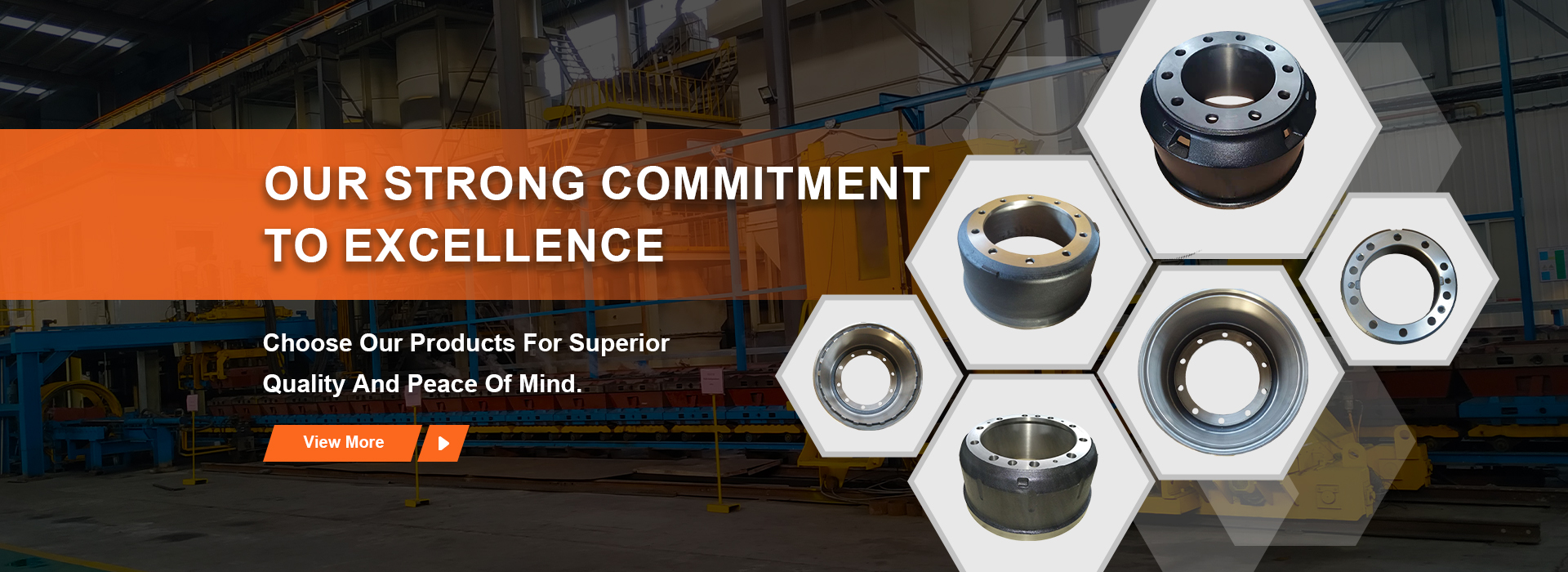
Brake drums are a fundamental component of braking systems in vehicles and industrial machinery, functioning as the surface against which brake shoes or pads apply friction to decelerate or stop rotational motion. Historically prevalent, particularly in older vehicle designs and heavy-duty applications, brake drums are now often superseded by disc brakes in passenger vehicles, although they remain vital in commercial vehicles, trailers, and specific industrial equipment. Their construction typically involves cast iron, though alternative materials like cast steel, aluminum alloys, and composite materials are employed to optimize performance characteristics. The core principle relies on converting kinetic energy into thermal energy through frictional contact, dissipating heat generated during braking. This guide will delve into the material science, manufacturing processes, performance engineering, failure modes, and maintenance considerations surrounding brake drums, providing a comprehensive technical overview for industry professionals.
Material Science & Manufacturing
The dominant material for brake drum construction is gray cast iron, specifically grades like ASTM A48 Class 30. This selection hinges on several key properties: high thermal conductivity (critical for heat dissipation), good wear resistance, machinability, and cost-effectiveness. The graphite flakes within the iron matrix contribute to its damping characteristics, reducing noise and vibration during braking. However, cast iron exhibits relatively low tensile strength and susceptibility to thermal shock. Alternative materials address these limitations. Cast steel drums offer improved strength and durability, particularly suitable for heavy-duty applications, but are more expensive and can exhibit higher heat transfer rates leading to potential brake fade. Aluminum alloy drums provide significant weight reduction, enhancing vehicle efficiency, but have lower thermal conductivity and wear resistance, often necessitating specialized friction materials. Composite drums, utilizing materials like carbon fiber reinforced polymers, offer the highest performance characteristics – lightweight, excellent heat resistance, and minimal thermal expansion – but are prohibitively expensive for most applications.
Manufacturing processes vary depending on drum size, complexity, and production volume. Sand casting is the most common method, involving creating a mold using sand, pouring molten metal into the cavity, and allowing it to solidify. Key parameters controlled during sand casting include melt temperature, pouring rate, and cooling rate to minimize defects like porosity, shrinkage cavities, and hot tears. Centrifugal casting is used for producing drums with higher density and improved mechanical properties, particularly those requiring thin walls. Machining operations – turning, milling, and grinding – are essential for achieving the precise dimensional tolerances and surface finish required for optimal braking performance. Heat treatment processes, such as annealing and quenching, are employed to relieve residual stresses and enhance material properties. Surface treatments, like plating or coating, can improve corrosion resistance and wear characteristics.
Performance & Engineering
Brake drum performance is fundamentally dictated by its ability to effectively dissipate heat generated during braking. Excessive heat leads to brake fade – a reduction in braking efficiency due to the weakening of friction materials and the expansion of drum and shoe/pad components. Thermal stress analysis is crucial in drum design, utilizing finite element methods (FEM) to predict temperature distribution and stress concentrations under various braking conditions. Drum geometry, including diameter, width, and wall thickness, significantly influences heat dissipation. Larger diameter drums provide increased surface area for heat transfer, while wider drums offer greater frictional contact area. Wall thickness impacts structural rigidity and resistance to deformation.
Engineering considerations extend to dynamic analysis, evaluating the drum’s response to centrifugal forces and impact loads. Resonant frequency analysis is performed to avoid harmonic vibrations that can induce noise and wear. Compliance with industry standards (discussed in the conclusion) dictates minimum material properties, dimensional tolerances, and performance requirements. Furthermore, the drum's interaction with the braking system – particularly the brake shoes or pads – must be carefully engineered to ensure optimal friction coefficient, minimal wear, and consistent braking performance. Factors like friction material composition, shoe/pad contact area, and hydraulic pressure all play critical roles. Finite element analysis is also used to evaluate stress distribution within the drum during braking events, ensuring structural integrity and preventing premature failure.
Technical Specifications
| Parameter | Typical Value (Light Duty Vehicle) | Typical Value (Heavy Duty Vehicle) | Testing Standard |
|---|---|---|---|
| Diameter (mm) | 203-305 | 320-410 | SAE J477 |
| Width (mm) | 38-50 | 76-127 | SAE J477 |
| Material | Gray Cast Iron (ASTM A48 Class 30) | Gray Cast Iron (ASTM A48 Class 40/50) or Cast Steel | ASTM A48 |
| Tensile Strength (MPa) | 200-300 | 400-600 | ASTM A48 |
| Hardness (HB) | 180-240 | 220-300 | ASTM A25 |
| Thermal Conductivity (W/m·K) | 50-60 | 45-55 | ASTM E1225 |
Failure Mode & Maintenance
Brake drum failure modes are diverse and often interconnected. Thermal cracking is a prevalent issue, arising from repeated heating and cooling cycles that induce stress concentrations, particularly in areas with geometric discontinuities. Fatigue cracking can occur due to cyclic loading during braking, especially in drums subjected to high stress levels. Wear, resulting from frictional contact with brake shoes/pads, gradually reduces drum thickness, potentially leading to structural failure. Scoring, caused by abrasive particles trapped between the drum and shoes/pads, creates surface imperfections that accelerate wear and reduce braking efficiency. Corrosion, particularly in environments with high humidity or exposure to road salts, weakens the material and promotes crack initiation. Finally, deformation, caused by excessive heat or impact loads, can result in runout and uneven braking.
Preventative maintenance is crucial for extending brake drum life. Regular inspections should identify cracks, scoring, and excessive wear. Measuring drum thickness with a micrometer ensures it remains within specified limits. Resurfacing drums can remove minor imperfections and restore braking performance, but should be performed within allowable limits to avoid compromising structural integrity. Proper lubrication of braking system components reduces friction and wear. Avoiding harsh braking practices minimizes thermal stress. Addressing corrosion promptly with protective coatings extends drum life. In cases of severe cracking or deformation, drum replacement is mandatory. It's vital to adhere to manufacturer’s recommended maintenance schedules and utilize qualified technicians for inspections and repairs.
Industry FAQ
Q: What is the primary reason for the shift from drum brakes to disc brakes in passenger vehicles?
A: The primary reason is superior heat dissipation. Disc brakes, with their open design and greater surface area, cool significantly faster than enclosed drum brakes. This translates to reduced brake fade and more consistent stopping power, especially during repeated or prolonged braking events. While drums offer adequate performance for many applications, discs provide a safety margin crucial for modern driving conditions.
Q: How does the material composition of a brake drum affect its resistance to thermal shock?
A: Materials with higher thermal conductivity and lower coefficients of thermal expansion exhibit greater resistance to thermal shock. Cast iron, while reasonably good, is susceptible to cracking under severe thermal shock. Steel offers improved resistance, and composites provide the best performance, minimizing deformation and cracking due to rapid temperature changes. The graphite flake structure in cast iron plays a role in absorbing some thermal shock, but this is limited.
Q: What are the critical machining tolerances that must be maintained during brake drum manufacturing?
A: Critical tolerances include diameter, runout (axial and radial), surface finish, and wall thickness variation. Runout, in particular, is crucial, as it directly affects braking smoothness and efficiency. Surface finish impacts friction coefficient and wear rates. Diametrical tolerances ensure proper fitment and braking force distribution. Variations in wall thickness can lead to uneven heat dissipation and stress concentrations.
Q: Can a brake drum be repaired if it exhibits minor scoring on the braking surface?
A: Minor scoring can often be addressed through drum resurfacing, also known as turning. This process removes a thin layer of material, restoring a smooth braking surface. However, there are limits to how much material can be removed while still maintaining the drum's structural integrity and meeting minimum thickness specifications. Severe scoring or deep gouges may render the drum unrepairable.
Q: What role do international standards play in ensuring the safety and reliability of brake drums?
A: International standards, like those from SAE, ASTM, ISO, and others, establish minimum material properties, dimensional tolerances, performance requirements, and testing procedures. Compliance with these standards ensures a baseline level of quality and safety. Standards define parameters such as tensile strength, hardness, thermal conductivity, and braking performance metrics, providing a framework for design, manufacturing, and quality control.
Conclusion
Brake drums, while facing competition from disc brake technology, remain a critical component in numerous applications demanding robust and reliable braking solutions. The selection of appropriate materials – primarily cast iron, steel, or aluminum alloys – is dictated by performance requirements, cost constraints, and environmental factors. Precise manufacturing processes, rigorous quality control, and adherence to established industry standards are essential for ensuring structural integrity, optimal heat dissipation, and consistent braking performance. Understanding the potential failure modes and implementing proactive maintenance strategies are vital for maximizing drum lifespan and ensuring the safety of operating equipment.
Looking ahead, advancements in materials science, such as the development of more durable and heat-resistant composites, and innovative manufacturing techniques like additive manufacturing, hold the potential to further enhance brake drum performance and efficiency. Continued research focused on optimizing drum geometry, friction material compatibility, and braking system integration will be crucial for meeting the evolving demands of the automotive and industrial sectors. Addressing concerns around environmental impact through improved material recyclability and reduced wear rates will also be paramount.