
Introduction
Determining brake drum size is crucial for vehicle safety and performance. Brake drums, a fundamental component of braking systems, vary significantly in diameter and width depending on vehicle type, load capacity, and braking requirements. This guide provides an in-depth technical overview of brake drum sizing, encompassing material science, manufacturing processes, performance engineering, potential failure modes, and relevant industry standards. Correct brake drum sizing ensures adequate heat dissipation, optimized braking force, and prolonged system life. The core industry pain point lies in accurately identifying the correct replacement drum, avoiding compatibility issues, and ensuring adherence to safety regulations, particularly in fleet maintenance and heavy-duty applications. Improper sizing can lead to reduced braking efficiency, premature wear, and potentially catastrophic failure.
Material Science & Manufacturing
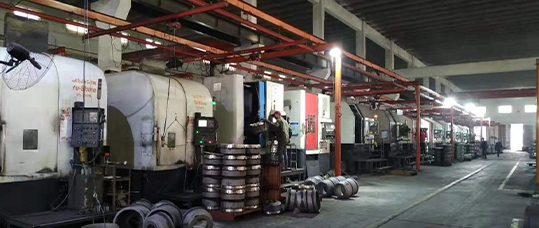
Brake drums are predominantly manufactured from gray cast iron, selected for its superior heat capacity, wear resistance, and damping characteristics. The specific grade of gray cast iron varies, typically ranging from Class 30 to Class 60, dictated by tensile strength and hardness requirements. Key material properties include thermal conductivity (approximately 45-55 W/m·K), compressive strength (600-800 MPa), and a Brinell hardness of 180-240 HB. Manufacturing processes primarily involve sand casting, although centrifugal casting is employed for larger diameter drums where enhanced structural integrity is needed. The sand casting process necessitates precise control of sand composition (silica, clay, binders), mold temperature, and pouring temperature of the molten iron (typically 1250-1350°C). Cooling rate is critical to control graphite flake size and distribution, influencing the material’s machinability and resistance to thermal shock. Post-casting, drums undergo machining operations – turning, milling, and grinding – to achieve precise dimensions and surface finish. Surface treatments such as annealing may be used to relieve internal stresses and improve ductility. Chemical composition analysis, utilizing techniques like X-ray fluorescence (XRF), is vital to ensure conformity to specified material standards. Variations in carbon content directly impact hardness and wear resistance; silicon content influences fluidity during casting.
Performance & Engineering
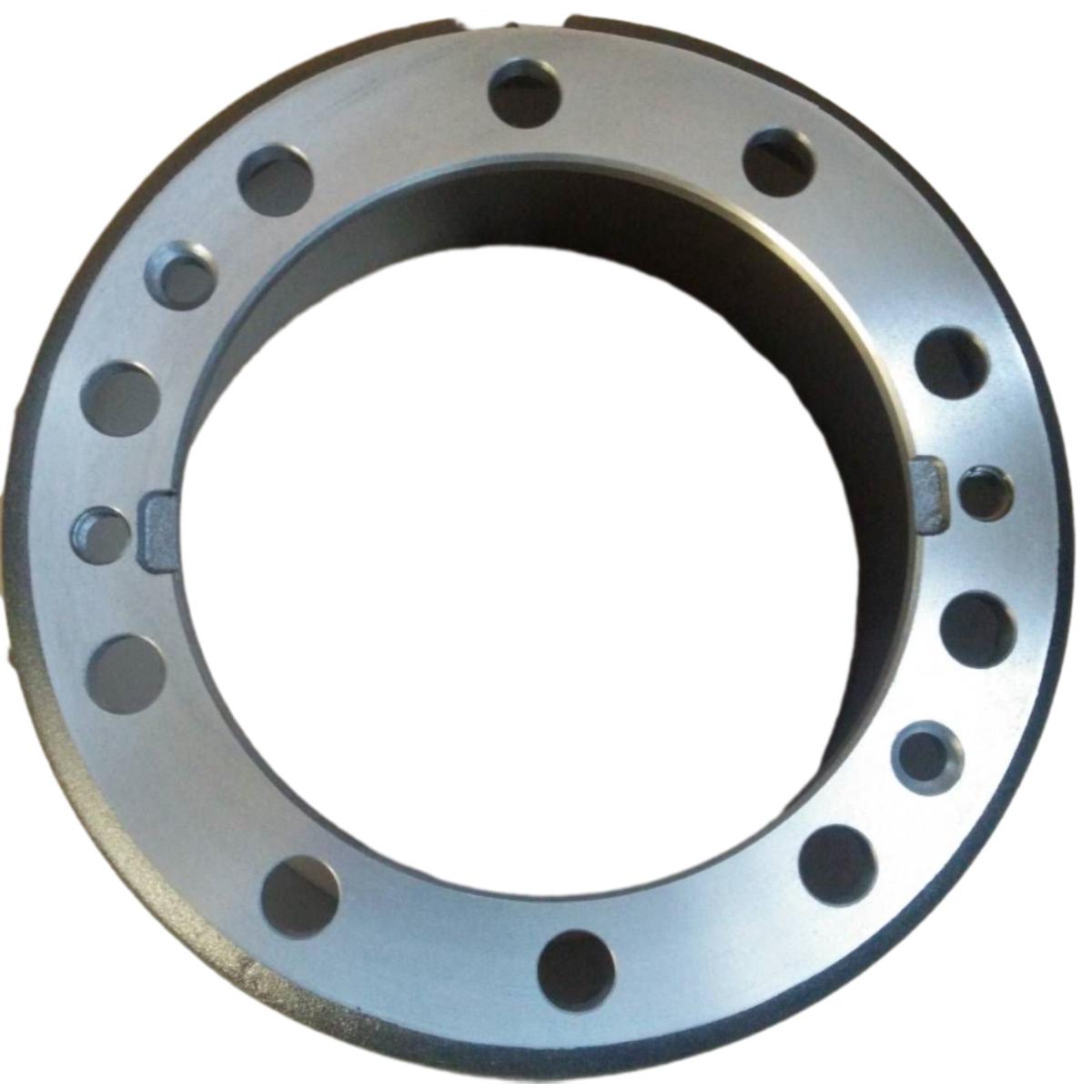
Brake drum performance is fundamentally governed by its ability to dissipate heat generated during braking. Heat generation is directly proportional to the kinetic energy of the vehicle and the braking force applied. The drum’s diameter and width influence the surface area available for heat transfer. Larger diameter drums generally offer greater thermal capacity but increase the leverage required for braking. Finite element analysis (FEA) is employed to model thermal stress distribution within the drum during braking cycles, identifying potential hot spots and optimizing drum geometry. Engineering calculations involve assessing the shear stress on the drum's inner surface due to the friction between the brake shoes and the drum. This shear stress must remain below the material’s shear strength to prevent deformation or cracking. The drum's rotational inertia also impacts braking performance; higher inertia demands greater braking torque to achieve the same deceleration rate. Compliance requirements, dictated by regulations such as FMVSS 105 (Federal Motor Vehicle Safety Standards) in the United States and ECE R90 in Europe, specify minimum braking performance criteria, including stopping distance and fade resistance. Brake drum design must consider factors such as coefficient of friction of the brake lining material, drum material's thermal expansion coefficient, and potential for moisture absorption which can affect braking effectiveness.
Technical Specifications
| Diameter (inches) | Width (inches) | Bolt Pattern | Material Grade (Cast Iron) |
|---|---|---|---|
| 8.0 | 1.5 | 5x4.5 | Class 30 |
| 9.0 | 2.0 | 5x5.5 | Class 35 |
| 10.0 | 2.5 | 6x5.5 | Class 40 |
| 11.0 | 3.0 | 8x6.5 | Class 45 |
| 12.0 | 3.5 | 8x7.0 | Class 50 |
| 13.0 | 4.0 | 9x8.0 | Class 60 |
Failure Mode & Maintenance
Common brake drum failure modes include thermal cracking, wear, warping, and corrosion. Thermal cracking typically originates from localized hot spots due to uneven brake shoe contact or inadequate heat dissipation. Repeated thermal cycling induces fatigue cracking, propagating through the drum material. Wear occurs primarily due to abrasive action of the brake shoes. Excessive wear reduces drum thickness, diminishing heat capacity and potentially leading to structural failure. Warping results from uneven heating and cooling, causing the drum to lose its circularity and creating vibrations during braking. Corrosion, particularly in environments with high salt concentration, weakens the drum material and accelerates wear. Preventive maintenance includes regular inspection for cracks, wear, and corrosion. Drum thickness should be measured periodically to ensure it remains within specified limits. Surface rust can be removed with wire brushing, but deep pitting indicates significant corrosion requiring drum replacement. Proper brake adjustment is crucial to maintain uniform brake shoe contact and minimize uneven wear. Avoid harsh braking practices that generate excessive heat. Wheel bearing maintenance is also critical; worn wheel bearings can induce vibrations that exacerbate drum wear and warping. Periodic drum resurfacing (turning) can restore a smooth braking surface, but should be limited to remove minimal material to maintain adequate thickness.
Industry FAQ
Q: What is the significance of the drum’s effective diameter in relation to braking force?
A: The effective diameter is the actual diameter of the braking surface. A larger effective diameter provides a greater mechanical advantage, translating to increased braking torque for a given brake shoe force. However, a larger diameter also increases the moment of inertia, potentially reducing responsiveness. Optimal diameter selection involves a trade-off between torque multiplication and system responsiveness.
Q: How does the material composition affect the drum’s resistance to thermal shock?
A: The graphite flake size and distribution within the cast iron matrix are critical. Finer, more uniformly distributed graphite flakes enhance thermal shock resistance. Higher silicon content improves fluidity during casting, contributing to a more homogenous microstructure. Variations in composition can lead to stress concentrations and increased susceptibility to cracking.
Q: What are the consequences of using a brake drum with an incorrect bolt pattern?
A: An incorrect bolt pattern will prevent the drum from securely mounting to the wheel hub, creating a significant safety hazard. The drum may detach during braking, leading to loss of vehicle control. It’s imperative to verify the bolt pattern matches the vehicle’s specifications.
Q: How can you determine if a brake drum needs to be replaced versus resurfaced?
A: Drum thickness is the primary determinant. If the drum has reached its minimum allowable thickness after resurfacing, it must be replaced. Significant cracking, deep pitting from corrosion, or evidence of severe warping also necessitate replacement. Resurfacing should only be performed if the drum is still within thickness specifications and free from major structural defects.
Q: What role does drum venting play in heat dissipation?
A: Drum venting, typically in the form of fins or holes, increases the surface area exposed to airflow, enhancing convective heat transfer. This effectively lowers the drum’s operating temperature, reducing the risk of thermal fade and extending brake life. Venting design must balance heat dissipation with maintaining sufficient structural integrity.
Conclusion
Accurately determining brake drum size is not merely a matter of physical dimensions, but a critical engineering consideration impacting vehicle safety, braking performance, and component longevity. This guide has detailed the multifaceted factors influencing drum selection, from material science and manufacturing processes to performance engineering and potential failure modes. Understanding the interplay between drum diameter, width, material composition, and operational stresses is paramount for ensuring optimal braking efficiency and adherence to industry safety standards.
Future developments in brake drum technology may include the incorporation of advanced materials like ceramic matrix composites for enhanced thermal conductivity and reduced weight. Furthermore, sophisticated modeling techniques and sensor technologies can enable real-time monitoring of drum temperature and stress, allowing for predictive maintenance and optimized braking control. Continued research and development in this area are essential to meet the evolving demands of the automotive and heavy-duty vehicle industries.