
Introduction
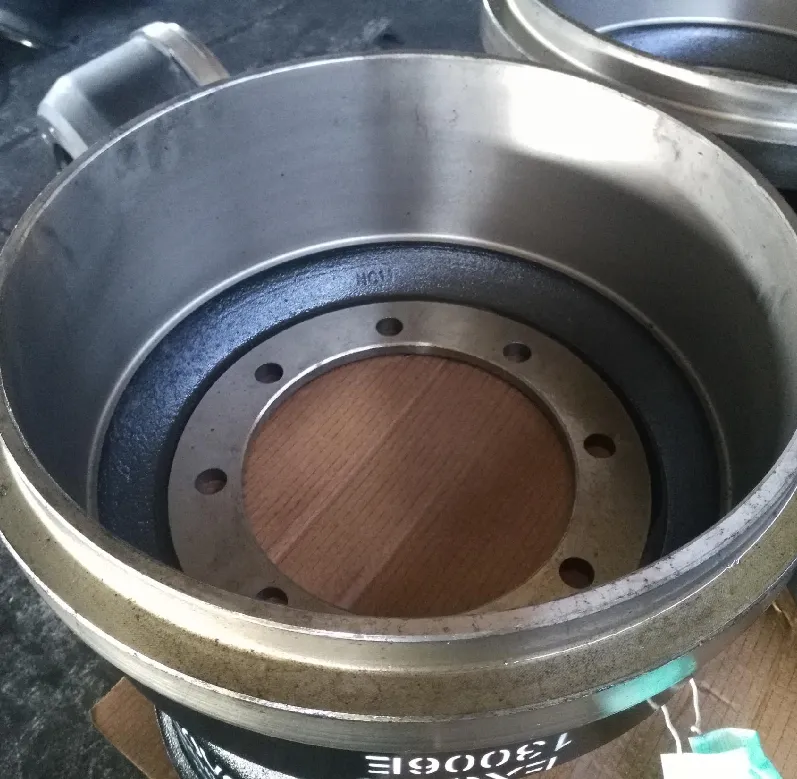
Truck brake drums are a critical component of heavy-duty vehicle braking systems, responsible for converting kinetic energy into thermal energy through friction generated by brake shoes or pads. Positioned within the industry chain downstream of foundries and material suppliers, brake drums directly impact vehicle safety and operational efficiency. Their performance is characterized by thermal capacity, wear resistance, and structural integrity. Modern brake drums primarily utilize gray cast iron due to its favorable thermal properties and cost-effectiveness, although alternative materials like ductile iron and composite materials are gaining traction in specialized applications. The core challenge facing the industry revolves around balancing drum weight with the need to dissipate substantial heat generated during frequent and hard braking events, especially in demanding commercial vehicle operations. Ensuring consistent friction performance across varying load conditions and maintaining dimensional stability over the drum’s service life are also key considerations. Failure can result in reduced braking performance, increased stopping distances, and potentially catastrophic accidents.
Material Science & Manufacturing
The predominant material for truck brake drum construction is gray cast iron (ASTM A48 Class 30). This material’s composition typically ranges from 2.5-4.0% carbon, 1.2-2.5% silicon, 0.5-1.5% manganese, and trace amounts of sulfur and phosphorus. The carbon exists primarily as graphite flakes within the iron matrix, providing lubrication and contributing to damping characteristics. Manufacturing processes begin with sand casting, utilizing patterns to create the drum shape within a mold. Precise mold design and control of pouring temperature (typically 1500-1600°C) are crucial to minimize defects such as porosity and shrinkage cavities. Following casting, drums undergo heat treatment – typically annealing – to relieve residual stresses and improve machinability. Machining operations, including turning, milling, and boring, are then performed to achieve the final dimensions and surface finish. Critical parameters controlled during machining include cutting speed, feed rate, and coolant application to prevent thermal distortion and ensure accurate geometry. Surface treatments, such as pearlitic hardening, are sometimes employed to enhance wear resistance. Recently, the utilization of computer numerical control (CNC) machining has increased, allowing for higher precision and repeatability in the manufacturing process. Quality control at each stage involves dimensional inspection, non-destructive testing (NDT) like ultrasonic testing, and material composition analysis.

Performance & Engineering
Brake drum performance is fundamentally governed by thermal dynamics and friction characteristics. During braking, kinetic energy is converted into heat. The drum must efficiently dissipate this heat to prevent thermal fade – a reduction in braking performance due to overheating. Thermal analysis, employing finite element modeling (FEM), is routinely used during the design phase to predict temperature distribution and identify potential hotspots. Force analysis considers the radial and axial stresses induced by braking torque and centrifugal forces. Structural integrity is paramount, and drums are designed with sufficient safety factors to withstand these loads without cracking or deformation. Environmental resistance is also crucial. Drums are exposed to corrosive elements like road salt, moisture, and contaminants. Protective coatings, such as zinc phosphate or epoxy-based paints, are applied to mitigate corrosion. Compliance requirements, including FMVSS 121 (Federal Motor Vehicle Safety Standard) in the US and ECE R90 in Europe, mandate minimum performance criteria for braking systems, including brake drum specifications related to material properties, dimensional tolerances, and thermal capacity. Furthermore, material selection influences the coefficient of friction with brake linings; optimized friction pairings are critical for effective and consistent braking.
Technical Specifications
| Diameter (in) | Width (in) | Material | Maximum Operating Temperature (°F) |
|---|---|---|---|
| 14 | 4 | Gray Cast Iron (ASTM A48 Class 30) | 800 |
| 16 | 5 | Gray Cast Iron (ASTM A48 Class 30) | 850 |
| 18 | 6 | Ductile Iron (ASTM A536-85) | 900 |
| 22.5 | 7 | Gray Cast Iron (ASTM A48 Class 30) | 800 |
| 22.5 | 8 | Ductile Iron (ASTM A536-85) | 950 |
| 24 | 9 | Gray Cast Iron (ASTM A48 Class 30) | 850 |
Failure Mode & Maintenance
Common failure modes in truck brake drums include thermal cracking, wear, distortion, and corrosion. Thermal cracking, particularly in gray cast iron, occurs due to rapid temperature fluctuations and the material's relatively low thermal shock resistance. Wear is a gradual process resulting from the abrasive action of brake linings. Excessive wear reduces drum thickness, compromising structural integrity. Distortion, often caused by uneven heat distribution or improper machining, can lead to brake drag and reduced braking efficiency. Corrosion, especially in environments with high salt concentration, weakens the drum material and accelerates wear. Fatigue cracking can initiate at stress concentration points, such as keyways or bolt holes, due to cyclical loading. Delamination can occur in composite drums, resulting in a loss of structural integrity. Maintenance practices include regular visual inspections for cracks, wear, and corrosion. Brake drum thickness should be measured periodically to ensure it remains within acceptable limits. Resurfacing or replacing drums when they reach the minimum thickness is critical. Proper brake adjustment is also vital to prevent uneven wear and brake drag. Lubrication of brake components (excluding the friction surfaces) helps reduce friction and wear. Preventative maintenance schedules should be strictly adhered to, based on vehicle operating conditions and manufacturer recommendations.
Industry FAQ
Q: What is the primary advantage of using ductile iron versus gray cast iron in brake drums?
A: Ductile iron exhibits significantly higher tensile strength and impact resistance compared to gray cast iron. This allows for thinner drum designs while maintaining equivalent structural integrity, reducing weight. Furthermore, ductile iron possesses better thermal conductivity, aiding in heat dissipation. However, it is typically more expensive than gray cast iron.
Q: How does the drum’s surface finish affect braking performance and wear?
A: A smooth, consistent surface finish is crucial. Rough surfaces can lead to increased friction and accelerated wear of both the drum and brake linings. A proper finish promotes uniform contact between the drum and linings, optimizing friction performance and minimizing noise. Controlled machining processes and surface treatments are essential to achieve the desired finish.
Q: What are the key indicators that a brake drum needs replacement?
A: Key indicators include exceeding the minimum allowable thickness specified by the manufacturer, the presence of significant cracks, evidence of severe distortion (runout exceeding specifications), and extensive corrosion that compromises structural integrity. Deep scoring or spalling of the braking surface also necessitates replacement.
Q: How does the operating environment (e.g., mountainous terrain vs. highway driving) influence brake drum selection and maintenance?
A: Mountainous terrain and frequent hard braking demand drums with higher thermal capacity and wear resistance. Ductile iron or composite drums may be preferable in such applications. Increased maintenance frequency, including more frequent inspections and potential resurfacing, is also necessary. Highway driving, while generally less demanding, still requires regular maintenance to address wear and corrosion.
Q: What role do composite materials play in modern brake drum technology?
A: Composite brake drums, often utilizing materials like steel or aluminum matrix reinforced with ceramic particles, offer significant weight reduction compared to cast iron drums. They also exhibit excellent thermal conductivity and corrosion resistance. However, they are generally more expensive and require specialized manufacturing processes. Their adoption is growing in applications where weight savings are paramount.
Conclusion
Truck brake drums represent a critical safety component demanding careful material selection, precise manufacturing, and diligent maintenance. The industry continues to balance the need for cost-effectiveness with demands for improved performance, weight reduction, and durability. Gray cast iron remains the dominant material due to its favorable thermal characteristics and cost, but ductile iron and composite materials are increasingly utilized in specialized applications. Ongoing research and development are focused on optimizing drum designs, enhancing thermal management, and extending service life.
Future trends will likely include wider adoption of lightweight materials, advanced surface coatings to improve wear resistance and corrosion protection, and the integration of sensor technologies for real-time monitoring of drum temperature and wear. Predictive maintenance strategies, leveraging data analytics, will also become increasingly important for optimizing fleet operations and ensuring braking system reliability. Adherence to relevant industry standards and rigorous quality control procedures are fundamental to ensuring the safety and performance of truck brake drum systems.