

Introduction
The drum brake system is a foundational braking technology employed extensively in automotive, heavy-duty vehicle, and industrial machinery applications. Positioned as a critical safety component within the vehicle's chassis system, it operates on the principle of friction generated by brake shoes pressing against the inner surface of a rotating drum. Its functionality directly impacts vehicle stopping distance and overall safety performance. While increasingly superseded by disc brake systems in front axle applications, drum brakes remain prevalent on rear axles due to their cost-effectiveness, self-energizing characteristics, and suitability for parking brake integration. Core performance metrics include braking torque, fade resistance, and service life, all intrinsically linked to material selection, manufacturing precision, and operational conditions. A key industry pain point lies in managing brake fade under repeated hard braking and mitigating corrosion in diverse operating environments.
Material Science & Manufacturing
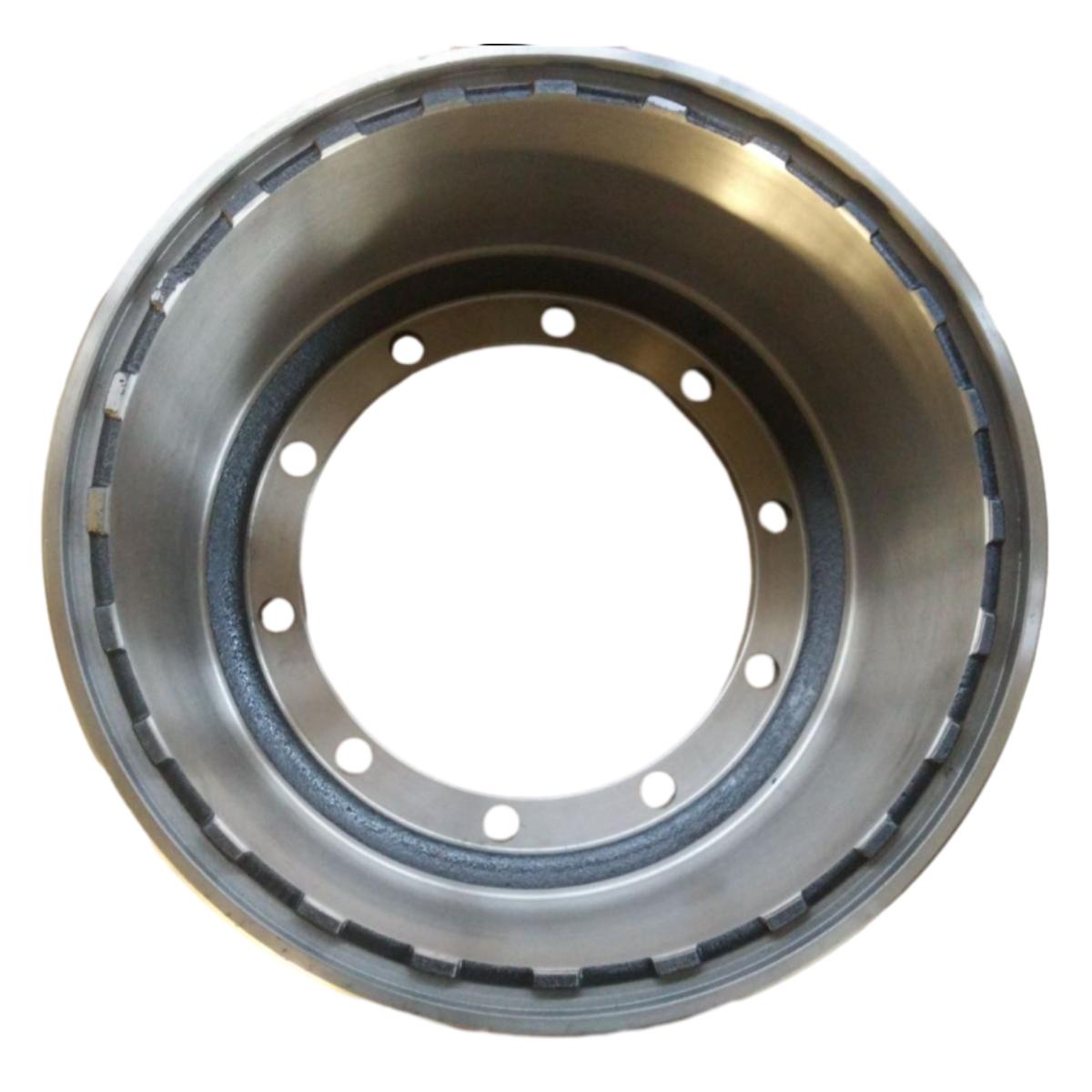
Drum brake systems rely on a combination of materials, each selected for specific properties. The brake drum itself is traditionally constructed from grey cast iron (ASTM A48 Class 30) due to its high thermal conductivity, wear resistance, and damping characteristics. The chemical composition typically includes 2.5-4.0% carbon, 1.2-2.5% silicon, 0.3-1.0% manganese, and small amounts of sulfur and phosphorus. Manufacturing involves sand casting, followed by machining to precise dimensional tolerances and surface finish requirements. Brake shoes are commonly fabricated from woven or sintered metallic friction materials bonded to steel backing plates (typically SAE 1010 steel). Friction material composition varies widely, encompassing organic, semi-metallic, and ceramic formulations, each providing a trade-off between friction coefficient, wear rate, and noise characteristics. Manufacturing the friction material involves mixing, pressing, sintering, and bonding. The lining is mechanically attached or adhesively bonded to the steel shoe. Critical manufacturing parameters include material density, porosity, bond strength, and frictional coefficient consistency. Wheel cylinders, responsible for hydraulic actuation, are typically made from ductile iron and undergo precision casting and machining, with stringent quality control on bore diameter and surface roughness. Surface treatments such as phosphate coating are applied to prevent corrosion. Quality control relies heavily on non-destructive testing methods like ultrasonic inspection and magnetic particle inspection to identify casting defects.
Performance & Engineering
The performance of a drum brake system is dictated by a complex interplay of forces and thermal dynamics. Force analysis involves calculating the braking torque generated by the friction between the brake shoes and the drum. This torque is a function of the friction coefficient, normal force applied by the wheel cylinder, and the effective radius of the drum. Environmental resistance is a crucial consideration. Corrosion, particularly from road salt and moisture, can significantly degrade the drum and shoe surfaces, reducing friction and increasing wear. Galvanic corrosion between dissimilar metals (e.g., steel shoes and cast iron drums) must be mitigated through protective coatings and material selection. Compliance requirements, such as FMVSS 105 in the United States and ECE R13 in Europe, mandate minimum braking performance standards, including stopping distance and brake force distribution. Functional implementation relies on hydraulic pressure generated by the master cylinder. This pressure actuates the wheel cylinders, forcing the brake shoes outwards against the drum. Self-energizing action, inherent in drum brake design, amplifies the braking force due to the geometry of the shoe and drum interface. However, this effect can also lead to instability and grabbing if not properly controlled. Fade resistance is improved through drum design (e.g., finned drums for enhanced heat dissipation) and friction material selection (materials with high fade resistance coefficients).
Technical Specifications
| Parameter | Typical Value (Passenger Vehicle) | Typical Value (Heavy-Duty Vehicle) | Test Standard |
|---|---|---|---|
| Drum Diameter | 203 - 305 mm | 320 – 406 mm | SAE J1100 |
| Drum Width | 30 - 50 mm | 70 - 120 mm | ISO 3864 |
| Friction Coefficient (μ) | 0.25 – 0.40 | 0.35 – 0.50 | ASTM D1002 |
| Braking Torque (Maximum) | 300 – 600 Nm | 800 – 2000 Nm | ISO 3452 |
| Operating Temperature Range | -40°C to +260°C | -40°C to +315°C | ECE R13 |
| Drum Material | Grey Cast Iron (G3000) | Grey Cast Iron (G4000) | EN 10253 |
Failure Mode & Maintenance
Drum brake systems are susceptible to several failure modes. Fatigue cracking in the drum, often initiated by thermal stress and impact loading, can lead to catastrophic failure. Delamination of the brake shoe lining, caused by bond failure between the friction material and the backing plate, reduces braking effectiveness. Grease or oil contamination of the friction surfaces significantly reduces the friction coefficient, leading to brake fade and increased stopping distances. Rust and corrosion, particularly in areas exposed to moisture and road salt, can seize moving parts and reduce braking performance. Wheel cylinder leaks, due to corrosion or damaged seals, result in loss of hydraulic pressure and brake failure. Maintenance procedures include regular inspection of brake shoe wear, drum surface condition, and wheel cylinder seals. Brake drums should be periodically resurfaced to remove surface irregularities and maintain optimal friction. Brake fluid should be flushed and replaced according to the manufacturer's recommendations to prevent corrosion and maintain hydraulic system integrity. Proper adjustment of the brake shoes is crucial to ensure consistent contact with the drum and prevent dragging. A common failure analysis technique involves metallurgical examination of fractured components to identify the root cause of failure. Non-destructive testing like dye penetrant inspection can reveal surface cracks before they propagate to critical size.
Industry FAQ
Q: What are the primary causes of brake fade in drum brake systems?
A: Brake fade is primarily caused by the overheating of the drum and shoes, leading to a reduction in the friction coefficient. Repeated hard braking generates significant heat, which can vaporize brake fluid or cause the friction material to outgas, creating a cushion of gas between the shoes and drum. This reduces the clamping force and braking effectiveness. Drum design, friction material selection, and driving habits all influence fade resistance.
Q: How does the drum's material composition impact its performance and longevity?
A: The composition of the drum, typically grey cast iron, is critical. Higher carbon content improves wear resistance, while silicon enhances thermal conductivity and reduces distortion. The microstructure of the cast iron, including the size and distribution of graphite flakes, influences its damping characteristics and resistance to thermal cracking. Proper heat treatment is essential to achieve the desired mechanical properties.
Q: What are the advantages and disadvantages of using different friction materials (organic, semi-metallic, ceramic)?
A: Organic materials offer quiet operation and good pedal feel but have lower fade resistance and wear faster. Semi-metallic materials provide a good balance of performance and cost but can generate more noise and dust. Ceramic materials offer high fade resistance and long life but are generally more expensive and can be less effective in wet conditions.
Q: What preventative measures can be taken to minimize corrosion within the drum brake system?
A: Corrosion can be minimized by using corrosion-resistant materials, applying protective coatings (e.g., phosphate coating, zinc plating), and ensuring proper sealing of the wheel cylinders. Regular inspection and cleaning of the brake components, along with the use of corrosion inhibitors in the brake fluid, can also help prevent corrosion.
Q: How do regulatory standards like FMVSS 105 influence the design and testing of drum brake systems?
A: FMVSS 105 (Federal Motor Vehicle Safety Standard 105) establishes minimum performance requirements for braking systems, including stopping distance, brake force distribution, and parking brake effectiveness. Manufacturers must design and test their drum brake systems to meet these requirements, which directly impacts drum size, friction material selection, and hydraulic system design.
Conclusion
The drum brake system, while evolving in design and materials, remains a viable and cost-effective braking solution, particularly for rear axle applications and heavy-duty vehicles. Its performance is fundamentally linked to meticulous material selection, precision manufacturing, and adherence to stringent industry standards. Addressing key pain points such as brake fade and corrosion through optimized drum design, advanced friction materials, and proactive maintenance practices is critical for ensuring long-term reliability and safety.
Future advancements in drum brake technology will likely focus on enhancing heat dissipation through novel drum geometries and materials, developing more durable and fade-resistant friction materials, and integrating intelligent monitoring systems to predict maintenance needs and prevent failures. The continued refinement of drum brake systems will ensure their relevance in a rapidly changing automotive landscape.