
Introduction
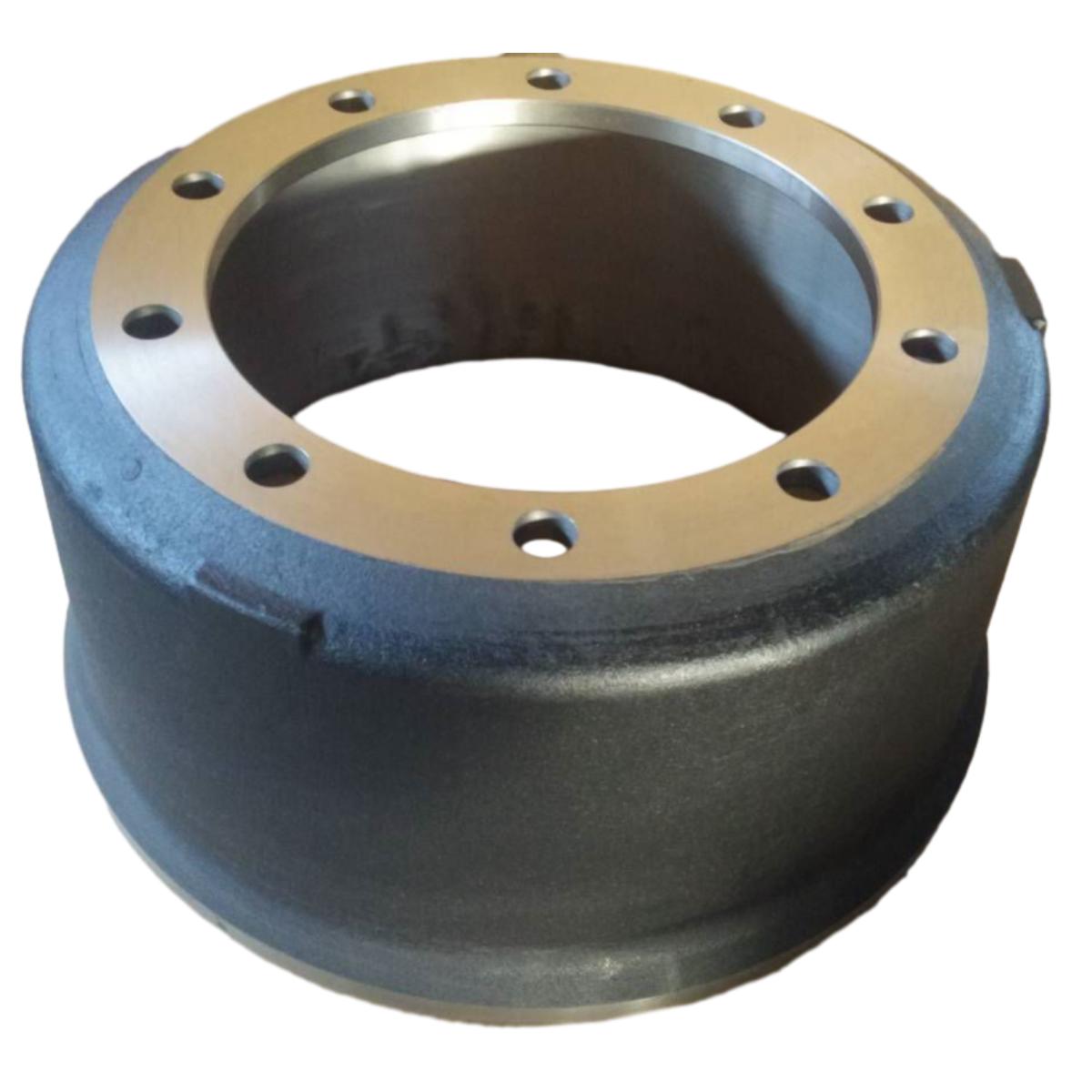
Disc brakes and drum brakes represent the two primary technologies employed in vehicular braking systems. While both serve the fundamental purpose of decelerating or stopping a vehicle, their underlying principles, construction, performance characteristics, and application domains differ significantly. Drum brakes, historically dominant, utilize friction generated within a rotating drum by expanding shoes pressed against the inner surface. Disc brakes, a later development, employ calipers to squeeze pads against a rotating disc, offering improved heat dissipation and responsiveness. This guide provides an in-depth analysis of these technologies, covering material science, manufacturing processes, performance engineering, failure modes, and relevant industry standards. A core pain point in brake system selection remains balancing cost effectiveness with performance and safety, particularly in commercial vehicle applications where high duty cycles and stringent regulations are paramount. The evolution of braking systems is also heavily influenced by the increasing demands of electric vehicles and advanced driver-assistance systems (ADAS).
Material Science & Manufacturing
Drum Brakes: The drum itself is typically constructed from grey cast iron, chosen for its high thermal conductivity, wear resistance, and relatively low cost. Manufacturing involves casting, machining, and surface finishing processes. The brake shoes are often lined with friction materials composed of organic compounds, semi-metallic materials, or ceramic composites, bonded to a steel backing plate. Manufacturing of these shoes involves compression molding and curing processes, requiring precise control of resin content and fiber orientation. Springs, crucial for retraction and force distribution, are manufactured from high-tensile steel wire through a cold forming process. Disc Brakes: Discs are commonly made from cast iron, though carbon ceramic and composite materials are increasingly used in high-performance applications. Cast iron discs are produced via centrifugal casting or directional solidification, maximizing strength and minimizing porosity. Calipers are typically aluminum alloys, offering a good strength-to-weight ratio, manufactured through die casting and subsequent machining. Brake pads utilize a similar range of friction materials as drum shoes, but are designed for higher operating temperatures and more aggressive wear profiles. The manufacturing process emphasizes consistent friction coefficient and minimal fade characteristics. Surface coatings, such as zinc or manganese phosphate, are applied to both drums and discs to enhance corrosion resistance. Critical parameter control during manufacturing involves ensuring dimensional accuracy, surface finish, and material composition to maintain consistent braking performance.
Performance & Engineering
Force Analysis: Disc brakes provide a more linear force response due to the direct application of force to the disc surface. Drum brakes exhibit a self-energizing effect, where friction force amplifies the applied force, but this can lead to instability and grabbing. Environmental Resistance: Both systems are susceptible to corrosion from road salts and moisture. Disc brakes, with their exposed surfaces, typically require more frequent cleaning and maintenance to prevent corrosion. Drum brakes are somewhat shielded but can suffer from internal corrosion. Compliance Requirements: Braking systems must comply with FMVSS (Federal Motor Vehicle Safety Standards) in the US, ECE Regulations in Europe, and similar standards worldwide. These regulations specify minimum braking performance, fade resistance, and durability requirements. Functional Implementation: Disc brakes offer superior heat dissipation, crucial for repeated hard braking, due to the open design. This prevents brake fade – a reduction in braking force due to overheating. Drum brakes, while simpler in design, trap heat within the drum, leading to faster fade. Hydraulic systems deliver the braking force in both designs, with ABS (Anti-lock Braking System) and ESC (Electronic Stability Control) often integrated to enhance safety and control. The engineering challenge lies in optimizing friction material composition, hydraulic pressure modulation, and thermal management to achieve consistent and reliable braking performance across a wide range of operating conditions. Finite Element Analysis (FEA) is widely used in the design of both components to optimize stress distribution and minimize material usage.
Technical Specifications
| Parameter | Disc Brakes (Typical) | Drum Brakes (Typical) | Units |
|---|---|---|---|
| Braking Torque | 500-1500 | 300-800 | Nm |
| Friction Coefficient (μ) | 0.35-0.55 | 0.25-0.45 | - |
| Operating Temperature | 0-800 | 0-400 | °C |
| Weight (per axle) | 8-15 | 5-10 | kg |
| Heat Capacity | High | Low | - |
| Self-Energizing Effect | Minimal | Significant | - |
Failure Mode & Maintenance
Disc Brake Failure Modes: Common failures include pad wear, rotor warping (leading to pulsation), caliper seizure (due to corrosion or contamination), and hydraulic line leaks. Rotor wear can occur through abrasion and thermal cracking. Pad degradation is a result of material loss from friction. Drum Brake Failure Modes: Frequent failures involve shoe wear, drum scoring (due to abrasive particles), wheel cylinder leaks (leading to hydraulic fluid loss), and adjustment mechanism malfunctions. Drum warping, though less common than with discs, can occur due to excessive heat. Maintenance: Disc brake maintenance involves regular pad and rotor inspection, caliper lubrication, and hydraulic fluid flushing. Drum brakes require periodic shoe replacement, drum machining (to restore surface smoothness), wheel cylinder inspection, and adjustment of the self-adjuster mechanism. Failure analysis frequently reveals that premature wear is caused by improper installation, contaminated friction materials, or insufficient lubrication. Corrosion is a significant contributor to many failures, particularly in environments with high salt exposure. Proactive maintenance schedules, combined with thorough inspections, are critical for ensuring the reliability and safety of both brake systems.
Industry FAQ
Q: What are the primary reasons for the shift towards disc brakes in modern vehicles?
A: The primary drivers are superior heat dissipation, leading to reduced brake fade, and more consistent braking performance, particularly under repeated hard braking. Disc brakes also offer improved wet braking performance and are more amenable to integration with ABS and ESC systems. Furthermore, disc brakes are generally easier to service and inspect.
Q: How does material selection influence the performance and lifespan of brake components?
A: Material selection is critical. Friction material composition dictates the coefficient of friction, wear rate, and resistance to heat fade. Disc and drum materials must possess high thermal conductivity, wear resistance, and dimensional stability. Alloying elements are carefully chosen to optimize these properties. Carbon ceramic materials, while expensive, offer exceptional performance in high-performance applications due to their low weight and high heat resistance.
Q: What are the common causes of brake squeal and how can it be mitigated?
A: Brake squeal is typically caused by vibrations between the brake pad and the rotor or drum. Factors contributing to squeal include pad material composition, surface finish, caliper stiffness, and the presence of contaminants. Mitigation strategies include using anti-squeal shims, applying anti-squeal compounds, ensuring proper caliper lubrication, and maintaining clean braking surfaces.
Q: How do environmental factors, such as temperature and humidity, affect brake performance?
A: Extreme temperatures can affect the friction coefficient and brake fluid viscosity. High humidity and exposure to road salts promote corrosion. Low temperatures can reduce the effectiveness of the friction material. Brake systems must be designed to operate reliably across a wide range of environmental conditions. The use of corrosion-resistant coatings and appropriate brake fluid formulations are essential.
Q: What role does regenerative braking play in the future of brake system design?
A: Regenerative braking, commonly found in electric and hybrid vehicles, recovers kinetic energy during deceleration and converts it into electricity, reducing reliance on friction brakes. This extends the lifespan of friction components and improves energy efficiency. Future brake system designs will likely integrate regenerative braking with traditional friction brakes seamlessly, optimizing performance and efficiency.
Conclusion
The choice between disc and drum brakes depends heavily on the specific application requirements and budgetary constraints. Disc brakes offer superior performance, particularly in terms of heat dissipation and responsiveness, making them the preferred choice for passenger vehicles and high-performance applications. However, drum brakes remain a cost-effective solution for some commercial vehicles and parking brake systems. Advancements in materials science, manufacturing techniques, and hydraulic control systems continue to enhance the performance and reliability of both technologies.
Looking ahead, the integration of regenerative braking and the development of advanced friction materials will further shape the future of braking systems. The increasing demand for improved safety, fuel efficiency, and reduced emissions will drive innovation in this critical automotive component. Furthermore, the transition to autonomous driving will necessitate even more sophisticated braking control algorithms and redundant safety features.