
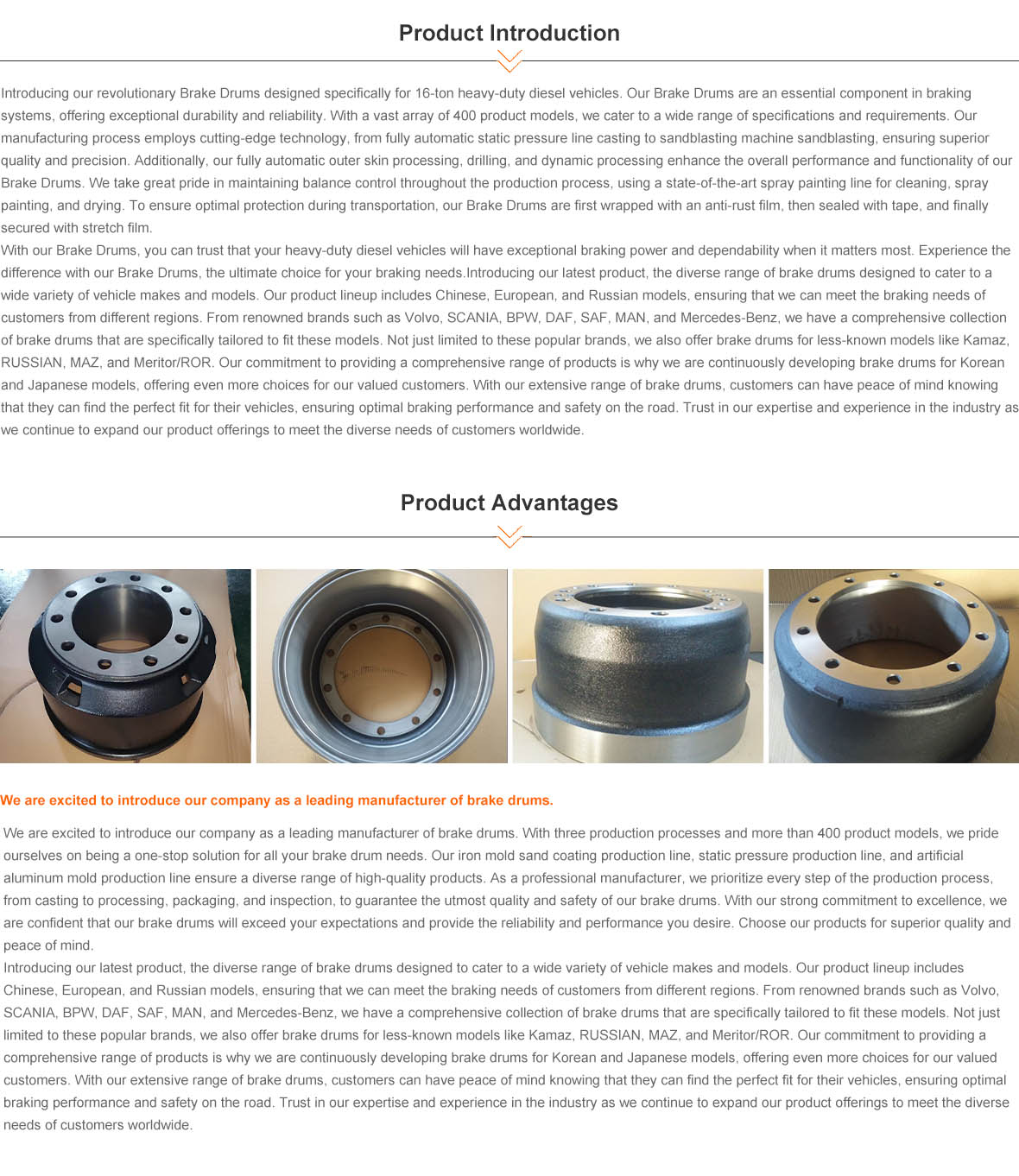
Introduction
The question of whether disc brakes stop better than drum brakes is central to automotive engineering and safety. This technical guide provides a comprehensive analysis of the performance characteristics, material science, manufacturing processes, failure modes, and applicable standards associated with both brake systems. Disc brakes and drum brakes represent fundamentally different approaches to converting kinetic energy into thermal energy through friction, and their efficacy is determined by a complex interplay of factors including heat dissipation, friction coefficient, material properties, and hydraulic system efficiency. While drum brakes were historically prevalent due to their lower manufacturing cost, disc brakes have become dominant in front axle applications, and increasingly in all four wheels, owing to their superior performance under demanding conditions. This document aims to definitively address the comparative stopping power, highlighting the advantages and disadvantages of each system for various applications and operating environments, targeted at automotive engineers, procurement managers, and maintenance personnel.
Material Science & Manufacturing
Drum Brakes: The drum itself is typically constructed from cast iron, selected for its high thermal capacity and ability to withstand significant frictional heat. The composition is generally around 90-95% iron, with carbon, silicon, manganese, and sulfur additions controlling the microstructure and mechanical properties. Manufacturing involves sand casting, followed by machining to precise tolerances for concentricity and surface finish. The brake shoes, which press against the inner surface of the drum, are often clad with friction material containing asbestos (historically, now largely replaced by non-asbestos organic (NAO), semi-metallic, or ceramic formulations). These materials are bonded to a steel backing plate. Disc Brakes: Discs, also commonly cast iron, utilize similar alloy compositions to drums, though higher grades of cast iron (e.g., Gray Cast Iron G3000) are often employed due to the more severe thermal stresses. Manufacturing involves casting, followed by machining, often including directional slotting or drilling to improve heat dissipation and reduce brake fade. Calipers, housing the brake pads, are typically aluminum alloys for weight reduction and enhanced thermal conductivity. Brake pads themselves consist of a steel backing plate with a friction material bonded to it, with formulations similar to those used in drum brake shoes – NAO, semi-metallic, or ceramic. The hydraulic system components (master cylinders, calipers, lines) are usually steel or alloy steel, requiring precise tolerances and surface finishes to ensure leak-free operation. Key parameter control in both systems includes material composition verification (spectroscopy), hardness testing (Brinell, Rockwell), dimensional accuracy (CMM), and surface roughness measurement (profilometry).

Performance & Engineering
Disc brakes generally exhibit superior stopping performance due to several key engineering principles. Firstly, they offer significantly better heat dissipation. The open design of disc brakes allows for convective cooling by ambient air, whereas drum brakes tend to trap heat within the drum assembly, leading to brake fade – a reduction in braking force due to overheating. Secondly, disc brakes are less susceptible to hydro-lock. When water enters a drum brake, it can cause corrosion and reduce braking efficiency, or even prevent braking entirely. Disc brakes, with their open design, allow water to be expelled more readily. Force analysis reveals that disc brakes distribute braking force more evenly across the pad surface, resulting in higher friction coefficients and more consistent stopping power. Environmental resistance is also a factor; disc brakes are less prone to corrosion in harsh environments. Compliance requirements, such as FMVSS 105 in the United States and ECE-R13 in Europe, mandate minimum braking performance levels and durability standards. Functional implementation relies on hydraulic pressure, generated by the master cylinder, acting upon the caliper pistons, forcing the brake pads against the rotor. The efficiency of this hydraulic system is crucial for maximizing braking performance. Modulation of brake pressure is achieved through anti-lock braking systems (ABS) and electronic stability control (ESC), further enhancing safety and control.
Technical Specifications
| Parameter | Drum Brakes (Typical) | Disc Brakes (Typical) | Units |
|---|---|---|---|
| Friction Coefficient (μ) | 0.25 - 0.35 | 0.35 - 0.45 | Dimensionless |
| Operating Temperature Range | 0°C - 300°C | 0°C - 800°C | °C |
| Weight (per axle) | 8 - 12 kg | 6 - 10 kg | kg |
| Heat Dissipation Rate | Low | High | Qualitative |
| Sensitivity to Water | High | Low | Qualitative |
| Manufacturing Cost | Lower | Higher | Qualitative |
Failure Mode & Maintenance
Drum Brake Failure Modes: Common failures include brake shoe wear, drum warping due to thermal stress, wheel cylinder leaks (leading to fluid loss and reduced braking force), and contamination of the friction surface with oil or grease. Fatigue cracking can occur in the drum due to repeated thermal cycling and mechanical stress. Maintenance involves regular inspection of brake shoe thickness, drum surface condition, and wheel cylinder integrity. Adjustment of brake shoe clearance is crucial to maintain optimal braking performance. Disc Brake Failure Modes: Typical failures encompass pad wear, rotor warping (leading to pedal pulsation), caliper piston seizure, and corrosion of hydraulic lines. Rotor cracking can occur due to extreme thermal shock or mechanical stress. Glazing of the brake pad surface can reduce friction. Maintenance involves inspection of pad thickness, rotor surface condition (runout and thickness variation), caliper operation, and hydraulic line integrity. Periodic bleeding of the brake system is essential to remove air bubbles and maintain hydraulic pressure. Rust formation on rotors, especially in humid climates, necessitates periodic cleaning or replacement. Preventative maintenance, including regular fluid changes and inspection, significantly extends the lifespan of both systems.
Industry FAQ
Q: What is the primary reason disc brakes offer better stopping power in emergency situations?
A: Disc brakes excel in emergency situations due to their superior heat dissipation capabilities. The open design allows for rapid cooling, preventing brake fade and maintaining a consistent friction coefficient even under repeated heavy braking. Drum brakes, conversely, trap heat, leading to a significant reduction in stopping power during prolonged or repeated braking events.
Q: How does the material composition of the rotor/drum affect brake performance and longevity?
A: The composition of the rotor or drum directly impacts its thermal capacity, thermal conductivity, and resistance to wear and thermal shock. Higher-grade cast iron alloys with optimized carbon content offer better heat resistance and reduced warping. The presence of alloying elements like silicon and manganese enhance strength and wear resistance. Improper material selection can lead to premature failure.
Q: What are the key considerations when selecting friction materials (brake pads/shoes)?
A: Friction material selection depends on the application and operating conditions. NAO materials offer quiet operation but have lower friction coefficients and are susceptible to fade at high temperatures. Semi-metallic materials provide higher friction but can be noisier and more abrasive to rotors/drums. Ceramic materials offer excellent fade resistance and low dust generation, but are typically more expensive.
Q: What role does the hydraulic system play in brake performance?
A: The hydraulic system is the backbone of braking. Its efficiency is critical. Proper fluid maintenance (preventing contamination and moisture absorption), accurate component sizing (master cylinder, calipers), and leak-free operation are paramount. Air in the system dramatically reduces braking force, while leaks lead to complete brake failure.
Q: What are the advantages of incorporating ABS and ESC into a braking system?
A: ABS (Anti-lock Braking System) prevents wheel lock-up during hard braking, allowing the driver to maintain steering control. ESC (Electronic Stability Control) builds on ABS by selectively braking individual wheels to counteract oversteer or understeer, enhancing vehicle stability and preventing skidding. These systems significantly improve safety, particularly in adverse conditions.
Conclusion
In conclusion, while drum brakes offer a cost-effective solution for less demanding applications, disc brakes demonstrably provide superior stopping power, heat dissipation, and resistance to fade, making them the preferred choice for most modern vehicles, particularly in front axle configurations. The material science underlying each system dictates its performance envelope, and stringent manufacturing controls are essential to ensure reliability. Understanding the failure modes and implementing preventative maintenance procedures are crucial for maximizing the lifespan and safety of both brake systems.
Looking forward, advancements in materials technology, such as carbon-ceramic rotors and improved friction materials, will continue to enhance disc brake performance. The integration of sophisticated control systems, including advanced ABS and ESC algorithms, will further optimize braking efficiency and safety. The trend towards electric vehicles and regenerative braking will also influence brake system design, potentially leading to smaller, lighter disc brake systems combined with regenerative braking to maximize energy recovery and minimize wear.