
Introduction
Centrifuge brake drums are critical components in high-speed rotating equipment, primarily utilized in industrial centrifuges for solids separation and liquid clarification. Their primary function is to provide a reliable and rapid deceleration mechanism during routine stopping procedures and in emergency situations, preventing rotor overspeed and potential catastrophic failure. Positioned within the industrial chain as a safety-critical element downstream of the centrifuge rotor and upstream of the control system, the brake drum’s performance directly impacts operational safety and process efficiency. Core performance characteristics include braking torque, heat dissipation capacity, wear resistance, and responsiveness to control signals. Traditional designs rely on mechanical friction, while modern systems are increasingly incorporating electromagnetic or hydraulic actuation for more precise control and reduced maintenance. The increasing demands for higher centrifuge speeds and larger rotor diameters necessitate advanced brake drum designs capable of handling substantial kinetic energy and maintaining operational reliability.
Material Science & Manufacturing
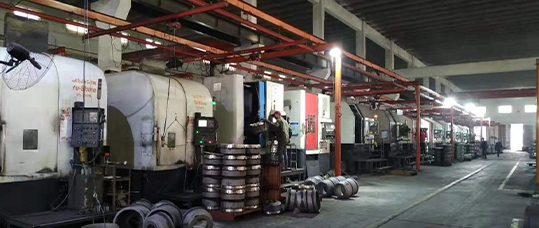
Centrifuge brake drums are typically manufactured from high-strength, wear-resistant materials to withstand the significant frictional forces and thermal stresses generated during braking. Common materials include grey cast iron (ASTM A48 Class 30), ductile cast iron (ASTM A536 85-55-06), and high-carbon steel alloys (SAE 4140, 4340). Cast iron is favored for its excellent damping properties, reducing noise and vibration, and its relatively low cost. Ductile iron provides improved toughness and shock resistance compared to grey cast iron. Steel alloys offer the highest strength and temperature resistance but require more complex manufacturing processes. The manufacturing process typically involves casting, machining, and surface treatment. Casting establishes the initial drum shape, followed by precision machining to achieve tight tolerances on critical dimensions, such as bore diameter, braking surface, and flange mounting features. Heat treatment, including annealing and tempering, is often employed to optimize the material's microstructure and mechanical properties. Surface treatments, such as thermal spraying of ceramic coatings or induction hardening, can further enhance wear resistance and reduce friction. Key parameter control during manufacturing includes precise control of casting solidification rates to minimize porosity, accurate machining tolerances to ensure proper fit and function, and consistent heat treatment profiles to achieve desired material properties. Finite element analysis (FEA) is commonly used during the design phase to optimize the drum’s geometry and material selection for maximum performance and durability.

Performance & Engineering
The performance of a centrifuge brake drum is dictated by its ability to absorb and dissipate the kinetic energy of the rotating centrifuge rotor. Force analysis reveals that the braking force is a function of the braking torque, the drum radius, and the coefficient of friction between the brake shoe and the drum surface. Environmental resistance is critical, especially in applications involving corrosive fluids or extreme temperatures. Brake drums operating in such environments must be constructed from corrosion-resistant materials or protected with appropriate coatings. Compliance requirements vary depending on the centrifuge application and geographical location, but typically include adherence to safety standards established by organizations such as the American Society of Mechanical Engineers (ASME) and the European Machinery Directive (2006/42/EC). Functional implementation involves the integration of the brake drum with the centrifuge’s braking system, which may include mechanical linkages, hydraulic actuators, or electromagnetic coils. The braking system must be capable of delivering a consistent and reliable braking force, while also providing precise control over the deceleration rate. Consideration must be given to heat dissipation to prevent overheating and potential failure. This often involves incorporating cooling fins or ventilation channels into the drum design. Stress analysis, including finite element modeling, is crucial for predicting the drum’s behavior under various loading conditions and identifying potential failure points. The brake drum’s design must account for centrifugal forces, thermal stresses, and frictional wear.
Technical Specifications
| Parameter | Typical Value (Small Centrifuge) | Typical Value (Large Centrifuge) | Unit |
|---|---|---|---|
| Drum Diameter | 200 | 800 | mm |
| Drum Width | 80 | 300 | mm |
| Material | Grey Cast Iron (A48 Class 30) | Ductile Cast Iron (A536 85-55-06) | - |
| Maximum Braking Torque | 500 | 5000 | Nm |
| Maximum Operating Temperature | 200 | 350 | °C |
| Surface Hardness | 180-220 | 250-300 | HB |
Failure Mode & Maintenance
Centrifuge brake drums are susceptible to several failure modes, including fatigue cracking, thermal cracking, wear, and corrosion. Fatigue cracking typically originates at stress concentration points, such as holes or sharp corners, and propagates under cyclic loading. Thermal cracking can occur due to rapid temperature changes or localized overheating. Wear results from the continuous friction between the brake shoes and the drum surface, leading to a reduction in drum diameter and braking performance. Corrosion can occur in environments with corrosive fluids or high humidity, weakening the material and reducing its load-bearing capacity. Failure analysis often reveals that a combination of factors contributes to drum failure. Preventative maintenance is crucial for extending the life of the brake drum and preventing catastrophic failures. This includes regular inspections for cracks, wear, and corrosion; lubrication of braking system components; and replacement of worn brake shoes. Non-destructive testing (NDT) methods, such as ultrasonic testing and magnetic particle inspection, can be used to detect subsurface cracks and other defects. When replacing a brake drum, it is essential to ensure that the new drum is compatible with the centrifuge’s braking system and meets the required specifications. Proper installation and adjustment of the braking system are also critical for optimal performance and durability. Routine monitoring of braking performance indicators, such as braking time and deceleration rate, can provide early warning of potential problems.
Industry FAQ
Q: What is the impact of drum material on braking performance and longevity?
A: The drum material significantly influences both braking performance and longevity. Higher hardness materials offer improved wear resistance but can reduce the coefficient of friction, requiring higher braking forces. Ductile iron and steel alloys offer superior strength and fatigue resistance compared to cast iron, extending service life in high-stress applications. The selection depends on the centrifuge’s operating conditions and desired braking characteristics.
Q: How does temperature affect the brake drum's performance and what measures can be taken to mitigate overheating?
A: Elevated temperatures reduce the material strength and can lead to thermal distortion and cracking. Overheating also decreases the coefficient of friction, reducing braking effectiveness. Mitigation strategies include designing the drum with cooling fins, ensuring adequate ventilation, and utilizing materials with high thermal conductivity and heat capacity.
Q: What are the key considerations when selecting a brake drum for a high-speed centrifuge?
A: Key considerations include the rotor’s kinetic energy, the required deceleration rate, the operating temperature range, and the presence of corrosive fluids. The drum must be capable of absorbing the kinetic energy without exceeding its thermal limits and must be constructed from materials compatible with the operating environment. Dynamic balancing is also crucial for minimizing vibration.
Q: What are the typical failure modes and how can they be prevented through maintenance?
A: Common failure modes include fatigue cracking, thermal cracking, wear, and corrosion. Prevention involves regular inspections for cracks and wear, lubrication of braking system components, proper adjustment of braking force, and replacement of worn parts. NDT methods can detect subsurface defects. Maintaining a consistent braking force and avoiding sudden, forceful stops can also minimize stress on the drum.
Q: What standards are relevant for ensuring the safety and reliability of centrifuge brake drums?
A: Relevant standards include ASME B30.10 (for lifting devices, which often incorporate centrifuges), European Machinery Directive 2006/42/EC, and specific industry standards related to centrifuge design and operation. Material specifications are guided by ASTM standards (e.g., A48, A536) and SAE standards for steel alloys. Compliance with these standards is essential for ensuring safe and reliable operation.
Conclusion
Centrifuge brake drums represent a critical safety component within industrial centrifuges, demanding meticulous material selection, precision manufacturing, and diligent maintenance. Their performance is intrinsically linked to the overall efficiency and operational reliability of the centrifuge system. Understanding the interplay between material properties, thermal management, and mechanical stresses is paramount for engineers tasked with designing, selecting, and maintaining these vital components.
Future advancements in brake drum technology will likely focus on developing lighter-weight materials, incorporating advanced cooling systems, and implementing intelligent monitoring systems that can predict and prevent failures. The integration of sensor technology and data analytics will enable predictive maintenance strategies, further enhancing the safety and efficiency of centrifuge operations. Continuous innovation in materials science and manufacturing processes will be essential for meeting the evolving demands of the industrial separation sector.