
Introduction
Brake drum wear patterns represent a critical area of concern within the automotive and heavy machinery industries. Brake drums, integral components of braking systems, are subjected to cyclical thermal and mechanical stresses during operation. Understanding the nature of these wear patterns – their formation, progression, and implications – is paramount for ensuring vehicle safety, optimizing maintenance schedules, and minimizing lifecycle costs. This guide provides an in-depth analysis of brake drum wear, encompassing material science, manufacturing processes, performance characteristics, failure modes, and relevant industry standards. The primary pain point for fleet managers, maintenance engineers, and procurement professionals lies in accurately predicting drum lifespan, preventing catastrophic failures, and selecting materials and designs that resist premature wear in diverse operating conditions. This document aims to bridge the knowledge gap by providing a comprehensive technical reference.
Material Science & Manufacturing
Brake drums are traditionally manufactured from gray cast iron due to its favorable thermal properties – high thermal conductivity and a relatively high coefficient of friction. The graphite flake structure within gray cast iron acts as a lubricant, reducing friction and heat buildup. However, compositional variations and manufacturing defects significantly influence wear resistance. Common grades include ASTM A48 Class 30 and Class 40, with Class 40 offering improved strength and wear resistance. Alternative materials, such as ductile iron and composite materials, are increasingly being explored for enhanced performance.
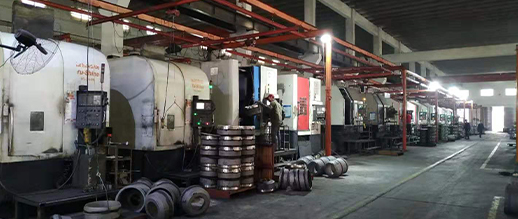
Manufacturing processes typically involve sand casting, followed by machining to achieve the required dimensional accuracy and surface finish. Key parameters controlling wear performance during manufacturing include: cooling rate (influencing graphite flake size and distribution), alloy composition (affecting hardness and wear resistance), and surface hardness (determined by heat treatment processes like annealing). Improper cooling can lead to localized variations in microstructure, creating regions susceptible to accelerated wear. Machining processes must be carefully controlled to avoid introducing surface defects, such as micro-cracks, which can act as nucleation sites for wear. Furthermore, the quality of the sand mold, and the control of gas porosity during casting, directly influence the mechanical integrity of the drum.
Performance & Engineering
Brake drum performance is intricately linked to thermal management and friction characteristics. During braking, kinetic energy is converted into thermal energy through friction between the brake shoes and the drum's inner surface. Excessive heat can lead to thermal expansion, reduced braking efficiency (brake fade), and accelerated wear. The drum's ability to dissipate heat is a critical design consideration. Finite Element Analysis (FEA) is routinely employed to simulate thermal stress distribution within the drum during braking events, optimizing geometry for enhanced heat dissipation.
Engineering analyses focus on stress concentration points, particularly at mounting flanges and around inspection holes. Cyclic loading from repeated braking events induces fatigue stresses, potentially leading to cracking and eventual failure. The geometry of the drum, including its thickness and ribbing, directly affects its resistance to deformation and fatigue. Compliance requirements, such as FMVSS 105 in the United States and ECE R90 in Europe, mandate minimum performance standards for braking systems, including drum durability and wear limits. Material selection must account for these regulatory requirements, ensuring that the drum can withstand the specified number of braking cycles without exhibiting unacceptable wear or structural failure. The coefficient of friction between the brake shoe lining and the drum surface is also a vital parameter; it impacts braking force and wear rate. Maintaining an optimal friction coefficient necessitates proper material compatibility and surface conditioning.
Technical Specifications
| Parameter | Typical Value (Gray Cast Iron - Class 30) | Typical Value (Ductile Iron) | Testing Standard |
|---|---|---|---|
| Tensile Strength (MPa) | 205 - 280 | 400 - 600 | ASTM A48 / ISO 1083 |
| Hardness (Brinell) | 180 - 240 | 200 - 300 | ASTM E10 / ISO 6506 |
| Thermal Conductivity (W/m·K) | 40 - 50 | 50 - 60 | ASTM E1225 / ISO 8302 |
| Coefficient of Friction (μ) | 0.25 - 0.40 (dynamic) | 0.30 - 0.45 (dynamic) | SAE J962 |
| Maximum Operating Temperature (°C) | 350 | 400 | Manufacturer Specification |
| Wear Rate (mm/10^6 cycles) | 0.01 – 0.03 (dependent on load & speed) | 0.005 – 0.015 (dependent on load & speed) | DIN 50119 |
Failure Mode & Maintenance
Common failure modes in brake drums include: 1) Thermal Cracking: Caused by rapid and uneven heating, leading to tensile stresses exceeding the material's strength. Often manifests as circumferential cracks. 2) Fatigue Cracking: Resulting from repeated cyclic loading, initiating at stress concentration points (e.g., mounting holes). 3) Wear: Gradual material removal due to friction, leading to reduced drum thickness and diminished braking performance. Wear patterns can be uniform (general abrasion) or localized (scoring, glazing, or spalling). 4) Spalling: Flaking of the drum surface due to subsurface cracking and stress concentration. 5) Glazing: Formation of a hard, polished surface layer due to excessive heat, reducing friction. 6) Corrosion: Particularly in humid or saline environments, leading to material degradation and reduced strength.
Preventative maintenance is crucial for mitigating these failures. Regular inspections should include visual checks for cracks, scoring, and glazing. Drum thickness should be measured periodically to ensure it remains within specified limits. Brake shoe lining condition should also be assessed, as worn or contaminated linings can accelerate drum wear. Maintenance procedures include: drum resurfacing (turning) to restore a smooth braking surface, replacement of worn drums, and ensuring proper brake adjustment to maintain adequate contact between the shoes and drum. Lubrication of the brake shoe pivot points is also important to prevent binding and uneven wear. Furthermore, identifying and addressing the root cause of excessive wear (e.g., contaminated brake fluid, improper brake adjustment) is essential for long-term reliability.
Industry FAQ
Q: What is the primary cause of uneven wear patterns on a brake drum?
A: Uneven wear patterns are often caused by several factors working in combination. These include improper brake adjustment (resulting in unequal shoe contact), contaminated brake fluid (leading to corrosion and localized wear), worn or damaged brake shoe linings, sticking brake pistons, and mechanical issues such as warped drums or misaligned brake assemblies. Thorough inspection of the entire braking system is crucial for accurate diagnosis.
Q: How does the material composition of the brake drum impact its resistance to thermal cracking?
A: The material composition directly influences thermal shock resistance. Gray cast iron, while having good thermal conductivity, is more susceptible to thermal cracking than ductile iron due to its lower tensile strength and fracture toughness. Alloys with higher carbon and silicon content generally exhibit improved thermal shock resistance, but can compromise machinability.
Q: What are the recommended procedures for measuring brake drum wear?
A: Brake drum wear is typically measured using a micrometer to determine the drum’s remaining thickness. Measurements should be taken at multiple locations along the inner diameter of the drum. Comparing these measurements against the manufacturer’s minimum allowable thickness specification is critical. Digital calipers can also be used, but require careful calibration and technique to ensure accuracy.
Q: What role does the brake shoe lining material play in drum wear?
A: The brake shoe lining material significantly influences drum wear. Aggressive lining materials with high friction coefficients will typically cause faster drum wear. Conversely, softer linings may provide longer drum life but reduce braking efficiency. Proper matching of lining and drum materials is essential to optimize performance and durability. Also, contamination of the lining with oil or grease will drastically increase wear rates on both the lining and the drum.
Q: What are the key indicators that a brake drum needs to be replaced rather than resurfaced?
A: A brake drum should be replaced if its thickness is below the manufacturer’s minimum allowable limit, if there are significant cracks (especially thermal cracks extending deep into the material), if there is evidence of severe spalling or warping, or if resurfacing would remove too much material, rendering the drum unsafe. Repeated resurfacing weakens the drum and reduces its ability to dissipate heat.
Conclusion
Brake drum wear patterns are a complex interplay of material properties, manufacturing processes, operational conditions, and maintenance practices. Understanding the underlying mechanisms driving these patterns is essential for optimizing brake system performance, ensuring vehicle safety, and minimizing lifecycle costs. The selection of appropriate materials, combined with precise manufacturing control and diligent preventative maintenance, are key to maximizing drum lifespan and preventing catastrophic failures. Addressing the root causes of wear, such as improper brake adjustment and contaminated brake fluid, is paramount for long-term reliability.
Future advancements in brake drum technology will likely focus on the development of advanced materials – such as ceramic matrix composites – that offer superior thermal resistance, wear resistance, and reduced weight. Furthermore, advancements in FEA modeling and predictive maintenance algorithms will enable more accurate assessment of drum condition and proactive maintenance scheduling. Continuous monitoring of brake drum temperature and wear rate using sensor technologies could provide valuable data for optimizing braking performance and extending drum life.