

Introduction
Brake drum casting is a critical manufacturing process in the automotive and heavy machinery industries, forming the foundational component of drum brake systems. Positioned within the automotive supply chain after vehicle design and engineering, the process converts molten metal into a precisely shaped drum capable of dissipating kinetic energy through frictional heating. Core performance characteristics of a brake drum include thermal conductivity, wear resistance, dimensional stability under high temperatures, and structural integrity to withstand substantial braking forces. Failure in brake drum performance directly impacts vehicle safety and operational efficiency, making the quality of casting and material selection paramount. Contemporary challenges center around minimizing weight while maximizing performance, reducing noise vibration and harshness (NVH), and ensuring consistent material properties across large production volumes. The move towards electric vehicles introduces unique demands, necessitating lighter-weight and high-conductivity materials to facilitate regenerative braking capabilities.
Material Science & Manufacturing
The primary material for brake drum casting is gray cast iron, selected for its excellent thermal conductivity, wear resistance, and cost-effectiveness. Chemical composition typically ranges between 2.5-4.0% carbon, 1.2-2.5% silicon, 0.3-1.5% manganese, and trace amounts of sulfur and phosphorus. Graphite flake distribution within the iron matrix is crucial, influencing machinability, damping capacity, and thermal shock resistance. Alternative materials include ductile cast iron, offering improved strength and toughness, and composite materials incorporating steel or ceramic reinforcements for enhanced thermal performance in high-demand applications.
The manufacturing process typically employs sand casting, although centrifugal casting and investment casting are utilized for specialized applications. Sand casting involves creating a mold cavity using a sand mixture bonded with clay and resin, then pouring molten iron into the mold. Key process parameters include melt temperature (typically 1200-1400°C), pouring rate, mold temperature, and cooling rate. Controlling these parameters is vital to prevent defects such as porosity, shrinkage cavities, and hot tears. Following casting, operations include core removal, cleaning (shot blasting), and machining to achieve final dimensions and surface finish. Quality control at each stage utilizes non-destructive testing (NDT) methods such as radiography, ultrasonic testing, and magnetic particle inspection to identify internal and surface flaws. The cooling rate is particularly critical, impacting the microstructure and graphite morphology. Rapid cooling leads to finer graphite flakes and increased hardness but may also increase residual stresses and susceptibility to cracking. Controlled cooling, often involving preheating the mold, promotes coarser graphite flakes and reduces stress levels. Advanced techniques, like lost foam casting, are gaining traction for their ability to produce complex geometries and minimize surface defects.
Performance & Engineering
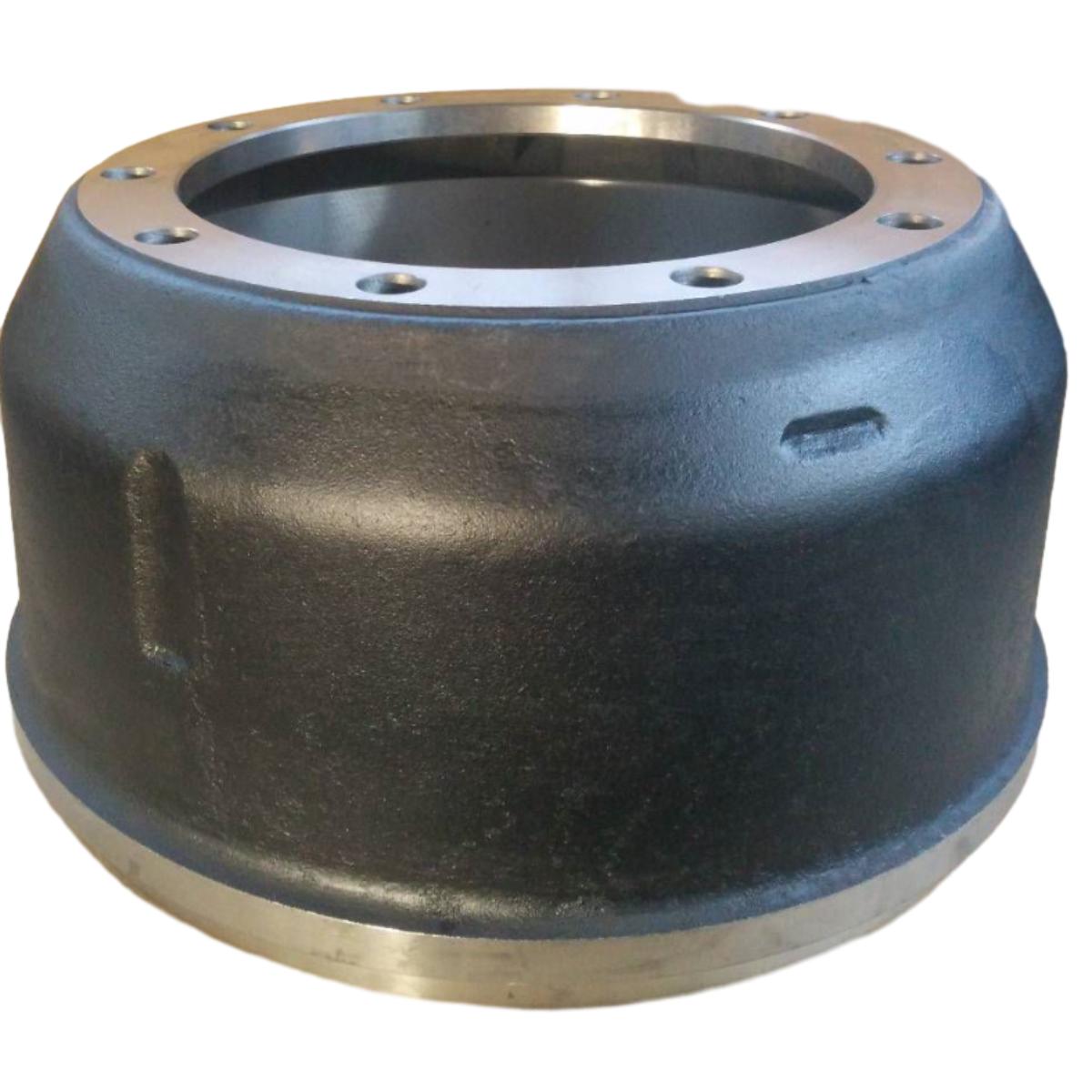
Brake drum performance is fundamentally governed by its ability to effectively dissipate the kinetic energy generated during braking. This necessitates a robust understanding of heat transfer mechanisms, particularly thermal conductivity and convective heat transfer to the surrounding air. Finite Element Analysis (FEA) is routinely employed to simulate thermal stress distribution within the drum under various braking scenarios, optimizing design parameters such as drum thickness, fin geometry, and rib placement. Force analysis focuses on the radial forces exerted by the brake shoes against the inner surface of the drum. These forces induce significant compressive stresses within the drum material, requiring sufficient strength and fatigue resistance to prevent cracking or deformation. Consideration must be given to the coefficient of friction between the brake shoes and the drum surface, which influences the heat generation rate and wear characteristics. The drum’s dimensional stability under high temperatures is critical; excessive thermal expansion can lead to brake drag and reduced braking efficiency. Furthermore, compliance with industry regulations, such as FMVSS 105 in the United States and ECE R90 in Europe, is mandatory. These standards specify performance requirements for braking systems, including brake drum characteristics regarding material properties, dimensional tolerances, and fade resistance. NVH (Noise, Vibration, and Harshness) performance is also a key engineering consideration, influencing driver comfort and perceived quality. Drum design features and material damping characteristics play a crucial role in minimizing unwanted noise and vibrations during braking.
Technical Specifications
| Parameter | Typical Value (Gray Cast Iron) | Typical Value (Ductile Cast Iron) | Testing Standard |
|---|---|---|---|
| Tensile Strength | 200-300 MPa | 400-600 MPa | ASTM A48 |
| Compressive Strength | 600-800 MPa | 800-1000 MPa | ASTM A48 |
| Thermal Conductivity | 45-55 W/m·K | 40-50 W/m·K | ASTM E1225 |
| Hardness (Brinell) | 180-250 HB | 200-300 HB | ASTM E10 |
| Density | 7.2-7.4 g/cm³ | 7.2-7.4 g/cm³ | ASTM B97 |
| Coefficient of Thermal Expansion | 12 x 10⁻⁶ /°C | 11 x 10⁻⁶ /°C | ASTM E228 |
Failure Mode & Maintenance
Common failure modes in brake drums include thermal cracking, wear, and distortion. Thermal cracking is often initiated by rapid temperature fluctuations during severe braking events, creating thermal stresses exceeding the material’s tensile strength. Cracks typically propagate from regions of high stress concentration, such as the flange or cooling fins. Wear occurs due to the abrasive action of the brake shoes against the drum surface. Excessive wear reduces drum thickness, compromising braking performance and eventually leading to failure. Distortion can result from uneven cooling rates or localized overheating, causing the drum to lose its roundness and create brake drag. Another significant failure mode is spalling, where small pieces of the drum surface flake off due to fatigue and repeated stress cycles.
Preventative maintenance involves regular inspection for cracks, wear, and distortion. Visual inspection should be conducted to identify surface defects. Thickness measurements should be taken at multiple locations to monitor wear. If cracks are detected, the drum should be replaced immediately. Minor surface imperfections can sometimes be addressed through machining or grinding, but this should only be performed by qualified personnel to avoid compromising structural integrity. Proper brake adjustment is crucial to maintain optimal braking performance and prevent excessive wear. Regular cleaning to remove brake dust and debris is also essential. When replacing brake drums, ensure compatibility with brake shoe material and follow manufacturer's specifications for installation torque and procedures. Lubricating the contact points between the drum and hub with a high-temperature grease can prevent seizing and facilitate smooth operation.
Industry FAQ
Q: What is the impact of graphite flake size on the performance of gray cast iron brake drums?
A: Graphite flake size significantly influences several key performance characteristics. Larger flakes generally enhance machinability but reduce tensile strength and fatigue resistance. Smaller, more evenly distributed flakes provide improved strength and wear resistance, making them preferable for high-performance applications. Controlling graphite morphology through careful alloy composition and cooling rate control is therefore crucial.
Q: How does the choice of casting process (sand vs. centrifugal) affect the microstructure and mechanical properties of the brake drum?
A: Sand casting is more versatile for complex geometries but can lead to porosity and segregation if not carefully controlled. Centrifugal casting, however, utilizes centrifugal force to ensure a denser, more homogenous microstructure with reduced porosity. This results in improved mechanical properties, particularly strength and fatigue resistance, making it suitable for high-stress applications.
Q: What are the common causes of thermal cracking in brake drums, and how can they be mitigated?
A: Thermal cracking is primarily caused by rapid temperature gradients and high thermal stresses during severe braking. Mitigation strategies include optimizing drum design to minimize stress concentrations, employing materials with higher thermal shock resistance, and controlling cooling rates to reduce thermal gradients. Proper brake system maintenance to prevent brake drag is also essential.
Q: What non-destructive testing (NDT) methods are commonly used to evaluate the quality of brake drum castings?
A: Common NDT methods include radiography (X-ray inspection) to detect internal defects like porosity and shrinkage cavities, ultrasonic testing to identify subsurface flaws, and magnetic particle inspection to reveal surface cracks. Liquid penetrant inspection is also used for detecting surface discontinuities. Each method has its advantages and limitations, and a combination is often employed for comprehensive quality assessment.
Q: How are brake drums designed to address noise, vibration, and harshness (NVH) concerns?
A: NVH mitigation involves optimizing drum geometry to minimize resonance frequencies and damp vibrations. This includes incorporating features like ribs, fins, and strategically placed damping materials. The surface finish of the drum also plays a role; a smoother surface reduces friction-induced noise. Careful material selection, prioritizing high damping capacity, further contributes to NVH reduction.
Conclusion
Brake drum casting is a complex manufacturing process demanding meticulous control over material science, process parameters, and engineering design. Achieving optimal performance requires careful consideration of thermal properties, mechanical strength, and resistance to wear and fatigue. The selection of appropriate materials, coupled with advanced casting techniques and rigorous quality control, are critical to ensuring safety, reliability, and durability.
Looking forward, advancements in materials science, such as the development of lightweight composite materials and improved cast iron alloys, will drive further innovation in brake drum technology. The increasing demand for high-performance braking systems in electric and autonomous vehicles will necessitate even more sophisticated designs and manufacturing processes. Continuous research and development, coupled with adherence to stringent industry standards, will be essential to meet these evolving challenges.