

Introduction
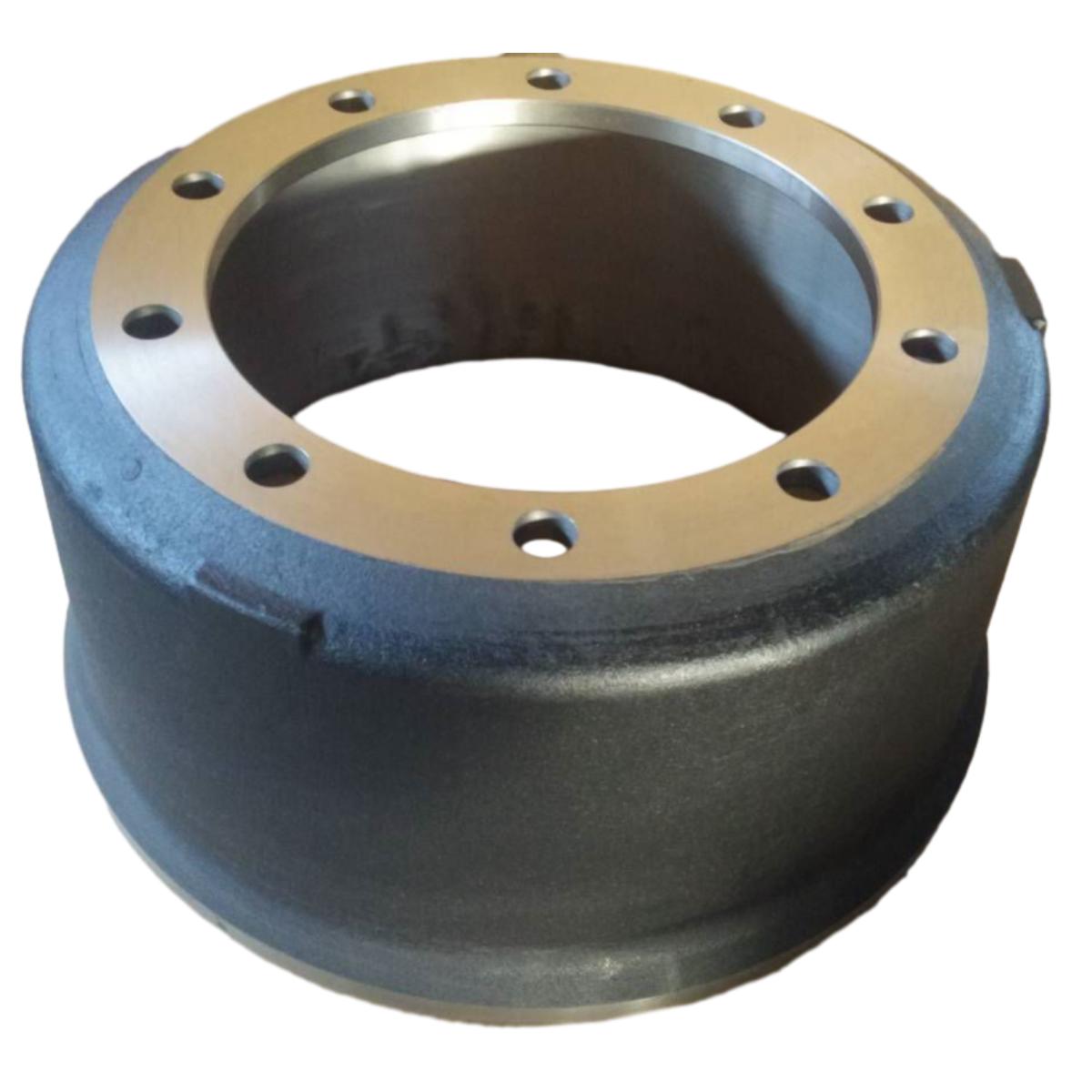
The 3800x brake drum represents a critical component within heavy-duty braking systems, primarily utilized in commercial vehicles, industrial machinery, and select automotive applications demanding substantial stopping power. Its technical position within the industry chain lies between the actuation system (brake shoes, linings) and the wheel hub assembly. The drum provides the frictional surface against which brake shoes are applied, converting kinetic energy into thermal energy to decelerate or stop the vehicle or machinery. Core performance characteristics are defined by its heat capacity, thermal conductivity, wear resistance, and structural integrity under high stress and temperature conditions. The increasing demand for higher braking efficiency, longer service life, and reduced weight necessitates advanced materials and manufacturing processes in 3800x brake drum production. A key pain point in the industry centers around managing thermal cracking, ensuring consistent material properties across the drum’s surface, and mitigating the effects of corrosion from road salts and industrial contaminants. Understanding these challenges is crucial for optimizing brake drum design and performance.
Material Science & Manufacturing
The predominant material for 3800x brake drums is grey cast iron, specifically grades conforming to ASTM A48 Class 30 or equivalent international standards. This material is chosen for its excellent heat absorption, good wear resistance, and relatively low cost. The chemical composition typically includes 2.0-3.5% Carbon, 1.8-2.8% Silicon, 0.8-1.5% Manganese, and trace amounts of Sulfur and Phosphorus. The graphite flake structure within grey cast iron contributes to its damping characteristics, reducing noise and vibration during braking. However, graphite flakes also create potential stress concentrators. Alternative materials like ductile cast iron (with spheroidal graphite) offer improved strength and toughness, but at a higher cost and potentially reduced heat capacity. Manufacturing processes typically involve sand casting, although centrifugal casting is increasingly employed for larger diameters and higher production volumes. Sand casting involves creating a mold using sand, pouring molten iron into the mold cavity, and allowing it to solidify. Key parameters controlled during sand casting include mold temperature, pouring temperature (typically 1200-1350°C), cooling rate, and sand composition. Centrifugal casting utilizes centrifugal force to distribute the molten metal evenly within a rotating mold, resulting in a denser and more uniform structure. Subsequent machining operations, including turning, milling, and grinding, are essential to achieve precise dimensions and surface finishes. Heat treatment, such as annealing, is often performed to relieve residual stresses and improve machinability. Quality control measures include radiographic inspection to detect internal defects (porosity, inclusions), and dimensional verification using coordinate measuring machines (CMMs).
Performance & Engineering
The performance of a 3800x brake drum is critically linked to its thermal management capabilities. During braking, kinetic energy is converted into heat, raising the drum's temperature significantly. Excessive temperatures can lead to thermal distortion, reduced braking efficiency (brake fade), and even thermal cracking. Finite element analysis (FEA) is widely used to model the stress distribution and thermal gradients within the drum under various braking conditions. Force analysis considers the radial load exerted by the brake shoes, the centrifugal forces acting on the drum, and the torsional stresses induced by braking torque. The drum's geometry, particularly its wall thickness and fin design (if present), directly impacts its heat dissipation rate. Environmental resistance is paramount. Exposure to road salts (sodium chloride, calcium chloride) leads to corrosion, weakening the drum’s structure. Protective coatings, such as zinc phosphate or powder coating, are applied to enhance corrosion resistance. Compliance requirements are stringent and vary by region. In North America, SAE J10 standards govern brake drum performance and safety. European standards (ECE R90) specify braking performance criteria and material requirements. Engineering considerations include designing for optimal drum stiffness to minimize deformation under load, ensuring adequate venting to facilitate heat removal, and selecting materials compatible with brake lining compositions to prevent friction-induced wear and noise.
Technical Specifications
| Parameter | Unit | Typical Value (3800x Drum) | Testing Standard |
|---|---|---|---|
| Diameter | mm | 3800 | ISO 9440-1 |
| Width | mm | 200 - 250 | SAE J10 |
| Material | - | Grey Cast Iron (ASTM A48 Class 30) | ASTM A48 |
| Tensile Strength | MPa | 200 - 250 | ASTM A48 |
| Hardness (Brinell) | HB | 180 - 220 | ASTM A25 |
| Thermal Conductivity | W/m·K | 40 - 50 | ASTM E1225 |
| Maximum Operating Temperature | °C | 600 | Internal Testing |
Failure Mode & Maintenance
3800x brake drums are susceptible to several failure modes. Thermal cracking is a primary concern, particularly in drums subjected to frequent hard braking or operating in high-temperature environments. These cracks typically initiate at stress concentration points, such as cooling fins or near bolt holes. Fatigue cracking can occur due to repeated stress cycles, especially if the drum has pre-existing defects. Delamination, or separation of layers within the cast iron structure, can result from improper casting procedures or material inconsistencies. Corrosion, driven by exposure to salts and moisture, weakens the drum material and accelerates wear. Wear itself is a gradual process, leading to a reduction in drum diameter and ultimately, reduced braking performance. Maintenance involves regular inspection for cracks, corrosion, and excessive wear. Depth gauges and visual inspections are used to assess drum condition. Machining can be used to restore the drum’s original dimensions if wear is within acceptable limits. However, excessive machining can reduce the drum’s wall thickness, compromising its structural integrity. Lubrication of the brake shoe contact points is crucial to prevent sticking and uneven wear. Proper brake adjustment ensures optimal contact between the shoes and drum, maximizing braking efficiency and minimizing heat buildup. Preventive maintenance programs, including regular cleaning and corrosion protection, significantly extend brake drum service life.
Industry FAQ
Q: What is the impact of varying graphite flake size and distribution on the performance of a 3800x brake drum?
A: Graphite flake size and distribution significantly impact brake drum performance. Larger, more dispersed flakes improve thermal conductivity and damping characteristics, enhancing heat dissipation and reducing noise. However, excessively large flakes can act as stress concentrators, increasing susceptibility to thermal cracking and fatigue failure. Maintaining optimal flake morphology is a critical aspect of material selection and casting process control.
Q: How does the fin design (if any) on a 3800x brake drum affect its cooling performance and structural integrity?
A: Fins increase the surface area available for heat dissipation, improving cooling performance. However, fins also introduce stress concentration points and reduce the drum’s overall stiffness. Fin design must balance thermal efficiency with structural integrity. Finite element analysis is used to optimize fin geometry (height, thickness, spacing) to maximize heat transfer while minimizing stress concentrations.
Q: What are the primary methods for detecting internal defects, such as porosity and inclusions, in 3800x brake drums?
A: Radiographic inspection (X-ray) is the most common method for detecting internal defects. Ultrasonic testing can also be used, though it is less effective at detecting small, isolated defects. Liquid penetrant testing is used to identify surface cracks and porosity. Destructive testing, such as sectioning and metallographic examination, provides detailed information about the material microstructure and defect distribution but is typically performed on sample drums rather than in-service components.
Q: What is the recommended service life for a 3800x brake drum, and what factors influence this lifespan?
A: The recommended service life varies significantly based on operating conditions and maintenance practices. Generally, a properly maintained 3800x brake drum can last between 150,000 to 300,000 miles (240,000 to 480,000 km) in typical commercial vehicle applications. Factors influencing lifespan include braking frequency, load weight, operating environment (exposure to salt, dust), and the quality of brake linings used. Regular inspections and adherence to manufacturer’s maintenance recommendations are crucial for maximizing lifespan.
Q: What advancements are being made in brake drum materials and coatings to improve performance and durability?
A: Research is focused on developing advanced cast iron alloys with improved thermal conductivity and strength. Composite materials, such as carbon-ceramic composites, are being explored for high-performance applications, although cost remains a significant barrier. Protective coatings, including plasma-sprayed ceramic coatings and advanced zinc-nickel alloys, are being developed to enhance corrosion resistance and reduce wear. Surface engineering techniques, such as laser hardening, are also being used to improve the surface hardness and wear resistance of brake drums.
Conclusion
The 3800x brake drum remains a vital component in numerous heavy-duty applications, relying on a sophisticated interplay of material science, manufacturing precision, and engineering design. Its performance is inextricably linked to its ability to effectively dissipate heat, withstand substantial mechanical stresses, and resist environmental degradation. Understanding the potential failure modes – thermal cracking, fatigue, corrosion, and wear – and implementing proactive maintenance strategies are crucial for maximizing service life and ensuring safe and reliable operation.
Future developments will likely focus on optimizing material compositions, employing advanced manufacturing techniques (such as additive manufacturing), and incorporating innovative coatings to further enhance brake drum performance and durability. Continued research into composite materials and improved thermal management strategies will be essential to meet the evolving demands of the transportation and industrial sectors, especially as the industry transitions towards heavier, faster, and more demanding operational profiles.