
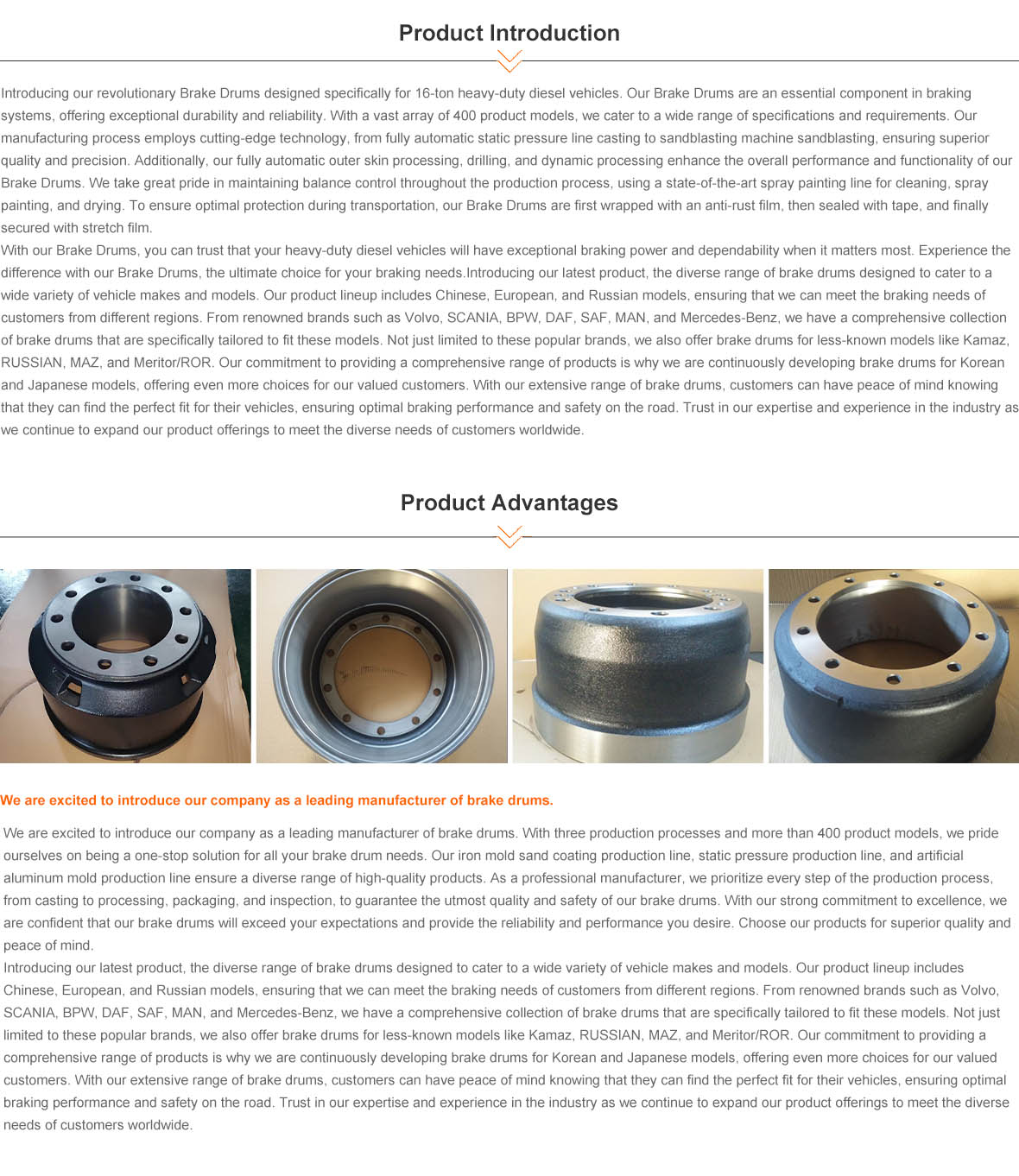
Introduction
The hydraulic drum brake kit represents a foundational technology in vehicle braking systems, particularly prevalent in heavy-duty applications such as commercial vehicles, trailers, and certain industrial equipment. Positioned between the wheel hub and the axle, this system utilizes hydraulic pressure to force brake shoes against the inner surface of a rotating drum, creating friction and decelerating the vehicle. Unlike disc brake systems, drum brakes encapsulate the braking elements, offering inherent protection from debris and reducing brake fade in certain conditions. Core performance characteristics center around stopping power, thermal stability, durability, and serviceability. The system's effectiveness is directly tied to the materials used in brake shoe construction, drum composition, hydraulic fluid properties, and the precision of mechanical components like wheel cylinders and adjusters. A persistent industry pain point lies in managing heat dissipation within the drum assembly and mitigating the effects of corrosion on internal components, leading to reduced braking efficiency and potential failure.
Material Science & Manufacturing
The construction of a hydraulic drum brake kit relies on a complex interplay of materials and manufacturing processes. Brake drums are commonly manufactured from gray cast iron, chosen for its excellent heat capacity, wear resistance, and machinability. The cast iron composition typically includes a high carbon content (3.0-4.0%), silicon (1.8-2.8%), and manganese (0.6-1.2%) to optimize these properties. Manufacturing involves sand casting followed by machining operations to achieve precise dimensions and surface finish. Brake shoes are traditionally fabricated from cast iron or steel, often coated with friction materials composed of organic compounds, metallic powders, and inorganic fillers. The friction material composition dictates the coefficient of friction, wear rate, and noise characteristics. Manufacturing processes include stamping or machining the core shoe, followed by hot bonding or riveting of the friction material. Wheel cylinders, crucial for converting hydraulic pressure into mechanical force, are typically made from ductile cast iron or steel, undergoing precision casting, machining, and surface treatment (e.g., plating) to resist corrosion. Hydraulic lines are manufactured from steel tubing, carefully flared and joined using specialized fittings. Key parameter control during manufacturing involves maintaining dimensional tolerances within tight specifications, ensuring consistent friction material density, and rigorously testing the hydraulic system for leaks and pressure integrity. Heat treatment processes, such as annealing and tempering, are critical for achieving the desired mechanical properties in cast iron and steel components.

Performance & Engineering
The performance of a hydraulic drum brake kit hinges on a sophisticated understanding of force analysis, thermal dynamics, and material fatigue. During braking, the hydraulic pressure exerted by the wheel cylinder translates into a tangential force acting on the brake shoes, generating friction against the drum’s inner surface. The magnitude of this force, and consequently the braking torque, is directly proportional to the hydraulic pressure and the effective radius of the drum. Engineering calculations must account for the lever arm effect and the contact area between the shoes and the drum. A critical engineering challenge is managing the heat generated during braking. Friction converts kinetic energy into thermal energy, elevating the temperature of both the drum and the shoes. Excessive heat can lead to brake fade (reduction in braking efficiency due to friction material degradation) and thermal cracking of the drum. Design considerations include optimizing drum fin geometry for improved heat dissipation and selecting friction materials with high thermal stability. Compliance with safety standards (e.g., FMVSS 105 in the United States, ECE R90 in Europe) dictates minimum braking performance requirements, including stopping distances and braking force levels. Environmental resistance is also paramount; components must withstand exposure to moisture, salt, road debris, and temperature fluctuations. Finite element analysis (FEA) is frequently employed to optimize component designs for stress distribution and fatigue life.
Technical Specifications
| Drum Diameter (inches) | Drum Width (inches) | Brake Shoe Width (inches) | Hydraulic Pressure (PSI) |
|---|---|---|---|
| 12 | 3.0 | 2.0 | 1500-2000 |
| 14 | 3.5 | 2.5 | 1800-2500 |
| 16 | 4.0 | 3.0 | 2000-3000 |
| 18 | 4.5 | 3.5 | 2200-3500 |
| 20 | 5.0 | 4.0 | 2500-4000 |
| 22 | 5.5 | 4.5 | 2800-4500 |
Failure Mode & Maintenance
Hydraulic drum brake kits are susceptible to several failure modes. Fatigue cracking of the brake drum, often initiated at stress concentration points (e.g., bolt holes, cooling fins), can lead to catastrophic failure. Corrosion, particularly in regions exposed to road salt, can weaken drum and shoe components, reducing their structural integrity. Brake shoe delamination, caused by adhesive failure between the friction material and the shoe core, diminishes braking performance. Wheel cylinder leakage, resulting from worn seals or corrosion of internal surfaces, compromises hydraulic pressure and braking force. Adjustment mechanism failure, preventing proper shoe-to-drum clearance, can lead to dragging brakes or reduced stopping power. To mitigate these failures, regular maintenance is crucial. Inspections should include assessing drum runout, measuring drum thickness, checking for cracks, and examining the condition of brake shoes, wheel cylinders, and hydraulic lines. Brake shoe replacement should occur when the friction material reaches its minimum allowable thickness. Wheel cylinder replacement is necessary when leakage is detected. Periodic brake adjustments are essential to maintain optimal shoe-to-drum clearance. Furthermore, proper hydraulic fluid maintenance (flushing and replacing the fluid at recommended intervals) prevents corrosion and ensures consistent performance. Identifying and addressing early signs of wear or damage proactively can significantly extend the service life of the hydraulic drum brake kit.
Industry FAQ
Q: What is the primary cause of brake fade in a hydraulic drum brake system?
A: Brake fade is primarily caused by the overheating of the brake drum and friction material. As temperatures rise, the coefficient of friction decreases, and the friction material can experience thermal degradation, reducing its ability to generate sufficient braking force. Poor heat dissipation, aggressive braking maneuvers, and prolonged downhill braking contribute to this phenomenon.
Q: How does the composition of the friction material affect braking performance?
A: The friction material composition significantly influences several performance characteristics. Organic compounds typically provide quieter operation but may have lower heat resistance. Metallic powders enhance heat dissipation and offer higher friction coefficients but can increase wear rates. Inorganic fillers improve structural integrity and contribute to consistent friction performance. The optimal composition depends on the intended application and operating conditions.
Q: What are the key considerations when selecting a hydraulic fluid for a drum brake system?
A: The hydraulic fluid must possess a high boiling point to prevent vapor lock, excellent lubricity to minimize wear on seals and cylinders, and corrosion inhibition properties to protect internal components. It should also be compatible with the materials used in the braking system (e.g., rubber seals, steel lines). DOT 3 or DOT 4 brake fluids are commonly used, but fluid selection should adhere to the vehicle manufacturer's recommendations.
Q: What is the role of the self-adjuster mechanism in a drum brake system?
A: The self-adjuster mechanism automatically compensates for brake shoe wear, maintaining a consistent shoe-to-drum clearance. This ensures optimal braking performance and prevents excessive pedal travel. Without a properly functioning adjuster, the brakes may become inefficient or drag, leading to premature wear and reduced fuel economy.
Q: How can corrosion be effectively prevented in hydraulic drum brake components?
A: Corrosion prevention involves several strategies. Using corrosion-resistant materials (e.g., ductile cast iron, plated steel), applying protective coatings (e.g., zinc plating, powder coating), and maintaining a properly sealed hydraulic system are crucial. Regularly flushing the brake fluid removes moisture and contaminants that contribute to corrosion. Additionally, visually inspecting components for signs of corrosion and addressing them promptly can prevent further deterioration.
Conclusion
The hydraulic drum brake kit remains a vital braking solution, particularly in heavy-duty applications where its robustness and inherent protection against debris offer significant advantages. Successful implementation relies on meticulous material selection, precise manufacturing processes, and a thorough understanding of the engineering principles governing braking performance and thermal management. Addressing the persistent challenges of heat dissipation and corrosion requires continuous innovation in material science and design.
Looking forward, advancements in friction material technology, such as the development of more thermally stable and wear-resistant compounds, will further enhance braking performance and longevity. Integration of sensor technology to monitor brake temperature and wear in real-time will enable predictive maintenance and improve safety. Ultimately, a comprehensive approach encompassing robust design, high-quality materials, and diligent maintenance practices is essential to maximizing the reliability and effectiveness of hydraulic drum brake systems.