

Introduction
Drum brakes represent a fundamental braking technology utilized extensively in automotive, commercial vehicle, and industrial applications. Positioned within the vehicle's braking system as a critical deceleration component, the drum brake converts kinetic energy into thermal energy through friction. Unlike disc brakes, drum brakes operate within an enclosed housing, utilizing brake shoes pressing against the inner surface of a rotating drum. While often superseded by disc brakes in high-performance applications, drum brakes remain prevalent due to their cost-effectiveness, self-energizing action (enhancing braking force), and suitability for parking brake functionalities. Core performance characteristics are defined by braking torque, fade resistance, and operational lifespan – factors heavily influenced by material selection, manufacturing precision, and environmental operating conditions. A key industry pain point lies in maintaining consistent friction coefficients across varying temperatures and environmental conditions, while simultaneously mitigating noise, vibration, and harshness (NVH) characteristics.
Material Science & Manufacturing
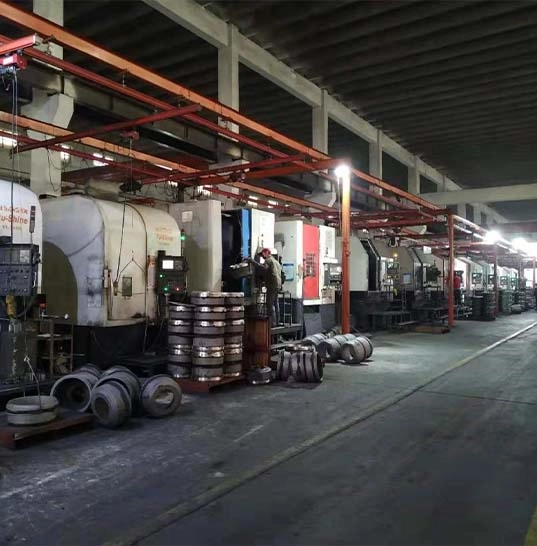
The performance of drum brakes is intrinsically linked to the materials comprising the brake drum and brake shoes. Brake drums are traditionally manufactured from gray cast iron, selected for its high thermal conductivity, wear resistance, and cost-effectiveness. The composition typically includes 2.5-4% carbon, 1-3% silicon, and smaller percentages of manganese, sulfur, and phosphorus. Manufacturing involves casting, followed by machining to achieve precise dimensions and surface finish. Critical parameters during casting include cooling rate and mold design to minimize residual stresses and ensure uniform microstructure. Brake shoes commonly employ woven or sintered iron powder metallurgy composites. These materials provide a high coefficient of friction and are engineered to withstand the elevated temperatures generated during braking. The friction material’s composition varies significantly, incorporating materials like cast iron powder, steel wool, graphite, and friction modifiers (e.g., ceramic fibers, mineral fillers). Manufacturing involves pressing the friction material onto a steel shoe core, followed by curing and bonding processes. The bonding agent’s strength and thermal stability are crucial for preventing delamination during operation. Surface treatments, such as plating or coating, are applied to the drum to enhance corrosion resistance and improve frictional characteristics. Quality control focuses on material composition verification (spectroscopy), hardness testing (Brinell or Vickers), and dimensional accuracy (CMM).
Performance & Engineering
The performance of drum brakes is governed by a complex interplay of mechanical and thermal forces. Force analysis reveals that the braking torque is directly proportional to the friction coefficient between the brake shoes and the drum, the normal force applied by the wheel cylinder, and the drum’s radius. The self-energizing effect, a characteristic of drum brakes, arises from the tangential component of the friction force acting to increase the normal force, resulting in higher braking torque for a given input force. Environmental resistance is a critical concern, particularly in regions with high humidity or exposure to road salts. Corrosion prevention strategies include applying protective coatings (e.g., zinc phosphate) to the drum and utilizing corrosion-resistant materials for the brake shoes and hardware. Compliance requirements are dictated by regulatory bodies such as SAE International and the Department of Transportation (DOT). These regulations specify performance standards for braking efficiency, fade resistance, and durability. Functional implementation involves hydraulic actuation via a wheel cylinder, which forces the brake shoes outward against the drum. The hydraulic pressure is controlled by the master cylinder and modulated by braking assist systems (e.g., ABS, EBD) to optimize braking performance and stability. Heat dissipation is a significant engineering challenge, as the thermal energy generated during braking can lead to brake fade (reduction in braking force due to overheating). Drum design incorporates features like fins and ventilation holes to enhance heat transfer.
Technical Specifications
| Parameter | Typical Value (Passenger Vehicle) | Typical Value (Heavy Duty Vehicle) | Testing Standard |
|---|---|---|---|
| Drum Diameter | 203 – 305 mm | 320 – 410 mm | SAE J477 |
| Drum Width | 40 – 60 mm | 70 – 120 mm | ISO 2714 |
| Friction Material Thickness | 8 – 12 mm | 12 – 20 mm | GB 5768 |
| Maximum Braking Torque | 300 – 600 Nm | 1000 – 2500 Nm | DIN 70050 |
| Coefficient of Friction (μ) | 0.25 – 0.45 | 0.35 – 0.55 | ASTM C903 |
| Fade Resistance (Temperature) | Up to 300°C | Up to 400°C | EN 1556 |
Failure Mode & Maintenance
Drum brakes are susceptible to several failure modes. Fatigue cracking of the brake drum, often initiated by thermal stress and impact loading, can lead to catastrophic failure. Delamination of the friction material from the shoe core occurs due to inadequate bonding, excessive heat, or contamination. Glazing of the friction material, resulting from prolonged operation at high temperatures without sufficient cooling, reduces the coefficient of friction and braking performance. Drum warping, caused by uneven heating and cooling, introduces runout and vibrations. Wheel cylinder leaks, stemming from seal degradation, compromise hydraulic pressure and braking effectiveness. Regular maintenance is critical for preventing these failures. This includes periodic inspection for drum wear, friction material thickness, and wheel cylinder leaks. Resurfacing or replacing the drum when it exceeds the wear limit is essential. Brake shoes should be replaced when the friction material reaches its minimum thickness. Wheel cylinder seals should be inspected and replaced as needed. Proper lubrication of moving parts (e.g., adjusting screws, pivot points) reduces friction and prevents corrosion. It is crucial to follow the manufacturer's recommended maintenance intervals and specifications. Ignoring these guidelines can significantly reduce brake system reliability and compromise safety.
Industry FAQ
Q: What are the primary factors contributing to brake fade in drum brake systems?
A: Brake fade is predominantly caused by the overheating of the brake drum and friction material. As temperatures rise, the coefficient of friction decreases, and the friction material can experience a reduction in structural integrity. Insufficient heat dissipation, prolonged braking events, and aggressive driving conditions exacerbate the issue. Vaporization of brake fluid due to excessive heat can also contribute to fade by reducing hydraulic pressure.
Q: How does the material composition of the brake drum impact its resistance to thermal shock?
A: The composition of the brake drum significantly influences its thermal shock resistance. Gray cast iron, with its relatively high carbon content, provides good thermal conductivity but is susceptible to cracking under rapid temperature changes. Alloying elements like nickel and chromium can improve thermal shock resistance but increase cost. The cooling rate during casting also plays a vital role; slower cooling promotes a more uniform microstructure and reduces residual stresses.
Q: What methods are employed to mitigate noise, vibration, and harshness (NVH) in drum brake systems?
A: NVH mitigation involves several strategies. Optimizing the friction material formulation to reduce stick-slip phenomena is crucial. Implementing dampers and shims between the brake shoes and the backing plate absorbs vibrations. Ensuring precise drum runout and proper alignment minimizes friction variations. Careful selection of spring rates and hardware design contributes to a smoother braking experience.
Q: What is the role of the self-energizing effect in drum brake performance, and are there any drawbacks?
A: The self-energizing effect amplifies braking force by increasing the normal force between the brake shoes and the drum. This provides greater braking torque for a given input force. However, it can also lead to uneven wear and increased sensitivity to friction material variations. It requires precise manufacturing tolerances and careful material selection to avoid instability.
Q: How do different environmental conditions (e.g., humidity, salt spray) affect the lifespan of drum brake components?
A: High humidity and exposure to road salts accelerate corrosion of the brake drum, brake shoes, and hardware. Corrosion weakens the materials, reduces friction performance, and compromises structural integrity. Protective coatings, such as zinc phosphate or powder coating, are essential for mitigating these effects. Regular cleaning and inspection are also crucial in harsh environments.
Conclusion
Drum brakes, while often superseded by disc brake technology in performance-oriented applications, remain a viable and cost-effective braking solution for a wide range of vehicles and industrial equipment. Their enduring presence is due to their inherent self-energizing action, suitability for parking brake applications, and relatively simple design. Understanding the nuances of material science, manufacturing processes, and performance engineering is paramount for optimizing drum brake performance and ensuring long-term reliability. Careful attention to factors like thermal management, corrosion prevention, and adherence to industry standards is essential for maximizing braking efficiency and minimizing failure rates.
Moving forward, advancements in friction material technology, such as the incorporation of novel ceramic composites and friction modifiers, will continue to enhance drum brake performance and reduce environmental impact. Continued refinement of manufacturing techniques, including precision casting and surface treatment processes, will further improve durability and reliability. As automotive and industrial sectors evolve, the optimal brake system design will increasingly involve a hybrid approach, leveraging the strengths of both drum and disc brake technologies to achieve the desired balance of cost, performance, and safety.