
Introduction
Brake pads and brake drums represent fundamental components within vehicular braking systems, operating in a synergistic relationship to achieve controlled deceleration and vehicle immobilization. While often discussed collectively, they are distinct elements with differing materials, manufacturing processes, and performance characteristics. This guide provides a comprehensive technical analysis of both brake pads and brake drums, encompassing material science, manufacturing techniques, performance engineering, failure modes, and relevant industry standards. The core industry pain point centers on achieving optimal friction coefficient stability across varying temperatures and driving conditions, alongside maximizing service life and minimizing noise, vibration, and harshness (NVH). Modern braking systems are increasingly challenged by demands for lighter weight, improved thermal management, and compatibility with advanced driver-assistance systems (ADAS), necessitating a detailed understanding of the interplay between pad and drum performance.
Material Science & Manufacturing
Brake Pads: The composition of brake pads dictates their frictional properties and wear characteristics. Common materials include organic compounds (such as phenolic resin, rubber, and cellulose fibers) for quieter operation and reduced rotor wear, semi-metallic compounds (incorporating steel wool, iron powder, and other metals) for enhanced heat dissipation and stopping power, and ceramic compounds (utilizing silicon carbide and other ceramics) for high-temperature stability and consistent performance. Manufacturing typically involves powder metallurgy, where constituent materials are blended, compressed under high pressure, and then cured or sintered. Critical parameters include particle size distribution, binder content, and compaction force. Raw material purity significantly impacts pad performance; contaminants can lead to uneven wear and reduced friction coefficients.
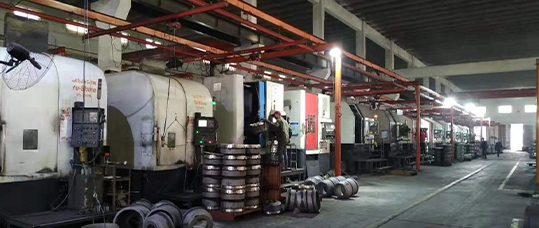
Brake Drums: Traditionally, brake drums are manufactured from gray cast iron, chosen for its excellent heat capacity, wear resistance, and machinability. However, newer applications employ ductile cast iron for improved strength and resistance to cracking. Manufacturing processes include casting, machining, and surface finishing. Casting quality is paramount; porosity and inclusions can weaken the drum and lead to premature failure. Machining processes, such as turning and milling, are utilized to achieve precise dimensions and a smooth braking surface. Surface finishing techniques, including gun drilling and honing, are employed to enhance heat dissipation and improve friction characteristics. The metallurgical structure of cast iron – specifically the graphite flake size and distribution – directly influences its thermal conductivity and wear properties. The manufacturing process necessitates stringent quality control to ensure dimensional accuracy and adherence to specified tolerances.
Performance & Engineering
The performance of brake pads and drums is inextricably linked to the principles of tribology – the science of interacting surfaces in motion. The frictional force generated at the pad-drum interface is governed by the coefficient of friction (µ), normal force, and contact area. Engineering analysis focuses on optimizing these parameters to maximize braking torque and minimize stopping distance. Thermal management is a crucial aspect, as excessive heat buildup can lead to brake fade – a reduction in braking effectiveness due to diminished friction. Brake drums utilize their mass and thermal capacity to absorb and dissipate heat generated during braking. Venting and finning are common design features employed to enhance heat transfer. Brake pad materials are engineered to maintain a consistent coefficient of friction across a wide temperature range. Force analysis, including shear stress distribution and contact pressure, is critical in determining the structural integrity of both components. Compliance with safety regulations, such as those stipulated by the Federal Motor Vehicle Safety Standards (FMVSS) in the United States, is mandatory. NVH characteristics are also significant; engineers strive to minimize squeal and judder through pad damping materials and drum design optimization.
Technical Specifications
| Parameter | Brake Pads (Semi-Metallic) | Brake Drums (Gray Cast Iron) | Units |
|---|---|---|---|
| Coefficient of Friction (µ) | 0.35 - 0.45 | 0.25 - 0.35 | Dimensionless |
| Operating Temperature Range | 0 - 600 °C | 0 - 400 °C | °C |
| Density | 7.0 - 7.8 | 7.2 - 7.4 | g/cm³ |
| Thermal Conductivity | 50 - 80 | 40 - 60 | W/m·K |
| Tensile Strength | > 200 | > 250 | MPa |
| Hardness (Brinell) | 60 - 70 | 180 - 240 | HB |
Failure Mode & Maintenance
Brake Pad Failure Modes: Common failure modes for brake pads include abrasive wear (due to friction with the drum), adhesive wear (caused by material transfer between pad and drum), fatigue cracking (resulting from repeated stress cycles), and delamination (separation of layers within the pad). Glazing, a phenomenon where the pad surface becomes hardened and polished, reduces friction. Contamination with dirt, debris, or brake fluid can also compromise pad performance. Brake Drum Failure Modes: Brake drums are susceptible to cracking (due to thermal stress or mechanical impact), warping (resulting from uneven heat distribution), and scoring (caused by abrasive particles). Rust and corrosion can develop on the braking surface, reducing friction and causing uneven wear. Excessive drum runout – a measure of radial variation – can lead to pedal pulsation.
Maintenance: Regular inspection of pad thickness and drum surface condition is crucial. Worn pads should be replaced in pairs to ensure balanced braking. Brake drums should be resurfaced (turned) to remove scoring and restore a smooth braking surface. Proper lubrication of moving parts (such as wheel cylinders and adjusting mechanisms) is essential. Brake fluid should be flushed and replaced periodically to prevent corrosion and maintain optimal hydraulic pressure. Wheel bearings should be inspected and greased to ensure smooth rotation and prevent premature wear of braking components. Ignoring warning signs, such as squealing noises, grinding sounds, or reduced braking effectiveness, can lead to catastrophic failure and compromise vehicle safety.
Industry FAQ
Q: What is the primary difference in performance between ceramic and semi-metallic brake pads?
A: Ceramic brake pads generally offer quieter operation, less dust generation, and more consistent friction coefficients at higher temperatures. However, semi-metallic pads typically provide stronger initial bite and superior heat dissipation, making them suitable for more demanding applications like heavy-duty vehicles or performance driving. The trade-off involves increased rotor wear with semi-metallics and potential for reduced stopping power in extremely cold conditions with ceramics.
Q: How does drum runout affect braking performance?
A: Excessive drum runout causes the brake pads to contact the drum surface unevenly, leading to pedal pulsation and reduced braking effectiveness. It also accelerates pad wear and can generate noise. Runout is typically measured using a dial indicator and corrected by resurfacing the drum or replacing it if the damage is severe.
Q: What is the role of graphite in cast iron brake drums?
A: Graphite flakes within the cast iron matrix act as internal lubricants, reducing friction and preventing seizure. They also contribute to the material’s machinability and thermal shock resistance. The size, shape, and distribution of graphite flakes are critical factors influencing drum performance and durability.
Q: How can brake fade be minimized in heavy-duty applications?
A: Brake fade can be minimized through several strategies, including utilizing brake drums with improved heat dissipation (e.g., vented designs), employing brake pads with high-temperature stability, ensuring proper hydraulic brake system maintenance (to prevent air ingress and maintain optimal fluid pressure), and implementing brake cooling systems (e.g., air-cooled drums).
Q: What are the common causes of brake squeal, and how can it be addressed?
A: Brake squeal is often caused by friction between the brake pad backing plate and the caliper piston, or by vibrations in the brake assembly. It can be addressed through applying anti-squeal shims to the pad backing plate, lubricating contact points, ensuring proper caliper hardware installation, and performing a thorough inspection of the braking components for wear or damage.
Conclusion
The selection and maintenance of brake pads and drums are critical for ensuring vehicle safety and optimal braking performance. Understanding the material science, manufacturing processes, and failure modes associated with each component is essential for making informed decisions regarding replacement and repair. Modern braking systems demand a holistic approach, considering factors such as thermal management, NVH characteristics, and compliance with stringent safety regulations.
Future advancements in braking technology will likely focus on developing lighter-weight materials, improving heat dissipation capabilities, and integrating intelligent braking systems with ADAS. Materials like carbon-ceramic composites are gaining traction in high-performance applications, offering superior heat resistance and reduced weight. Continued research and development efforts will undoubtedly lead to further enhancements in brake pad and drum technology, ultimately contributing to safer and more efficient vehicles.