
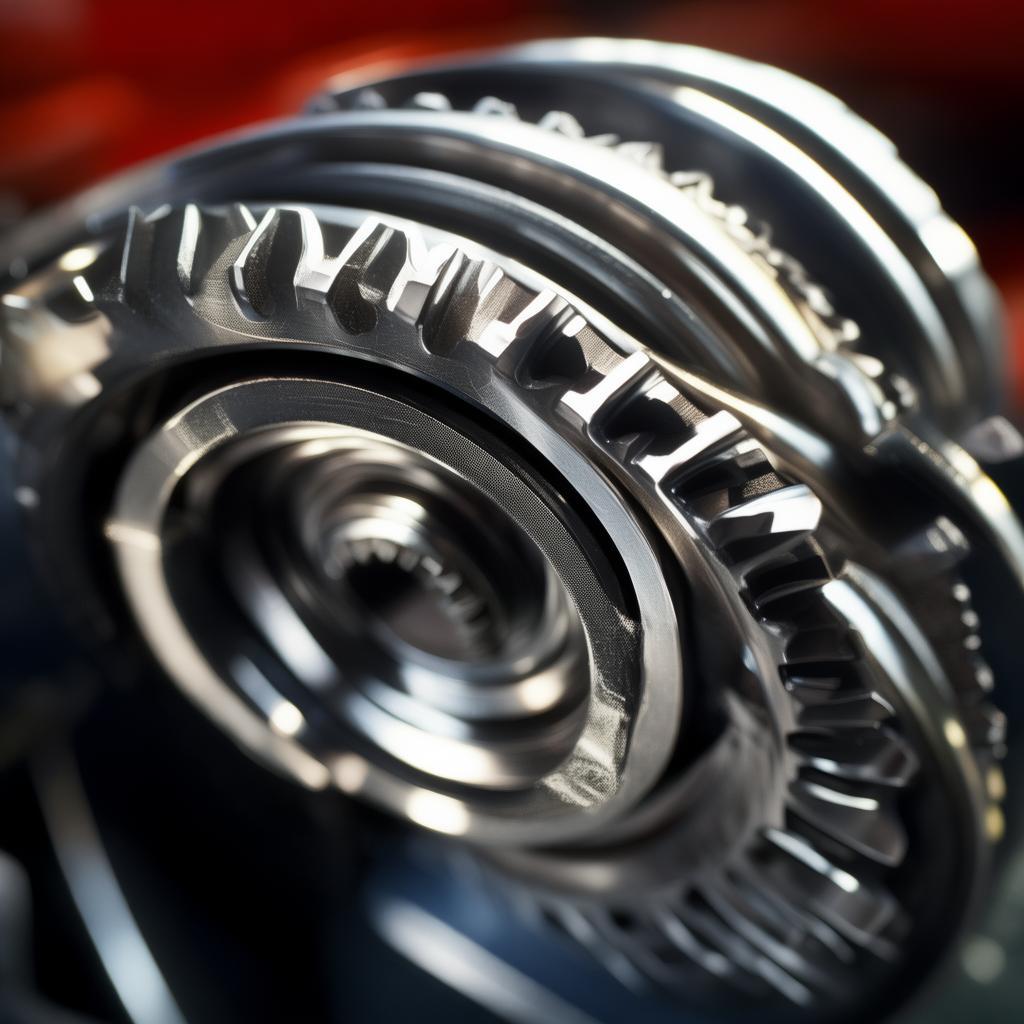
bevel gear forging
Precision Bevel Gear Forging Solutions for High-Performance Drivetrains
Product Overview
Our bevel gear forging process delivers superior mechanical properties and dimensional accuracy for critical power transmission applications. Unlike conventional machining or casting, our forged bevel gears exhibit optimized grain flow that follows the tooth contour, resulting in components with exceptional fatigue resistance and load-bearing capacity. Each forged gear undergoes rigorous quality control to ensure conformance to AGMA, DIN, and ISO standards, making them ideal for demanding industrial environments where failure is not an option.
From spiral bevel gears for heavy machinery to straight bevel gears for precision instruments, our forging capabilities cover a wide range of modules, pressure angles, and material grades. The bevel gear forging methodology we employ eliminates internal porosity and inclusions commonly found in cast alternatives, providing a denser, more homogenous microstructure that extends service life by up to 30% in high-torque applications.
Key Features
- Optimized Grain Flow: Hot forging aligns metal fibers along the gear tooth profile, maximizing strength at stress concentration points.
- Superior Material Density: Closed-die forging reduces micro-porosity, achieving near-100% density for improved wear resistance.
- Custom Alloy Compatibility: Supports 8620, 4140, 4340, 9310, 18CrNiMo7-6, and other case-hardening or through-hardening steels.
- Net-Shape or Near-Net-Shape: Minimizes material waste and subsequent machining, reducing lead times and production costs.
- Consistent Mechanical Properties: Controlled heating and cooling cycles ensure uniform hardness and toughness across every batch.
- Scalable Production: From prototype quantities (50 pieces) to mass production (10,000+ pieces) with repeatable quality.
Technical Specifications
| Parameter | Available Range | Standard Tolerance |
|---|---|---|
| Module (m) | 1.5 – 12 | DIN 8 – DIN 6 |
| Outside Diameter | 30 mm – 600 mm | ±0.05 mm (after machining) |
| Pressure Angle | 20°, 25°, 14.5° (custom) | ±0.5° |
| Tooth Hardness (Core) | 30–45 HRC (through-hardened) / 58–62 HRC (case-hardened) | ±2 HRC |
| Max. Tooth Length | 150 mm | ±0.1 mm |
| Forging Material Grade | SAE 8620, SAE 4140, SAE 4340, 18CrNiMo7-6, 20MnCr5 | ASTM / DIN / JIS |
| Surface Finish (as-forged) | Ra 3.2 – 6.3 µm | Ra 0.8 µm (after finishing) |
| Heat Treatment Options | Carburizing, induction hardening, nitriding, quench & temper | Per customer specification |
Application Scenarios
The unique properties of bevel gear forging make it indispensable in sectors where torque density and reliability are critical:
- Heavy Construction & Mining: Swing drives, track drives, and differentials in excavators, loaders, and drilling rigs require forged bevel gears to withstand shock loads and abrasive environments.
- Agricultural Machinery: PTO shafts, gearboxes for harvesters and tractors benefit from the fatigue life of forged gears operating under variable, high-torque conditions.
- Industrial Gearboxes: Right-angle drives in conveyors, mixers, and crushers where compact design and high power density are mandatory.
- Automotive & Off-Highway: Differential gears, transfer case components, and axle drives for commercial vehicles and specialty EVs.
- Marine & Offshore: Propulsion systems and deck machinery where corrosion resistance and impact strength are paramount.
- Aerospace & Defense: Actuators, helicopter transmissions, and auxiliary power units requiring traceable, certified forging processes.
Advantages
Choosing forged over machined or cast bevel gears delivers measurable operational benefits:
- Higher Load Capacity: The continuous grain flow in forged teeth increases bending fatigue strength by 20–40% compared to cut gears from bar stock.
- Reduced Weight: Optimized geometry from forging allows thinner sections without compromising strength, contributing to overall drivetrain weight reduction.
- Lower Total Cost of Ownership: Extended service intervals, reduced downtime, and fewer replacements offset the initial forging investment.
- Faster Lead Times for Complex Profiles: For spiral and hypoid bevel gears, forging reduces rough machining time by up to 50%.
- Material Versatility: We can forge bevel gears in duplex stainless steels, nickel-based alloys, and precipitation-hardening grades for specialized environments.
Why Choose Us
- 20+ Years of Forging Expertise: Our engineering team has designed tooling for over 5,000 unique bevel gear geometries, including non-standard pressure angles and custom tooth modifications.
- Integrated Production Line: In-house capabilities include die design, hot forging, controlled cooling, heat treatment, and CNC finishing—all under one roof for consistent quality.
- Advanced Simulation: We use DEFORM™ finite element analysis to predict grain flow, die fill, and residual stress before production, eliminating trial-and-error.
- Certified Quality Systems: ISO 9001:2015, IATF 16949 (automotive), and AS9100D (aerospace) certifications ensure traceability and process discipline.
- Global Logistics: With warehouses in North America, Europe, and Asia, we can deliver forged bevel gears to your assembly line with JIT scheduling.
- Technical Support: Our metallurgists and gear engineers provide free design-for-forging reviews to optimize your gear’s performance and manufacturability.
FAQ
Q: What is the minimum order quantity (MOQ) for custom bevel gear forging?
A: For new tooling development, the MOQ is typically 200 pieces. However, we can accommodate prototype runs of 50–100 pieces for validation testing at a slightly higher per-unit cost.
Q: How does bevel gear forging compare to machining from solid bar?
A: Forging aligns the grain structure with the tooth profile, delivering 30–50% higher fatigue strength. Machined gears from bar stock have interrupted grain flow, making them more susceptible to tooth root cracking under cyclic loads.
Q: Can you forge bevel gears with integrated shafts or flanges?
A: Yes. We offer closed-die forging for one-piece designs that combine the bevel gear with a shaft, hub, or flange—eliminating the need for welding or keyway connections and improving concentricity.
Q: What surface treatments do you recommend after forging?
A: For most applications, we recommend carburizing to 0.8–1.2 mm case depth (58–62 HRC) followed by shot peening. For corrosive environments, we apply black oxide or electroless nickel plating after final machining.
Q: How do you ensure dimensional stability after heat treatment?
A: We use predictive modeling to design forging dies with compensation for shrinkage and distortion. Post-forging stress relieving and controlled quenching minimize geometry changes. Final machining tolerances are verified with CMM inspection.
Q: What is the typical lead time for a new bevel gear forging project?
A: Tooling design and fabrication takes 4–6 weeks. First article samples are delivered within 8–10 weeks from order confirmation. Production quantities follow within 2 weeks of sample approval.
Contact our engineering team for a design review and quotation on your next bevel gear forging project. We provide free DFM (Design for Manufacturing) analysis for all custom inquiries.