

Introduction
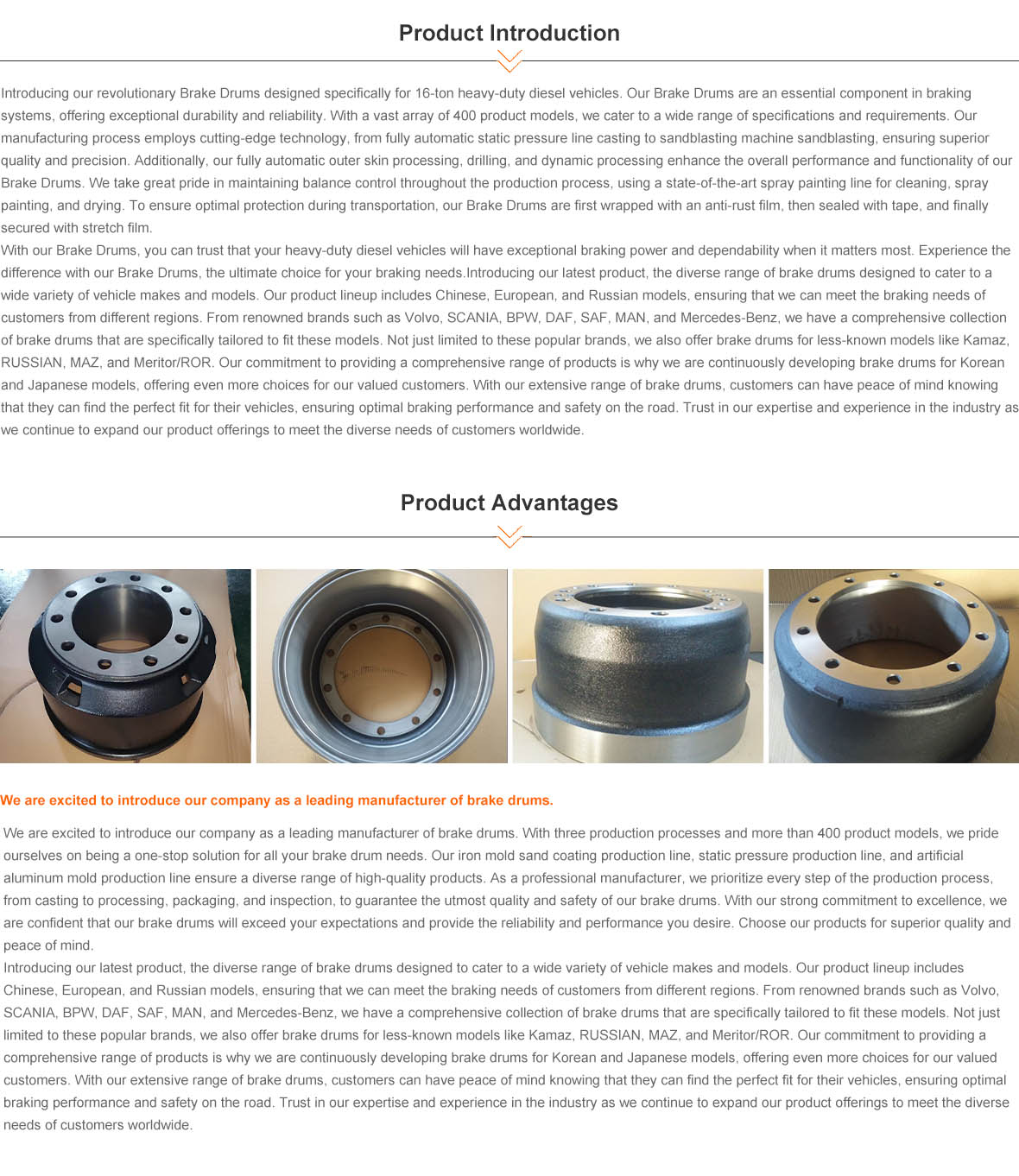
Semi-truck brake drums are critical components of the vehicle’s braking system, responsible for converting kinetic energy into thermal energy through friction. Their weight is a significant engineering consideration impacting overall vehicle weight, rotational inertia, and consequently, braking performance and fuel efficiency. Brake drum weight varies substantially depending on material composition, diameter, hub pilot versus stud pilot designs, and intended application (long-haul, vocational, etc.). Typically manufactured from gray cast iron, ductile iron, or composite materials, understanding the weight characteristics of these drums is essential for fleet managers, maintenance personnel, and vehicle manufacturers. This guide provides an in-depth technical analysis of semi-truck brake drum weight, covering material science, manufacturing processes, performance implications, failure modes, and relevant industry standards. We will address the core pain points regarding weight optimization versus durability and safety, focusing on the practical implications of drum weight for commercial vehicle operation.
Material Science & Manufacturing
The predominant material for semi-truck brake drums is gray cast iron (ASTM A48 Class 30) due to its excellent heat dissipation properties, wear resistance, and relatively low cost. Gray cast iron contains flake graphite within a ferrous matrix, providing good damping characteristics and machinability. However, its tensile strength and ductility are comparatively low. Ductile iron (ASTM A532 Grade 65-45-12) offers improved strength and toughness due to the spherical shape of the graphite inclusions, making it suitable for heavier-duty applications. More recently, composite brake drums – combining a cast iron braking surface with an aluminum or steel hub – have emerged, drastically reducing weight.
Manufacturing processes significantly influence the final drum weight. Traditional methods involve sand casting, where molten iron is poured into a sand mold. The mold’s geometry directly dictates the drum’s shape and dimensions. Critical parameters controlled during casting include pouring temperature, cooling rate, and mold material composition. Excessive cooling rates can lead to residual stresses and potential cracking. Machining operations, including turning, milling, and grinding, are then employed to achieve the required tolerances and surface finish. Modern manufacturing utilizes centrifugal casting, which produces denser and more uniform castings with reduced porosity. Composite drum manufacturing involves forging or casting the iron braking surface and then bonding it to the aluminum or steel hub using high-strength adhesives and mechanical fasteners. Quality control at each stage is paramount, including radiographic inspection for internal flaws and dimensional accuracy checks.
Performance & Engineering
Brake drum weight directly impacts several performance characteristics. Increased drum weight contributes to higher rotational inertia, requiring more torque to accelerate or decelerate the drum during braking. This translates to a slightly longer stopping distance and increased fuel consumption. Conversely, heavier drums generally possess greater thermal capacity, allowing them to absorb more heat generated during braking without experiencing thermal fade. However, excessive weight can also place undue stress on wheel bearings and suspension components.
Engineering analysis involves evaluating the drum’s structural integrity under various loading conditions. Finite Element Analysis (FEA) is commonly used to simulate stresses and strains induced by braking forces, thermal gradients, and centrifugal loads. Key parameters considered include drum thickness, ribbing patterns, and material properties. Brake drum design must comply with stringent safety regulations, such as those established by the Department of Transportation (DOT) and SAE International. Proper heat dissipation is crucial to prevent brake fade, which occurs when the drum temperature exceeds the material’s capacity to absorb heat, leading to a reduction in friction coefficient. Ventilation features, such as fins or internal passages, are often incorporated to enhance cooling. Furthermore, consideration must be given to drum compatibility with brake shoe materials to prevent glazing and maintain optimal friction performance.
Technical Specifications
| Drum Diameter (in) | Drum Width (in) | Material | Typical Weight (lbs) | Maximum Gross Vehicle Weight Rating (GVWR) Compatibility (lbs) |
|---|---|---|---|---|
| 14 | 4 | Gray Cast Iron | 80-110 | 16,000-20,000 |
| 16 | 5 | Gray Cast Iron | 120-150 | 20,000-30,000 |
| 16 | 5 | Ductile Iron | 150-180 | 30,000-35,000 |
| 16 | 5 | Composite (Iron/Aluminum) | 70-90 | 20,000-30,000 |
| 16.5 | 6 | Ductile Iron | 170-200 | 35,000-40,000 |
| 16.5 | 6 | Composite (Iron/Steel) | 100-120 | 35,000-40,000 |
Failure Mode & Maintenance
Common failure modes for semi-truck brake drums include thermal cracking, spalling, and out-of-roundness. Thermal cracking originates from repeated heating and cooling cycles, creating stress concentrations that propagate into cracks. Spalling involves the chipping or flaking of the drum’s surface due to excessive wear or impact loading. Out-of-roundness occurs when the drum becomes non-circular, leading to uneven braking and potential vibration. Fatigue cracking can also occur, especially in drums subjected to high stresses and frequent braking events. Corrosion, particularly in areas exposed to road salt and moisture, can weaken the drum’s structure and accelerate failure.
Preventative maintenance is crucial to maximize brake drum lifespan. Regular inspections should be performed to identify cracks, spalling, and excessive wear. Drums should be resurfaced (turned) when they fall outside acceptable thickness tolerances. Proper lubrication of wheel bearings and brake shoe adjustment are also essential. When replacing drums, it’s vital to match the drum’s specifications to the vehicle’s GVWR and intended application. Avoid using mismatched brake shoes and drums, as this can lead to premature wear and reduced braking performance. Storage of spare drums should be in a dry environment to prevent corrosion. Periodic torque checks on lug nuts are also critical to ensure proper clamping force and prevent drum distortion.
Industry FAQ
Q: What is the trade-off between using a heavier cast iron drum versus a lighter composite drum?
A: The primary trade-off revolves around thermal capacity versus weight. Heavier cast iron drums offer superior heat dissipation, crucial for sustained heavy braking (e.g., long descents). Lighter composite drums reduce rotational inertia, improving fuel efficiency and potentially reducing stopping distances in less demanding situations. The choice depends on the typical operating conditions and duty cycle of the vehicle. Composite drums often require more frequent inspections and potentially earlier replacement due to the thinner braking surface.
Q: How does drum weight affect wheel bearing life?
A: Increased drum weight places a greater radial load on wheel bearings. This accelerated loading can reduce bearing life and increase the frequency of replacement. Proper wheel bearing maintenance, including regular lubrication and adjustment, is critical to mitigate this effect. Selecting high-quality wheel bearings rated for the specific GVWR and drum weight is also essential.
Q: What is the acceptable level of out-of-roundness for a semi-truck brake drum?
A: Acceptable out-of-roundness varies depending on the drum’s diameter and manufacturer’s specifications. Generally, exceeding 0.005 inches total indicator reading (TIR) requires drum replacement or resurfacing. Significant out-of-roundness can lead to uneven brake shoe contact, reduced braking efficiency, and increased vibration.
Q: Are there specific regulations governing brake drum weight and material composition?
A: While there aren't direct regulations specifying maximum brake drum weight, regulations dictate minimum thickness requirements and material properties to ensure safety. DOT and SAE standards govern brake system performance and component integrity. Material composition must meet established ASTM standards (e.g., ASTM A48 for gray cast iron, ASTM A532 for ductile iron).
Q: What role does drum material play in corrosion resistance?
A: Gray cast iron is susceptible to corrosion, particularly in environments with high salt content. Ductile iron offers slightly improved corrosion resistance. Composite drums, with their aluminum or steel hubs, can experience galvanic corrosion if dissimilar metals are not properly isolated. Regular cleaning and application of corrosion inhibitors are essential preventative measures.
Conclusion
The weight of a semi-truck brake drum is a multifaceted engineering parameter with significant implications for vehicle performance, safety, and operational efficiency. Material selection – ranging from traditional gray cast iron to advanced composite materials – directly influences weight, thermal capacity, and durability. Manufacturing processes and stringent quality control are essential to ensure consistent drum performance and reliability. Understanding the failure modes associated with brake drums and implementing a proactive maintenance program are paramount to preventing catastrophic failures and maximizing component lifespan.
As the transportation industry increasingly focuses on fuel efficiency and sustainability, the trend towards lighter-weight brake drum solutions, such as composite designs, is likely to continue. However, careful consideration must be given to balancing weight reduction with the need for robust thermal management and structural integrity. Continued research and development in material science and manufacturing technologies will be crucial to optimize brake drum performance and meet the evolving demands of the commercial vehicle sector.