
Introduction
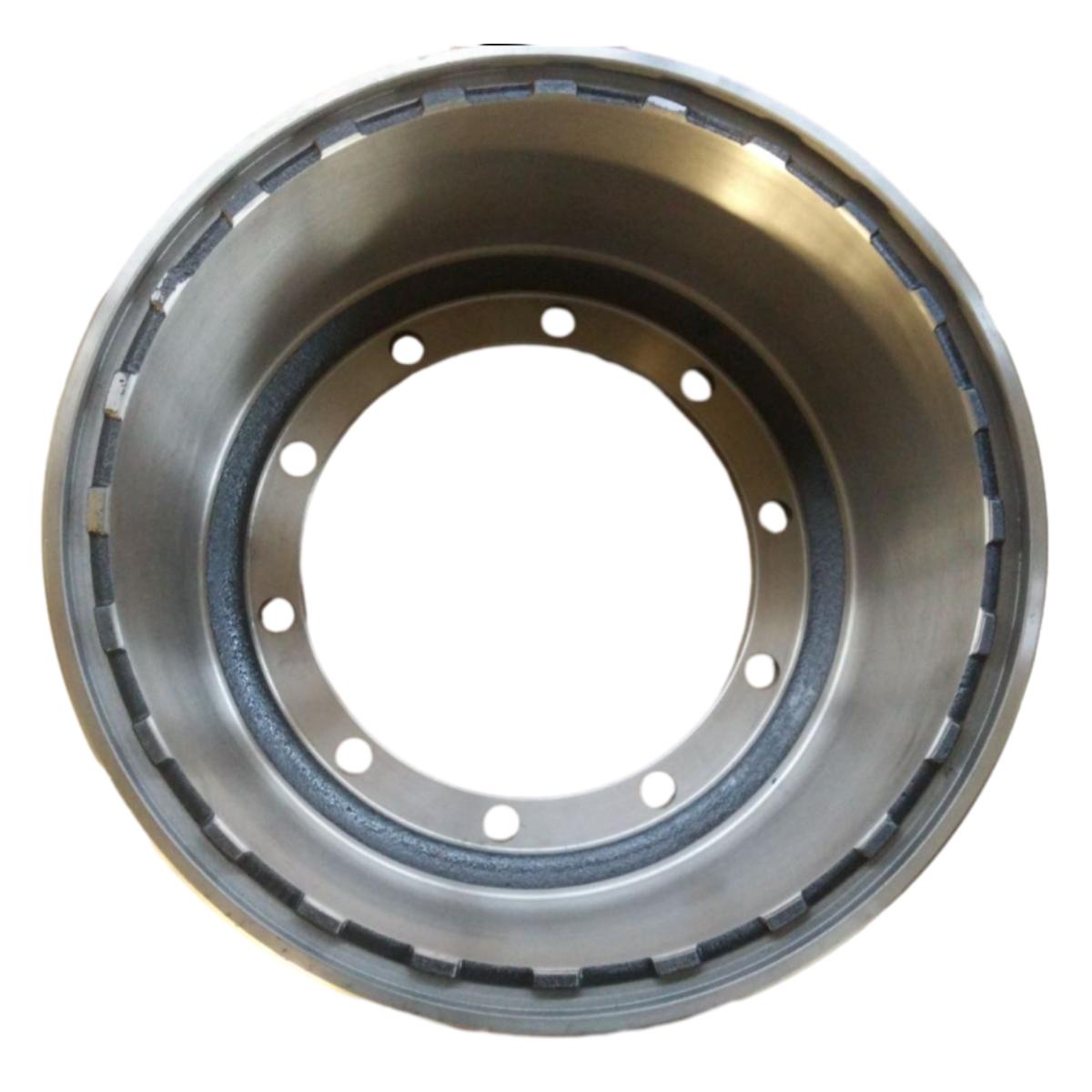
Brake rotor drums, integral components of braking systems in vehicles and industrial machinery, are responsible for dissipating the kinetic energy generated during deceleration. Situated within the braking assembly, the drum interfaces with brake shoes or pads to create frictional force, facilitating controlled stopping. Their technical position within the automotive and industrial supply chain is critical, demanding high precision manufacturing and material integrity. Core performance metrics include thermal capacity, wear resistance, dimensional stability under thermal stress, and adherence to stringent safety regulations. Unlike disc brake systems, drum brakes operate on an internal shoe-drum interface, presenting unique engineering challenges related to heat management and self-energizing effects. The continued, albeit evolving, use of drum brakes in parking brake systems and certain vehicle classes necessitates a thorough understanding of their materials, manufacturing processes, and potential failure modes.
Material Science & Manufacturing
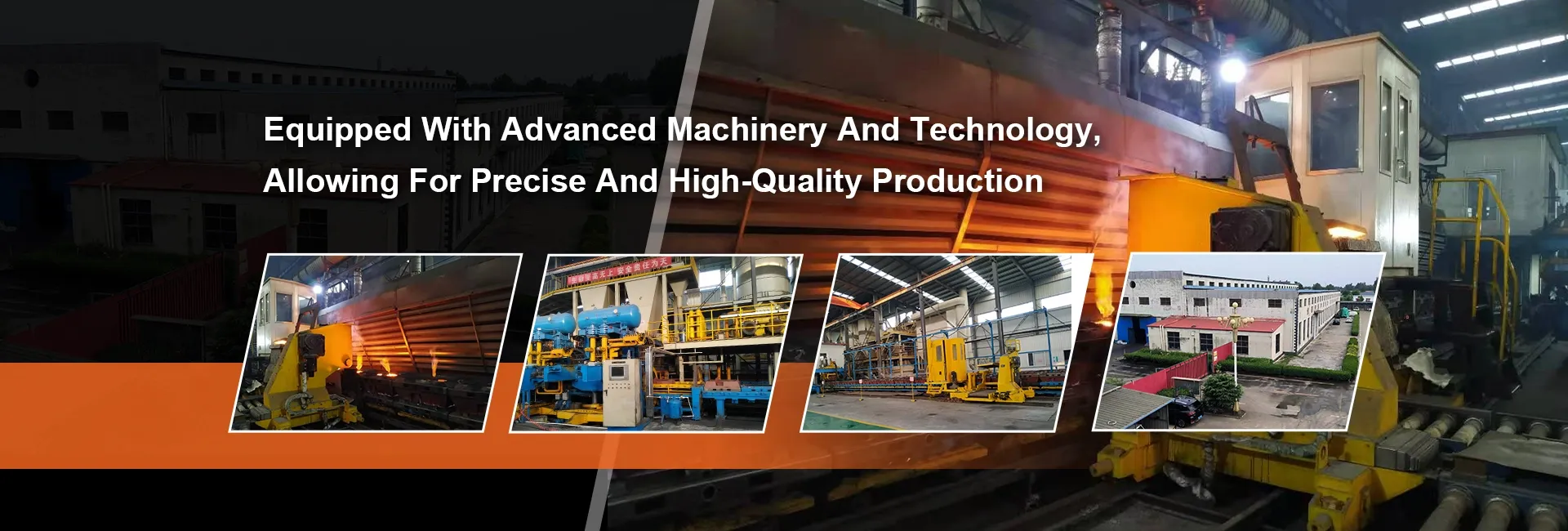
Historically, brake rotor drums were predominantly manufactured from cast iron due to its cost-effectiveness, high thermal conductivity, and good wear resistance. However, modern applications often employ ductile cast iron (ASTM A48 Class 30) offering improved strength and ductility compared to gray cast iron. Alternative materials like steel alloys and composite materials are increasingly explored for high-performance applications. The manufacturing process typically begins with pattern making and sand casting, followed by machining operations such as turning, milling, and grinding to achieve precise dimensions and surface finish. Critical parameters during casting include cooling rate, sand composition, and metal fluidity to avoid porosity and ensure uniform microstructure. Heat treatment, specifically annealing, is often employed to relieve residual stresses introduced during casting and machining, improving dimensional stability. Surface treatments such as pearlitization and induction hardening are applied to enhance wear resistance and fatigue life. The control of carbon content, silicon levels, and manganese alloys within the cast iron is vital, directly influencing hardness, tensile strength, and thermal shock resistance. Recent advancements include dynamic casting simulations and non-destructive testing (NDT) methods like ultrasonic testing to detect internal defects and ensure structural integrity. Furthermore, precise control of the drum’s geometry, including concentricity and runout, is crucial for minimizing vibration and ensuring smooth braking performance.
Performance & Engineering
The performance of a brake rotor drum is heavily influenced by its thermal management capabilities. During braking, kinetic energy is converted into heat, and the drum must effectively dissipate this heat to prevent brake fade – a reduction in braking force due to overheating. Finite element analysis (FEA) is commonly used to model the thermal stress distribution within the drum, optimizing its design for efficient heat dissipation. The drum’s mass, rotational inertia, and surface area play significant roles in its thermal performance. Engineering considerations include maximizing the contact area between the braking surface and the surrounding air, and incorporating internal ribbing to enhance heat transfer. Furthermore, the drum’s geometry must account for the self-energizing effect inherent in drum brake systems, where a portion of the braking force is generated by the drum’s rotation. Compliance with safety standards such as FMVSS 105 in the United States and ECE R13 in Europe is paramount. These standards dictate minimum performance requirements for braking systems, including stopping distance, brake fade resistance, and durability. Force analysis must also consider the radial and axial forces exerted by the brake shoes or pads during braking, ensuring the drum’s structural integrity under these loads. Material selection is guided by the need to balance high thermal conductivity, wear resistance, and mechanical strength, typically requiring a compromise between these properties.
Technical Specifications
| Parameter | Typical Value (Passenger Vehicle) | Typical Value (Heavy Duty Truck) | Unit |
|---|---|---|---|
| Diameter | 200-300 | 300-400 | mm |
| Width | 40-60 | 80-120 | mm |
| Material | Ductile Cast Iron (ASTM A48 Class 30) | Ductile Cast Iron (ASTM A48 Class 35) | - |
| Tensile Strength | 200-300 | 350-500 | MPa |
| Hardness (Brinell) | 180-250 | 220-300 | HB |
| Thermal Conductivity | 40-50 | 45-55 | W/m·K |
Failure Mode & Maintenance
Brake rotor drums are susceptible to several failure modes, including thermal cracking, wear, and deformation. Thermal cracking occurs due to rapid temperature fluctuations during braking, leading to tensile stresses exceeding the material’s strength. Wear results from the abrasive action of the brake shoes or pads, gradually reducing the drum’s thickness. Deformation can occur due to overheating or excessive mechanical loads, leading to runout and vibration. Fatigue cracking can initiate at stress concentration points, such as keyways or bolt holes, and propagate under cyclic loading. Corrosion, particularly in environments with high salt content, can accelerate wear and reduce the drum’s structural integrity. Regular maintenance is crucial to prevent these failures. This includes periodic inspection for cracks, wear, and deformation. Measuring drum thickness to ensure it remains within specified limits is essential. Resurfacing drums to remove minor wear and restore a smooth braking surface can extend their service life. However, excessive resurfacing reduces drum thickness and can compromise its structural integrity. Lubricating the contact points between the drum and the braking assembly helps reduce friction and wear. Avoiding harsh braking practices and ensuring proper brake adjustment can also minimize stress on the drum and extend its lifespan. The identification of localized hotspots via infrared thermography is an emerging preventative maintenance technique.
Industry FAQ
Q: What are the primary differences in material selection between passenger vehicle and heavy-duty truck brake drums?
A: Heavy-duty truck brake drums require materials with significantly higher tensile strength, thermal conductivity, and wear resistance due to the substantially higher braking loads and operating temperatures. Consequently, they typically utilize higher grades of ductile cast iron (ASTM A48 Class 35 or higher) with increased carbon and silicon content compared to passenger vehicle drums (ASTM A48 Class 30).
Q: How does drum geometry affect heat dissipation, and what design features are employed to improve it?
A: Drum geometry directly impacts heat dissipation. Larger diameter and wider drums provide greater surface area for heat transfer. Internal ribbing and finning increase the effective heat transfer area and promote convective cooling. Optimizing the drum’s profile to maximize airflow is also crucial. FEA simulations are used to identify and mitigate hotspots.
Q: What are the limitations of resurfacing brake drums, and when should replacement be considered?
A: Resurfacing removes material, reducing the drum’s thickness and potentially compromising its structural integrity. Each drum has a minimum allowable thickness specified by the manufacturer. If the drum’s thickness falls below this limit after resurfacing, it must be replaced. Additionally, if the drum exhibits significant cracking, warping, or localized wear, replacement is the only safe option.
Q: How do environmental factors, such as exposure to salt, influence the lifespan of brake drums?
A: Exposure to salt accelerates corrosion, particularly in regions with harsh winter conditions. Corrosion weakens the material, reduces its wear resistance, and can lead to cracking. Regular cleaning and the application of corrosion inhibitors can mitigate the effects of salt exposure. Selecting drums with enhanced corrosion resistance coatings is also beneficial.
Q: What non-destructive testing methods are used to assess the integrity of brake drums?
A: Common NDT methods include visual inspection for cracks and surface defects, ultrasonic testing to detect internal flaws, and magnetic particle inspection to identify surface and near-surface cracks. Infrared thermography can detect localized hotspots indicative of potential failure.
Conclusion
Brake rotor drums, though a mature technology, remain a crucial component in many braking systems. Their performance is fundamentally linked to material science, manufacturing precision, and thermal management. Selecting the appropriate material grade, optimizing drum geometry, and implementing effective maintenance practices are paramount to ensuring safety and reliability. The ongoing development of advanced materials and manufacturing techniques promises to further enhance the performance and durability of brake rotor drums, addressing the evolving demands of the automotive and industrial sectors.
Future trends include the increasing adoption of composite materials for weight reduction and improved thermal performance, the integration of sensors for real-time monitoring of drum temperature and wear, and the development of more sophisticated FEA models for optimizing drum design. Continued research into corrosion-resistant coatings and surface treatments will also be crucial for extending drum lifespan in harsh operating environments. The interplay between regulatory standards, technological advancements, and cost considerations will continue to shape the evolution of brake rotor drum technology.