
Introduction
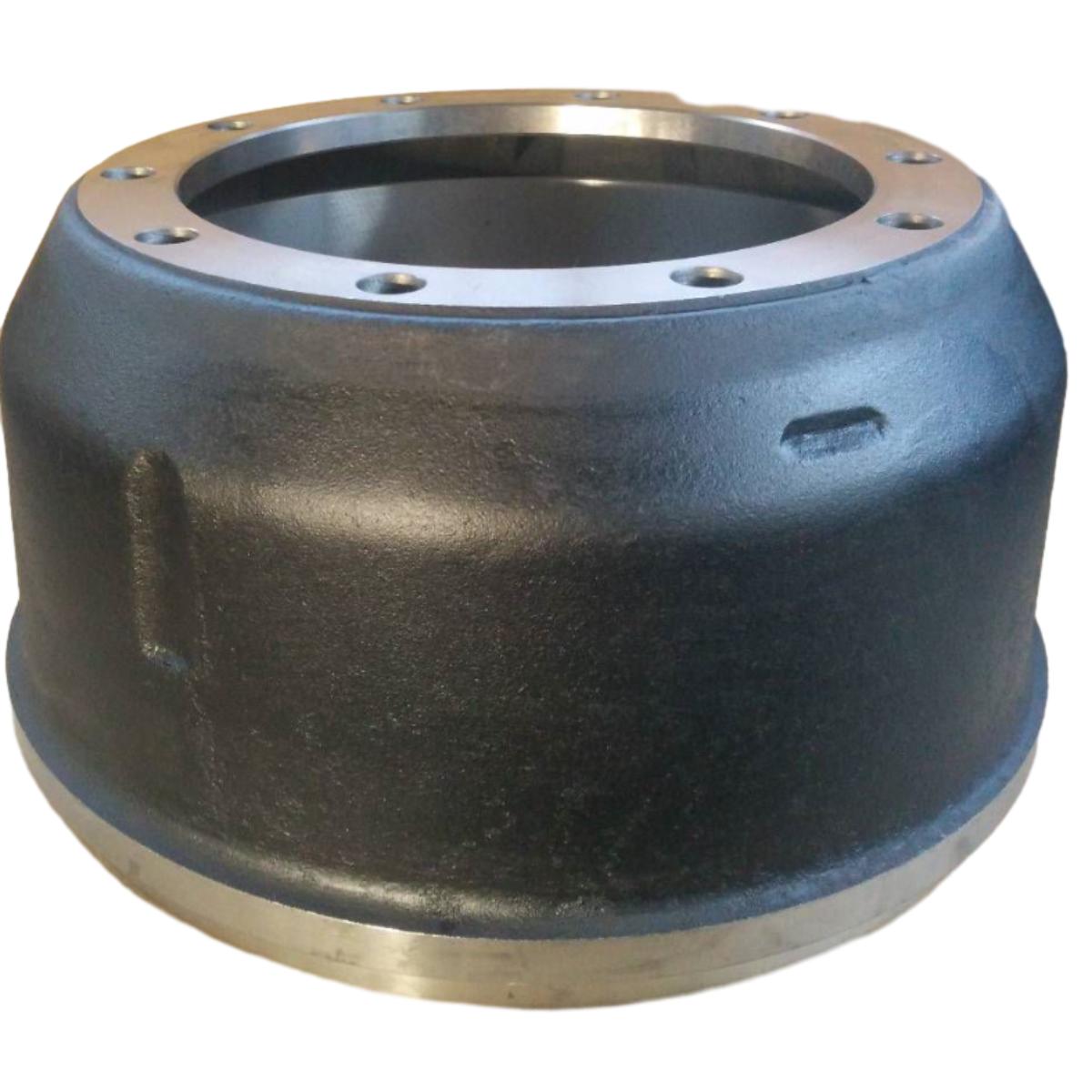
Alliance brake drums are critical components within the braking systems of heavy-duty vehicles, including trucks, buses, and trailers. They function by providing a surface against which brake shoes or pads apply friction, converting kinetic energy into thermal energy to decelerate or stop the vehicle. The ‘cross reference’ aspect refers to identifying equivalent brake drum models from various manufacturers based on dimensional specifications, mounting configurations, and performance characteristics. This is crucial for fleet maintenance, parts sourcing, and ensuring compatibility when original equipment manufacturer (OEM) parts are unavailable or cost-prohibitive. Alliance brake drums are commonly constructed from gray cast iron due to its cost-effectiveness, wear resistance, and thermal conductivity. Understanding the specific alloy composition, manufacturing processes, and the factors influencing their performance is fundamental to effective brake system maintenance and safety.
Material Science & Manufacturing
The predominant material used in Alliance brake drums is gray cast iron, specifically grades ranging from SAE J453 Grade 30 to Grade 50, depending on the application's demands. The key constituents are iron, carbon (typically 2.5-4.0%), silicon (1.8-3.0%), manganese (0.6-1.2%), sulfur (0.8-1.5%), and phosphorus (0.2-0.8%). The graphite flake morphology within the gray cast iron matrix provides lubrication and contributes to shock absorption. Manufacturing typically involves sand casting, utilizing patterns made from wood, metal, or resin. The process involves creating a mold cavity, pouring molten iron into the cavity, allowing it to solidify, and then removing the casting. Critical parameters during casting include melt temperature, pouring rate, cooling rate, and mold material composition. Subsequent machining operations, such as turning, milling, and drilling, are performed to achieve the required dimensional accuracy and surface finish. Heat treatment, particularly annealing, can be employed to relieve internal stresses and improve machinability. Quality control includes radiographic inspection to detect internal flaws (porosity, shrinkage), and dimensional verification using coordinate measuring machines (CMMs). Surface treatments like phosphate coating are frequently applied to enhance corrosion resistance.

Performance & Engineering
Brake drum performance is heavily influenced by thermal management. During braking, kinetic energy is converted into heat, and the drum must efficiently dissipate this heat to prevent thermal fade – a reduction in braking effectiveness due to overheating. Factors affecting heat dissipation include drum mass, fin design (if present), and airflow. Finite element analysis (FEA) is routinely employed to model thermal stress distribution within the drum during braking events. Mechanical stresses arise from both braking forces and centrifugal forces due to drum rotation. The drum's structural integrity must withstand these stresses without cracking or deformation. Engineering calculations involve determining the shear stress at the friction surface and the tensile stress within the drum wall. Material selection and drum geometry are optimized to maximize structural rigidity and minimize stress concentrations. Compliance with regulations such as FMVSS 105 (Federal Motor Vehicle Safety Standard) in the US, and ECE R90 in Europe, is mandatory. These standards specify minimum performance requirements for brake systems, including brake drums, in terms of stopping distance, brake force, and thermal endurance. The drum’s diameter and width significantly impact braking torque. Larger diameter drums provide greater leverage, while wider drums offer a larger friction surface.
Technical Specifications
| Drum Diameter (in) | Drum Width (in) | Bolt Circle Diameter (in) | Number of Bolts |
|---|---|---|---|
| 14 | 4.0 | 6.5 | 8 |
| 16 | 5.5 | 8.0 | 10 |
| 16.5 | 6.0 | 8.75 | 10 |
| 18 | 7.0 | 9.5 | 12 |
| 20 | 8.0 | 11.0 | 12 |
| 22.5 | 9.0 | 12.25 | 12 |
Failure Mode & Maintenance
Common failure modes in Alliance brake drums include thermal cracking, spalling, and wear. Thermal cracking occurs due to rapid heating and cooling cycles, creating stress concentrations that exceed the material's tensile strength. Spalling involves the chipping or flaking of the drum surface, often initiated by subsurface cracks or material defects. Wear is a gradual process resulting from friction between the drum and brake shoes/pads. Failure analysis often reveals that improper brake adjustment, contaminated brake linings, or excessively aggressive driving contribute to accelerated wear and failure. Corrosion, particularly from road salt exposure, can also weaken the drum material. Preventative maintenance includes regular inspection for cracks, spalling, and excessive wear. Brake shoe/pad replacement should be performed in pairs to ensure balanced braking. The drum surface should be cleaned and inspected for debris during brake service. Torqueing bolts to the manufacturer’s specifications is critical to prevent distortion and ensure proper clamping force. If thermal cracking is detected, the drum should be replaced immediately. Resurfacing drums is possible, but it reduces drum thickness and can compromise structural integrity if performed excessively. Regular lubrication of the backing plate components helps to prevent binding and uneven wear.
Industry FAQ
Q: What is the significance of the drum’s hub pilot diameter and how does it affect cross-referencing?
A: The hub pilot diameter is the internal diameter of the drum that mates with the wheel hub. It's a critical parameter for proper wheel centering and preventing wobble. Variations in this diameter, even by a small amount, can render a drum incompatible. During cross-referencing, the hub pilot diameter must match the original specification to ensure safe and proper wheel mounting. Failure to do so can cause wheel runout, excessive vibration, and potentially wheel separation.
Q: How do different grades of cast iron impact the service life of a brake drum?
A: Higher grades of cast iron, like SAE J453 Grade 50, contain a higher percentage of alloying elements (e.g., nickel, chromium) which increase tensile strength, wear resistance, and thermal conductivity. This results in a longer service life, particularly in demanding applications like heavy-duty trucks operating in severe duty cycles. Lower grades may be sufficient for lighter-duty vehicles, but will generally exhibit faster wear rates and are more susceptible to thermal cracking.
Q: What role does drum material composition play in noise, vibration, and harshness (NVH) characteristics?
A: The graphite flake size and distribution within the cast iron matrix significantly influence NVH. A finer, more uniformly distributed graphite structure generally reduces squeal and vibration. The damping capacity of the material also plays a role; higher damping absorbs more vibrational energy. Drum design, including fin geometry and wall thickness, also impacts NVH. Resonance frequencies can be excited during braking, leading to noise generation.
Q: How are Alliance brake drums typically inspected for subsurface cracks, and what non-destructive testing methods are used?
A: Subsurface cracks are often undetectable through visual inspection alone. Magnetic particle inspection (MPI) is a common non-destructive testing (NDT) method used to reveal surface and near-surface cracks. Ultrasonic testing (UT) can detect deeper subsurface flaws. Radiographic inspection (X-ray) provides a comprehensive view of the internal structure, identifying porosity, shrinkage, and cracks. Dye penetrant inspection is also used for surface crack detection. Regular inspections following a scheduled maintenance plan are essential for early detection of potential failures.
Q: What are the implications of using a brake drum with a different surface finish than the OEM specification?
A: The surface finish affects the coefficient of friction between the drum and brake shoes/pads. A rougher surface finish can initially provide higher friction, but also leads to accelerated wear of both the drum and shoes/pads. A smoother finish provides more consistent friction, but may require a longer break-in period. Using a drum with a drastically different surface finish can result in uneven braking, increased stopping distances, and premature component failure. It’s vital to adhere to the OEM’s surface finish specifications when cross-referencing.
Conclusion
Alliance brake drums represent a critical safety component in heavy-duty vehicle braking systems. Their performance and longevity are dictated by material science, precise manufacturing processes, and adherence to stringent engineering standards. Successful cross-referencing requires meticulous attention to dimensional specifications, material properties, and regulatory compliance. Understanding the potential failure modes and implementing proactive maintenance procedures are essential for maximizing brake drum service life and ensuring vehicle safety.
Future developments in brake drum technology will likely focus on lighter weight materials (e.g., composite materials), improved thermal management solutions, and enhanced surface coatings to minimize wear and corrosion. Continued advancements in non-destructive testing techniques will enable more accurate and reliable detection of subsurface flaws, further enhancing brake system reliability. The increasing adoption of automated braking systems will also place greater demands on brake drum performance and durability.