
Introduction
The component 2522915c91 designates a heavy-duty brake drum, specifically engineered for industrial vehicles and machinery operating under demanding conditions. Brake drums are a critical safety component within braking systems, responsible for converting kinetic energy into thermal energy via friction, ultimately bringing the vehicle or machine to a controlled stop. This guide will provide an in-depth examination of the material science, manufacturing processes, performance characteristics, failure modes, and maintenance procedures associated with brake drums of this specification. The industry currently faces challenges related to extended service life, consistent performance across varying load conditions, and mitigating thermal stress-induced cracking. Improving material composition and manufacturing control are paramount to addressing these concerns, alongside effective condition monitoring and predictive maintenance strategies. The drum’s performance directly impacts operational safety and downtime, making robust design and stringent quality control essential.
Material Science & Manufacturing
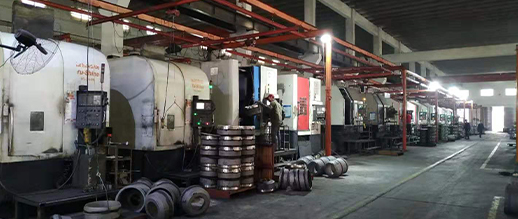
Brake drums of this specification are typically manufactured from grey cast iron, specifically ASTM A48 Class 30. The material's composition prioritizes thermal conductivity, wear resistance, and damping capacity. Key elements include iron (Fe), carbon (C) ranging from 2.5% to 4.0%, silicon (Si) between 1.8% and 3.0%, manganese (Mn) at 0.7% to 1.2%, sulfur (S) at a maximum of 0.08%, and phosphorus (P) at a maximum of 0.05%. The graphite flake morphology within the cast iron matrix is critical for lubricating the friction surface and enhancing thermal shock resistance. Manufacturing begins with patternmaking, followed by sand casting utilizing a resin-bonded sand mold. Precise mold creation is vital to achieve dimensional accuracy. Following casting, the drum undergoes stress relieving heat treatment to minimize residual stresses induced during cooling. Machining operations, including turning, boring, and facing, are performed to achieve the final dimensions and surface finish. Quality control measures include radiographic inspection to detect internal flaws, and dimensional metrology using coordinate measuring machines (CMMs). Critical parameters controlled during manufacturing include cooling rates during solidification, annealing temperature and duration, and machining tolerances. Improper control can lead to variations in microstructure, residual stress levels, and ultimately, premature failure.

Performance & Engineering
The performance of the 2522915c91 brake drum is heavily influenced by its ability to dissipate heat generated during braking events. Thermal analysis, including finite element analysis (FEA), is used to optimize the drum’s geometry and minimize thermal gradients. Key engineering considerations include the drum’s mass, wall thickness, fin design (if applicable), and the material’s thermal conductivity. Force analysis during braking focuses on the distribution of stresses within the drum, particularly hoop stress and bending stress. Maximum allowable stress levels are dictated by the material’s yield strength and fatigue limit. The drum must also meet stringent compliance requirements related to dimensional accuracy, material composition, and surface finish, as defined by SAE J10 standards. Environmental resistance is a critical factor, requiring the drum to withstand exposure to road salts, moisture, and temperature fluctuations. Corrosion protection is typically achieved through surface coatings, such as phosphate coating or painting. The drum's braking performance is also directly tied to the brake lining material and the friction coefficient between the drum surface and the lining. Maintaining a consistent friction coefficient over the drum’s service life is crucial for predictable stopping distances and brake fade prevention.
Technical Specifications
| Parameter | Specification | Testing Standard | Units |
|---|---|---|---|
| Diameter (Bore) | 450 | ISO 847 | mm |
| Outer Diameter | 600 | DIN 50110 | mm |
| Width (Axial Length) | 250 | ASTM E8 | mm |
| Material | Grey Cast Iron (ASTM A48 Class 30) | ASTM A48 | - |
| Tensile Strength | 250 - 350 | ASTM A48 | MPa |
| Hardness (Brinell) | 180 - 240 | ASTM E10 | HB |
Failure Mode & Maintenance
Common failure modes for 2522915c91 brake drums include thermal cracking, spalling, and wear. Thermal cracking is initiated by repeated heating and cooling cycles, leading to fatigue failure due to thermal stresses. Spalling involves the detachment of surface material, often caused by localized overheating or impact loading. Wear occurs due to the abrasive action of the brake lining. Failure analysis reveals that improper brake adjustment, excessive braking loads, and contamination of the brake lining can accelerate these failure modes. Predictive maintenance strategies involve regular inspection for cracks, surface defects, and dimensional changes. Non-destructive testing (NDT) methods, such as ultrasonic testing and magnetic particle inspection, can be used to detect subsurface flaws. Maintenance procedures include cleaning the drum surface, verifying brake adjustment, and replacing worn brake linings. Preventive maintenance should also include periodic heat treatment to relieve residual stresses. Lubrication of the brake shoe pivot points is essential to prevent sticking and uneven wear. Corrective maintenance involves replacing the drum if it exhibits significant damage or exceeds wear limits. Records of inspection and maintenance activities are crucial for tracking drum performance and identifying potential issues before catastrophic failure occurs.
Industry FAQ
Q: What is the primary cause of thermal cracking in brake drums?
A: The primary cause of thermal cracking is repeated thermal cycling. During braking, the drum heats up rapidly, creating thermal stresses. When the drum cools, these stresses can exceed the material's fatigue limit, leading to crack initiation and propagation. Factors like rapid and uneven cooling, high braking loads, and pre-existing flaws exacerbate this issue.
Q: How does the graphite content in cast iron affect the drum’s performance?
A: Graphite content is critical. The flake morphology of graphite provides internal lubrication, reducing friction and wear. It also enhances thermal shock resistance by absorbing energy during rapid temperature changes. Too little graphite can lead to increased wear and reduced damping capacity, while excessive graphite can compromise the material's strength.
Q: What are the key indicators that a brake drum needs to be replaced?
A: Key indicators include exceeding the maximum allowable wear limit (determined by drum diameter and thickness), visible cracks, significant spalling or surface defects, and detectable warping or runout. NDT methods can confirm subsurface flaws not visible during a visual inspection.
Q: What is the role of stress relieving heat treatment in the manufacturing process?
A: Stress relieving heat treatment reduces residual stresses induced during casting and machining. These residual stresses can contribute to premature failure, particularly thermal cracking. By relieving these stresses, the drum's fatigue life and overall reliability are significantly improved.
Q: How important is proper brake adjustment, and what are the consequences of improper adjustment?
A: Proper brake adjustment is paramount. Insufficient clearance leads to constant friction, generating excessive heat and accelerating wear. Excessive clearance results in reduced braking efficiency and increased stopping distances. Both scenarios contribute to premature brake drum failure.
Conclusion
The 2522915c91 brake drum represents a critical component in industrial braking systems, demanding careful consideration of material science, manufacturing processes, and operational factors. Its performance is intrinsically linked to the cast iron’s composition, particularly the graphite morphology, and the precision of manufacturing controls. Maintaining optimal thermal management, through proper design and maintenance, is fundamental to preventing premature failure due to thermal cracking and wear.
Future advancements in brake drum technology may focus on exploring alternative materials, such as composite materials, to further enhance thermal conductivity and reduce weight. Implementing advanced monitoring systems to detect early signs of wear and thermal stress will also be crucial for proactive maintenance and improved safety. Continuous research and development are essential to address the evolving demands of industrial applications and ensure the long-term reliability of brake drum systems.